





19th Century Rummer
A 19th century rummer is a sturdy drinking glass designed for ale, wine, or punch, offering substantial weight and historic character to a table setting.
19th Century Rummer
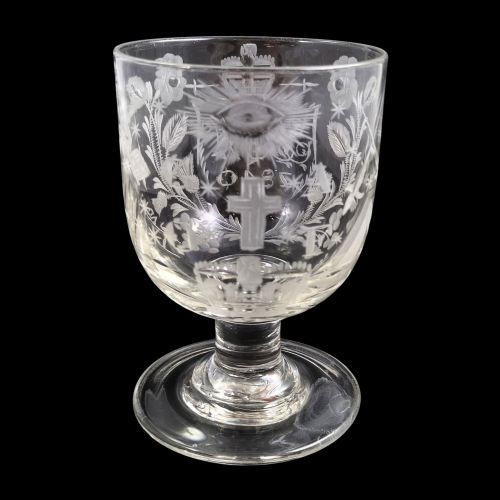
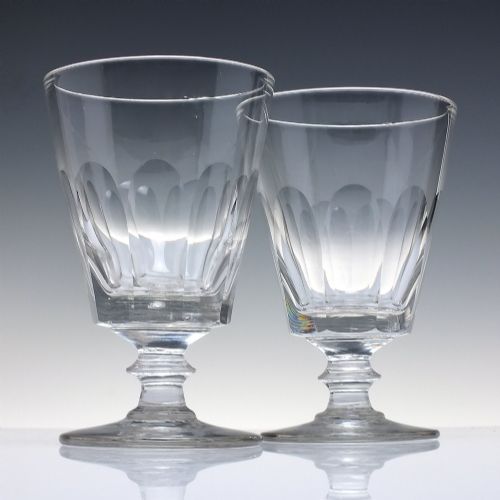
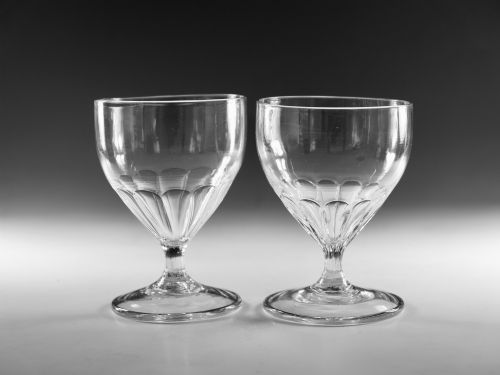
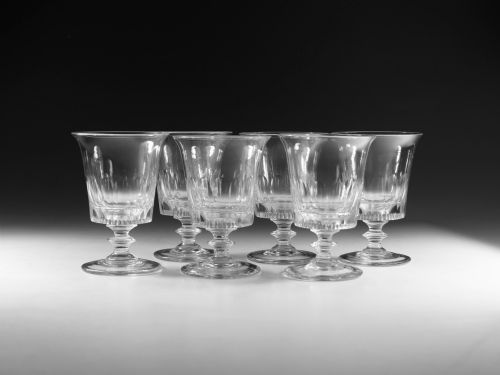
When you examine a 19th century rummer, you are looking at heavy drinking vessels originating from the Georgian and Victorian eras. The selection on this page ranges from plain tavern glasses to heavily cut Anglo-Irish examples and engraved commemorative pieces.
Most specimens follow traditional forms featuring bucket bowls, pan tops, or stout stems with lemon squeezer bases. English and regional workshops produced these pieces primarily for domestic hospitality, club gatherings, and tavern use.
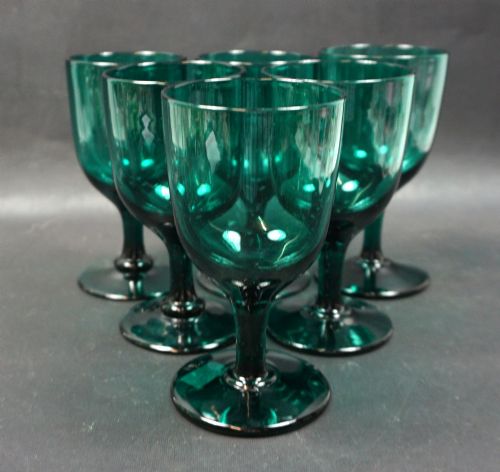
Buyers will encounter pairs, sets of six, and individual large table rummers spanning periods from about 1800 through 1880. These forms reflect changing social drinking habits and evolving glasshouse techniques across the nineteenth century.
Materials and Working Methods
Makers relied on lead glass and flint glass, which provided the heavy feel and clear resonance characteristic of the period. Hand-blown techniques produced thick walls and sturdy bases capable of withstanding robust daily service.
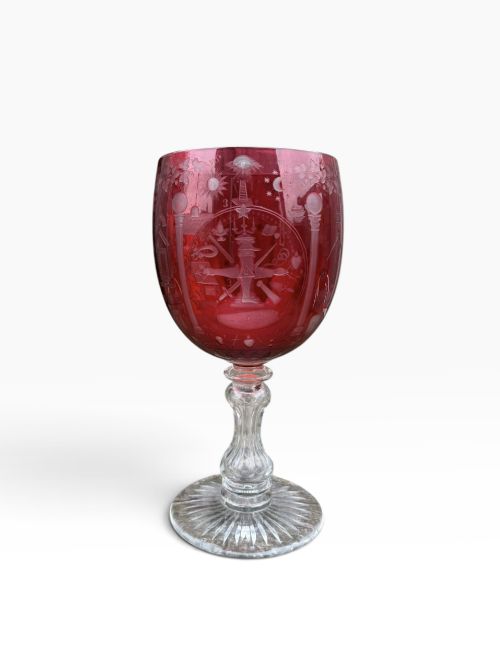
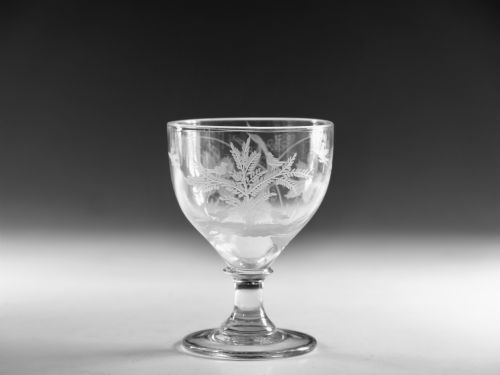
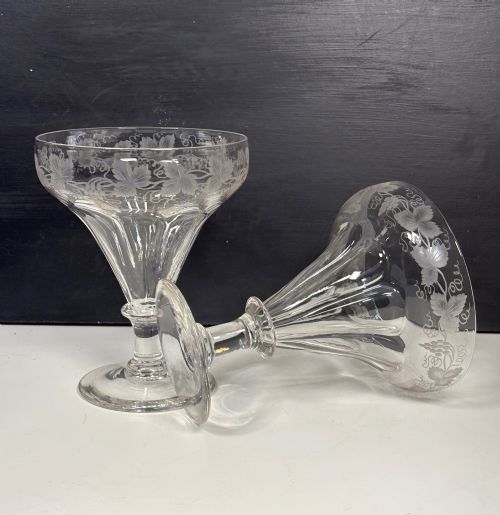
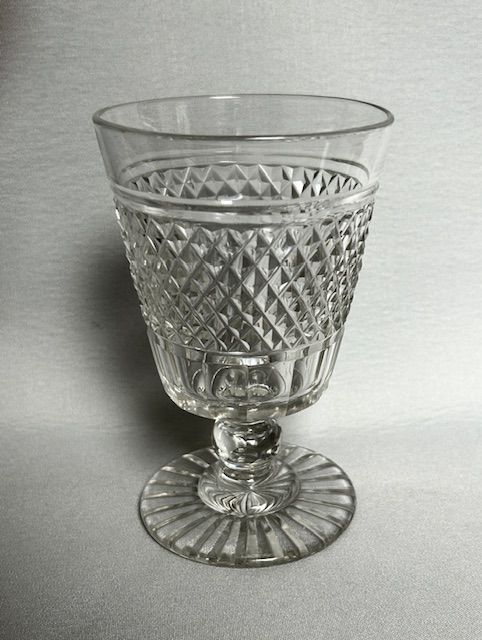
Craftsmen used cutting wheels to apply hobnail patterns and geometric facets, while others decorated surfaces with wheel-engraved hops, barley, and armorial crests. Coloured glass variants, including cranberry, turquoise, and pale green, achieved their hues through specialised metal oxides in the molten batch.
Some rummers bear the bulldog of British resolve alongside the Union Jack, ready to hold whatever toast comes their way.
Judging Quality and Execution
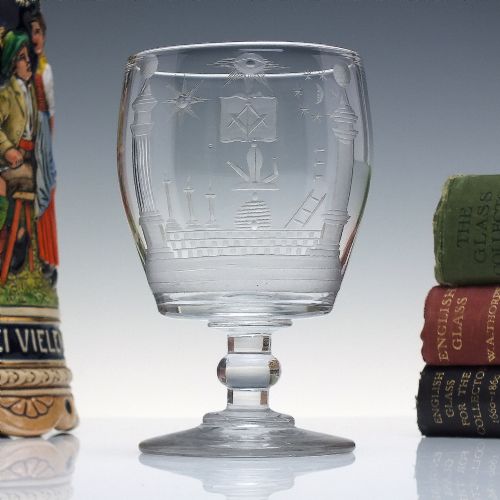
The distinction between standard tavern wares and top-tier examples lies in the crispness of the glass cutting and the depth of the wheel engraving. Superior pieces exhibit well-balanced proportions, substantial metal weight, and intricate decorative motifs like Masonic symbols or specific historical bridges.
Clarity of the crystal and stability of the foot also mark the grade of manufacture. Heavily faceted Anglo-Irish pieces with sharp, clean prisms sit firmly at the upper end of the scale compared to simpler, thicker utility glasses.
The 19th Century Rummer Glossary
- Rummer
- A large, heavy drinking glass used in the 18th and 19th centuries for ale, wine, or punch. These vessels typically feature a short stem and a capacious bowl.
- Lead glass
- A type of glass containing lead oxide that increases brilliance, weight, and workability for cutting. It forms the heavy body of superior 19th century drinking vessels.
- Lemon squeezer base
- A square, moulded glass foot with stepped corners resembling a citrus juicer. This weighty base provided extra stability for tall or large rummers during the Georgian period.
- Hobnail cut
- A raised, diamond-shaped decorative pattern cut into the surface of glass. It creates a tactile texture that catches the light brilliantly.
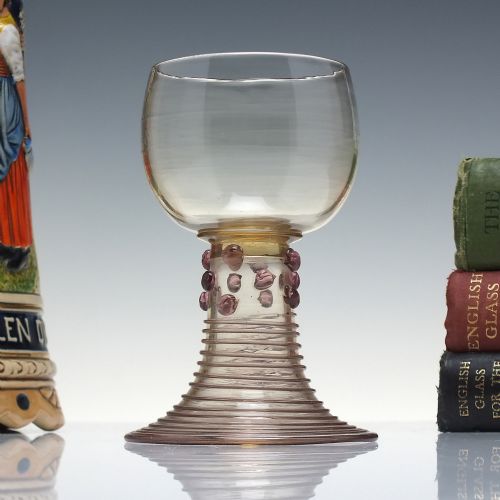
- Roemer
- A continental European drinking glass, often green, featuring a decorated cylindrical stem and a rounded bowl. Bohemian versions from the later 19th century frequently appear alongside British rummers.
19th Century Rummer: Frequently Asked Questions
What were rummers used for?
These glasses served as heavy-duty vessels for ale, cider, and punch in homes and taverns. Their substantial size accommodated generous portions during social gatherings and club meetings.
People also utilised them for wine or commemorative toasts, relying on the sturdy weight to prevent tipping on crowded tables.
How do I date a 19th century rummer?
Dating relies on stylistic clues such as bowl shapes, stem types, and manufacturing methods. Early pieces from around 1800 often feature heavy bucket bowls and lemon squeezer bases.
Later Victorian examples tend to introduce coloured glass, taller proportions, or different stem formations like balusters. Comparing engraving styles and pontil marks helps narrow the decade of production.
Are these glasses safe to use today?
Most antique rummers remain structurally sound enough for gentle modern use, provided they are handled with care. Hand washing in warm water is essential to preserve the historic glass.
Avoid thermal shock from hot liquids or modern dishwashers, as antique lead glass can crack under rapid temperature changes.
What is an Anglo-Irish rummer?
Anglo-Irish rummers originate from the period when glass production flourished under tax laws in Ireland, particularly in Dublin and Waterford. These pieces are distinguished by exceptionally heavy lead crystal and deep, bold geometric cutting.
Collectors prize them for their brilliant clarity and the sharp definition of their faceted bowls.