



Antique Presentation Goblet
An antique presentation goblet marks a significant moment, bringing solid silver, silver plate and rich gilding together into a monumental vessel.
Antique Presentation Goblet
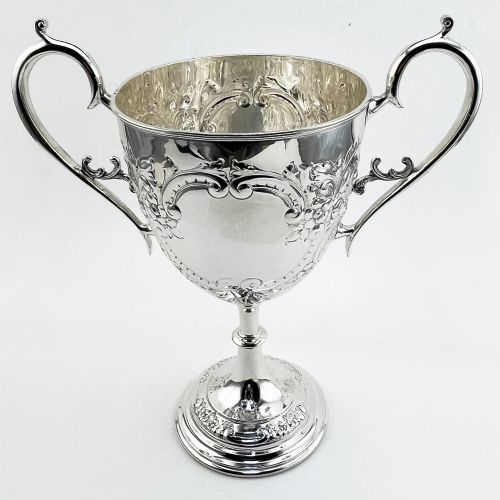
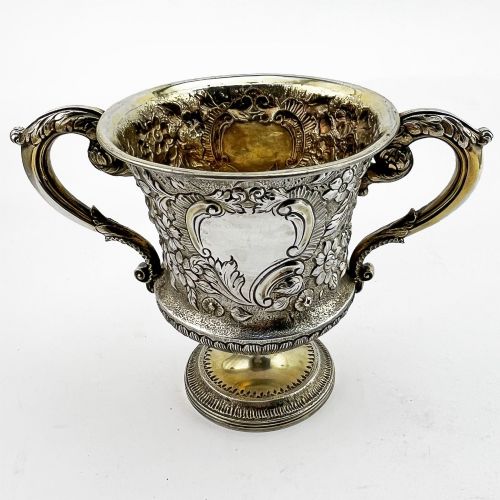
An antique presentation goblet serves as a commemorative vessel, often taking the form of a trophy cup, loving cup or chalice. These pieces arrive from various eras, including the Georgian, Victorian and Edwardian periods, as well as international workshops such as Chinese Export and Indian Kutch.
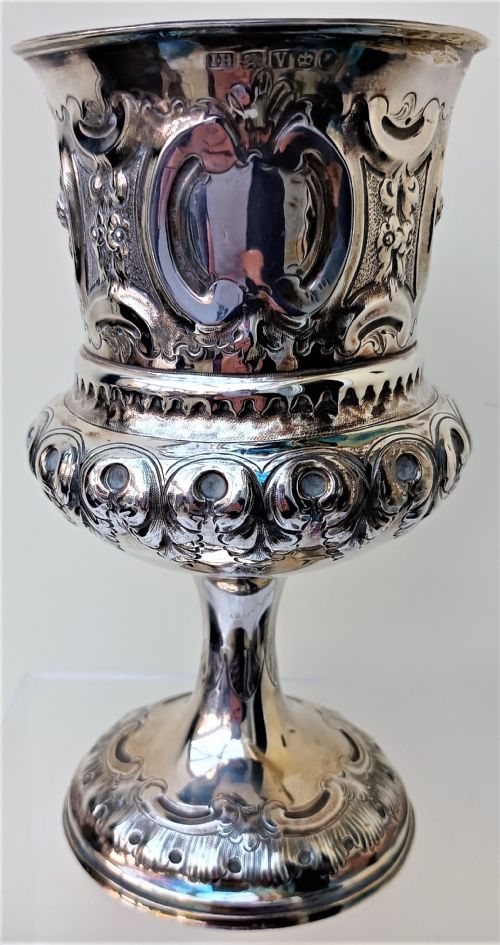
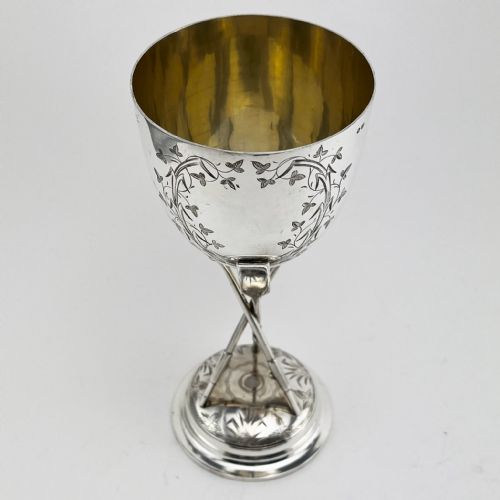
The designs range from two-handled campana-shaped cups to tall wine goblets and lidded presentation pieces. Many carry specific engravings that record sporting victories, rowing triumphs, cricket achievements or hunting events.
Buyers will encounter substantial sterling silver and silver gilt alongside Sheffield plate and copper foundations. These vessels were made to be displayed proudly upon sideboards or presented formally to deserving recipients.
Materials and construction
Silversmiths shaped sterling silver and solid silver through hammering, casting and spinning to achieve deep bowls and sturdy stems. Sheffield plate and standard silver plate offered an accessible alternative, fusing thin layers of silver to base metals like copper.
Surface decoration relies heavily on hand engraving, chasing and repoussé work, rendering intricate floral patterns, koi carp or commemorative inscriptions. Gilt interiors, known as silver gilt, added a rich layer of gold wash to protect the silver from acidic contents.
Antique Presentation Goblet Retail Price Guide 2026
Typical asking prices for presentation goblet among the pieces listed under this phrase on Sellingantiques today, from the lower quarter to the upper quarter. They describe what is for sale here now, not the wider market.
Some sporting presentation pieces come paired with matching tie pins, ensuring the victorious recipient could coordinate their accessories down to the last detail.
Factors of quality
The weight of the metal and the balance of the vessel dictate the initial sense of substance in the hand. Thicker gauge silver supports deeper, crisper hand-chased relief rather than shallow machine stamping.
Mastery of the silversmith's art appears in the crispness of applied handles, the seamless execution of cast collars, and the clarity of maker marks and hallmarks. Superior engraving retains sharp lines and deliberate depth without piercing the vessel wall.
James Deakin & Sons·Henry Tatton & Son·Zee Wo·Joseph Rodgers & Sons
The Antique Presentation Goblet Glossary
- Sterling silver
- A silver alloy containing 92.5 percent pure silver by weight, providing the standard for quality British silverware.
- Sheffield plate
- An early form of composite metal made by fusing a sheet of silver to a copper ingot before rolling them together into sheets.
- Silver gilt
- Sterling silver that has been coated with a thin layer of gold, commonly applied to the interior bowls of loving cups.
- Campana cup
- A classical bell-shaped vessel with a flared rim and footed base, frequently fitted with scroll handles.
- Loving cup
- A large drinking vessel featuring two or three handles, designed to be passed amongst company at formal gatherings.
Antique Presentation Goblet: Frequently Asked Questions
How are these cups cleaned?
Maintenance requires gentle washing with warm soapy water and a soft cloth to protect the antique surface. Avoid harsh abrasive dips that strip away the historical patina built up over generations.
For pieces with intricate chased decoration or delicate engraving, use a soft-bristled brush to clear away tarnish from the recesses without applying heavy pressure.
What periods do these pieces span?
The selection covers centuries of metalwork, stretching from Georgian and Regency creations through the height of Victorian production. Edwardian and later twentieth-century examples also appear.
Each era brings distinct aesthetic choices, shifting from classical restraint to ornate Victorian floral motifs and later Art Deco geometric lines.
Were these goblets actually used for drinking?
Many loving cups and chalices functioned as communal drinking vessels at banquets and sporting dinners, often passed from person to person. Others served strictly as display pieces or permanent trophies.
Gold-washed interiors on many examples helped prevent the metallic taste of silver from affecting wine or punch.
How can I date an unmarked piece?
Dating relies heavily on style, construction methods, and any engraved dedications or hallmarks present on the body. Assay office marks and maker's stamps provide the most precise chronological markers.
When marks are absent, the form of the handles, the weight of the metal, and the typography of the inscription offer strong clues to the period of creation.