



Victorian Engraved Glassware
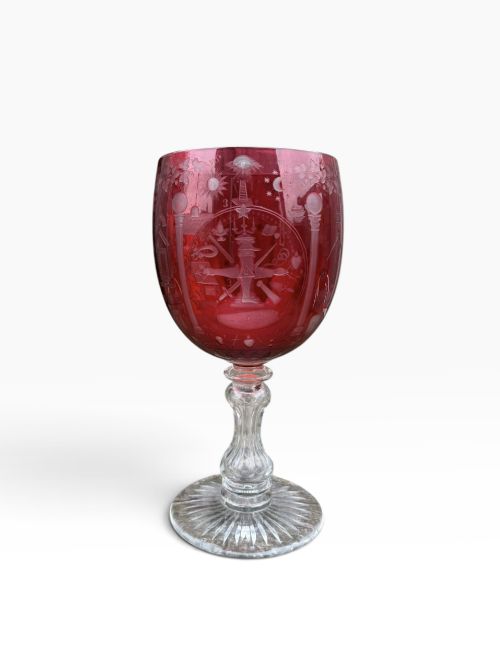
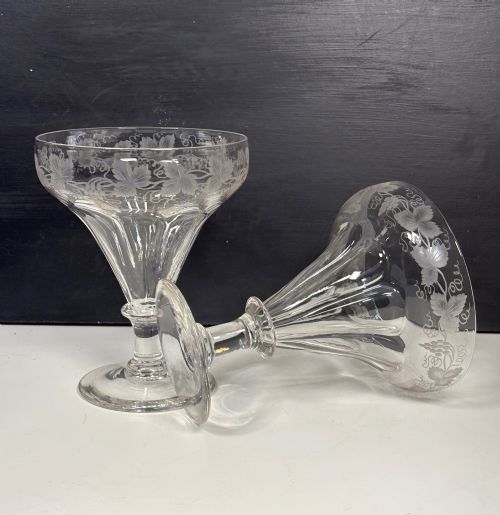
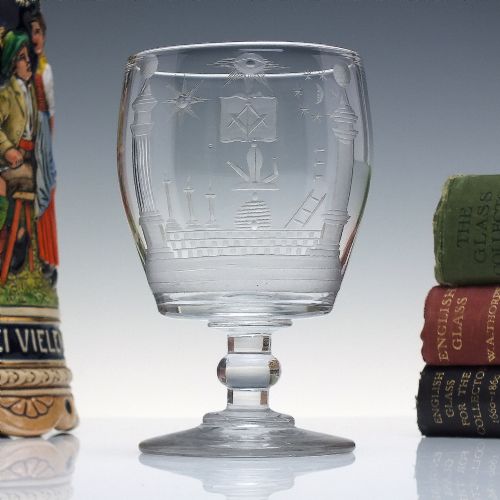
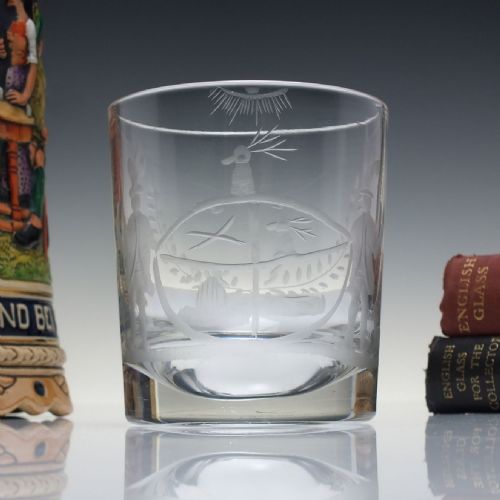
Victorian engraved glassware brings tactile depth to the table through wheel-carved flora, Masonic emblems, and richly saturated lead crystal vessels.
Victorian Engraved Glassware
When you search for victorian engraved glassware, you encounter drinking vessels, decanters, and serving pieces shaped primarily during the nineteenth century. The selection spans English lead crystal tablewares alongside continental Bohemian productions in striking coloured glass.
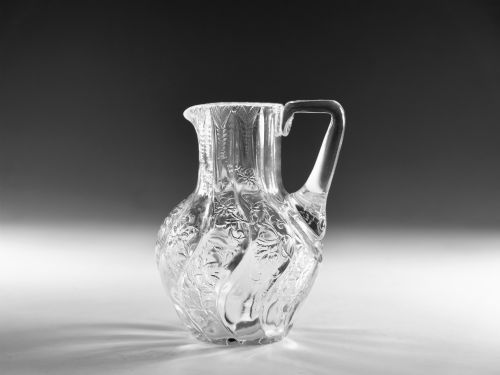
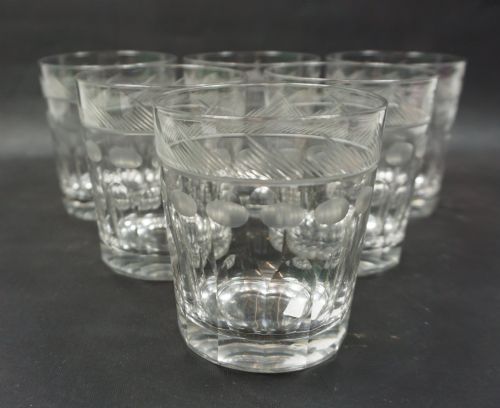
You are most likely to meet stemware such as rummers, wine glasses, and champagne coupes, alongside utility forms like tumblers, jugs, and finger bowls. These pieces bridge formal dining service with commemorative and fraternal display.
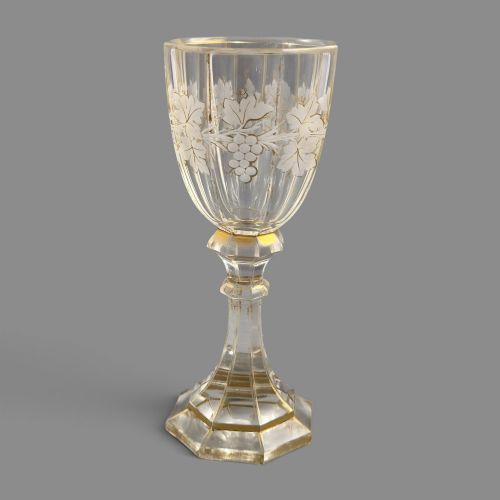
The aesthetic vocabulary encompasses naturalistic motifs like convolvulus and fruiting vines, as well as distinct Masonic and fraternal iconography. Pieces range from modest individual medicine measures to extensive matched sets intended for grand dining.
Materials and production techniques
Makers utilised heavy lead crystal and flint glass to provide a dense, stable medium capable of enduring deep wheel-cutting without compromising structural integrity. Coloured effects were achieved through layered glass, notably cranberry and ruby red over crystal, which allowed craftsmen to cut back the outer casing to reveal the clear metal beneath.
Surface ornamentation relied on skilled wheel engraving and intaglio carving, executed with rotating abrasive discs of varying sizes to achieve matte textures and polished facets. Certain items incorporated supplementary gilding applied to the rims and engraved details, sealing the decoration through kiln firing.
Listings demonstrate that nineteenth century makers worked extensively in clear lead crystal, cranberry glass, and ruby flash glass.
Distinguishing quality across the range
The fineness of the engraving dictates the distinction between standard utilitarian production and superior studio output. Master carvers achieved remarkable depth, shading, and naturalistic detail in foliage and heraldic devices, whereas lesser pieces display shallow, mechanical scratching.
The clarity and weight of the underlying metal further separate workshop standards. Exceptional examples utilise heavy lead crystal with resonant ring and brilliant light refraction, unmarred by heavy optical distortion or bubbles in the glass matrix.
Stevens & Williams·Moser
The Victorian Engraved Glassware Glossary
- Rummer
- A heavy-stemmed drinking glass popular in the nineteenth century, typically featuring a capacious bowl suitable for ale, wine, or punch.
- Römer
- A traditional continental goblet style characterised by a spherical bowl resting on a cylindrical, stud-decorated stem known as a foot.
- Intaglio
- A technique where the design is carved into the surface of the glass rather than left standing in relief, producing a recessed image.
- Cranberry glass
- A transparent pinkish-red glass produced by the addition of gold chloride to the molten batch, widely utilised for Victorian tableware.
- Flash glass
- A vessel formed by coating a core of clear or contrasting glass with a thin outer layer of coloured glass, enabling two-tone engraved effects.
Victorian Engraved Glassware: Frequently Asked Questions
How do I care for antique engraved glassware?
Wash these pieces strictly by hand in warm, soapy water, avoiding sudden temperature changes that might stress the historic metal. Dry them promptly with a lint-free cloth to maintain the brilliance of the crystal and the integrity of any gilding.
Store stemware upright on stable shelving rather than hanging them by their rims. Avoid placing coloured or gilded vessels in modern dishwashers.
What distinguishes rummers from standard wine glasses?
Rummers possess a markedly heavier build and a broader, deeper bowl designed to hold generous portions of everyday table beverages. They sit on shorter, sturdier stems intended for robust daily handling.
Standard wine glasses of the period feature more delicate proportions, thinner walls, and refined stems suited to formal dining service.
How can I identify Bohemian pieces from English ones?
Bohemian examples frequently employ vibrant saturated colours such as amber, ruby, and green, often accompanied by elaborate gilding and heavy architectural forms like the Römer. English production often relies on clear lead crystal or distinct overlay techniques featuring naturalistic botanical engraving.
Examination of the base and pontil mark can also offer clues regarding workshop origin and manufacturing traditions.
Were engraved glasses used for everyday dining?
Victorian households utilised these vessels across both daily meals and formal occasions, depending on the weight and elaboration of the set. Tumblers, finger bowls, and custard cups formed part of active dining services rather than mere cabinet display.
Commemorative pieces bearing Masonic or fraternal emblems served specific ceremonial functions during lodge gatherings.