

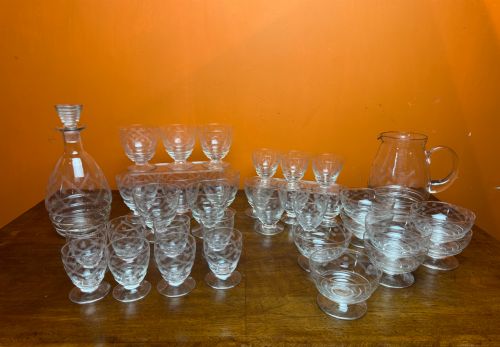


Engraved Crystal Pitcher
An engraved crystal pitcher brings weight and hand-cut clarity to the table, combining heavy lead crystal with delicate wheel-cut surface work.
Engraved Crystal Pitcher
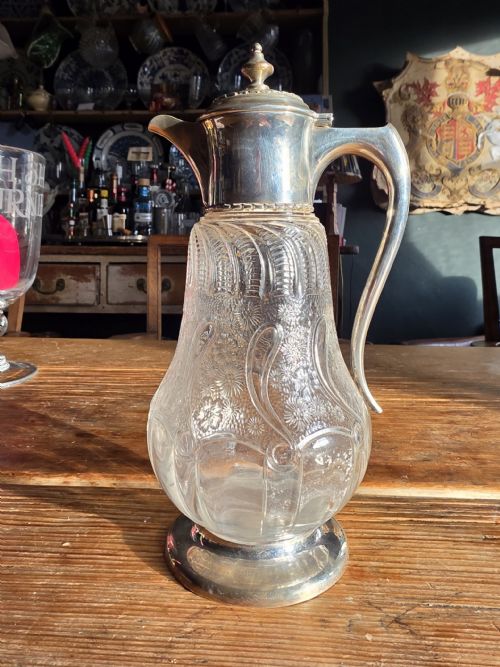
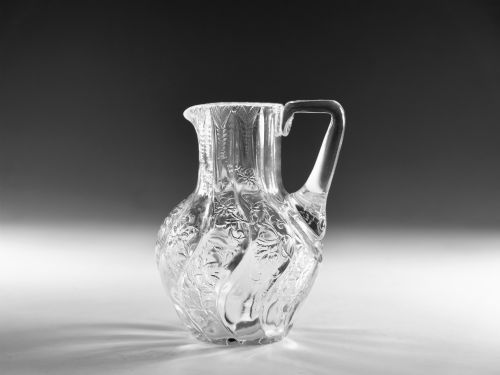
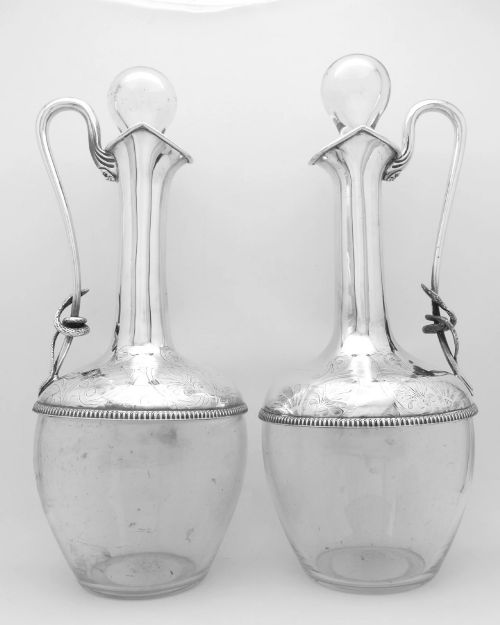
An engraved crystal pitcher functions primarily as a serving vessel for wine, claret, or water, often taking the form of a claret jug or ewer. These pieces span from the late nineteenth century into the twentieth century, with Victorian and Edwardian examples appearing frequently alongside later Art Deco items.
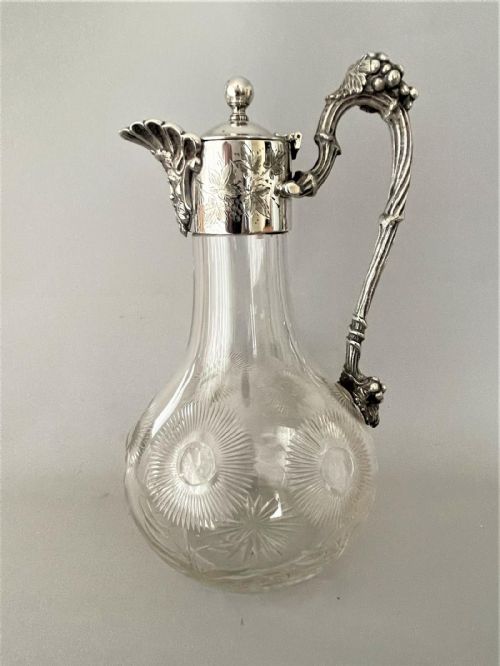
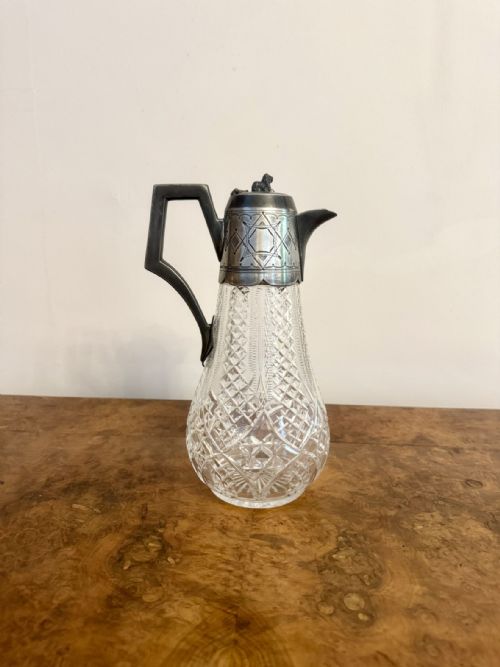
The body of an engraved crystal pitcher is shaped from clear, red, or teal glass, frequently mounted with silver plate, sterling silver, or silver-gilt collars, handles, and hinged lids. Makers in England, France, and Austria produced these vessels, incorporating distinct regional styles such as Islamic Revival or Rococo Revival motifs.
Buyers will most commonly encounter Victorian and Edwardian iterations featuring star patterns, fruiting vines, dolphins, or floral emblems. These vessels serve both decorative and functional roles in dining and glassware collections.
Factors determining quality
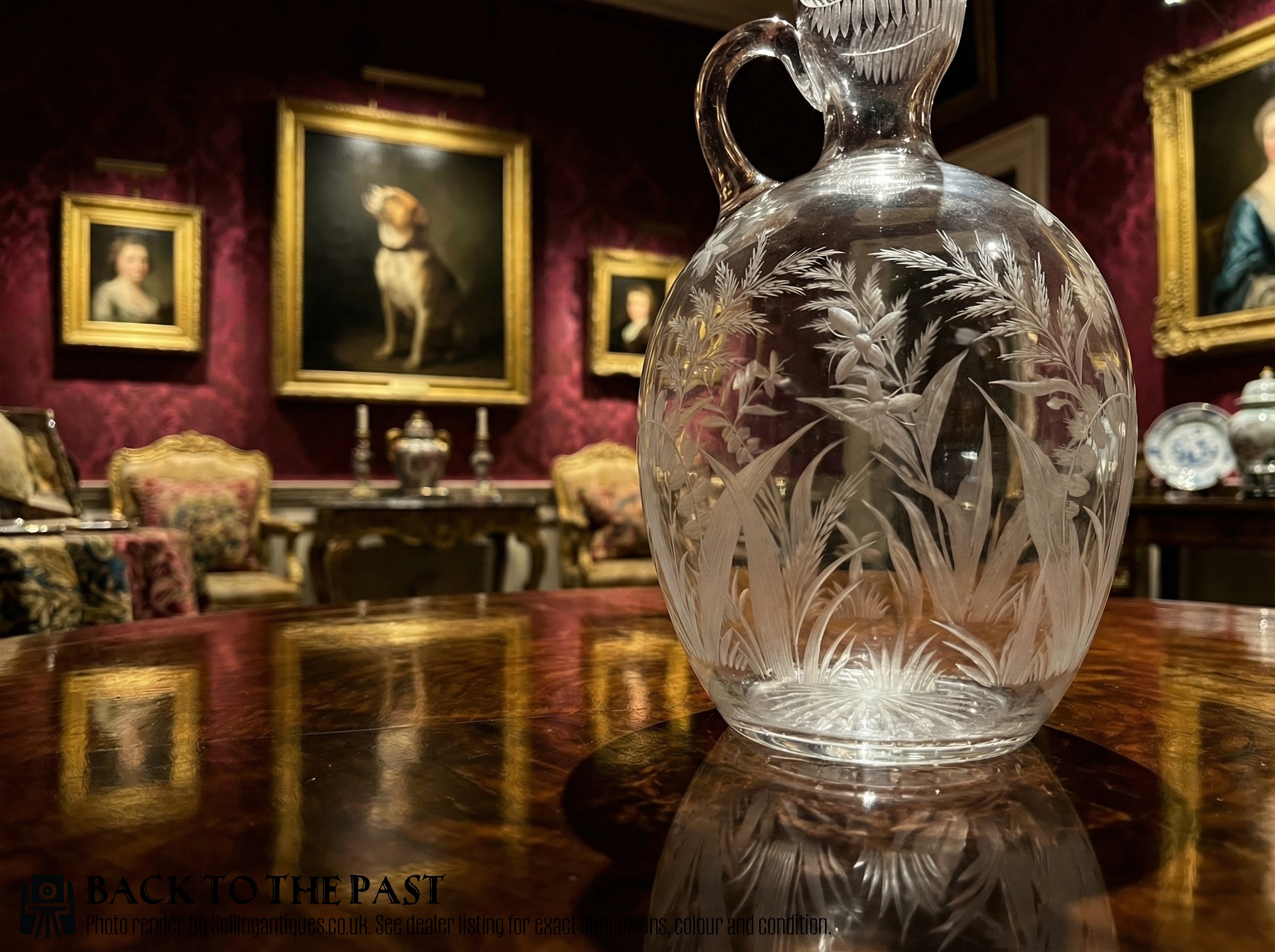
The depth, precision, and sharpness of the hand wheel engraving dictate the visual merit of the piece. Crisp lines and detailed motifs like dolphins or fruiting vines distinguish superior engraving from shallow surface etching.
The weight and clarity of the crystal body, combined with the thickness and structural integrity of any silver or silver-plated mounts, determine the overall substance and balance of the jug.
English and French glassworks dominate the material record, alongside Austrian contributions featuring distinctive Islamic Revival styles.
William Comyns·Asprey and Co. Ltd·Stevens and Williams·Webb Corbett·Lobmeyr
The Engraved Crystal Pitcher Glossary
- Claret jug
- A specialised vessel designed for serving red wine, typically featuring a glass body and a metal handle, collar, and hinged lid. These items were prominent on nineteenth-century dining tables.
- Intaglio
- A technique where the design is carved into the surface of the glass rather than left in relief. This method creates depth when viewed through the transparent crystal.
- Silver plate
- A layer of silver fused to a base metal, commonly utilised for the mounts and handles of Victorian jugs. It provided the appearance of solid silver at a lower production cost.
- Ewer
- A large jug with a wide spout and curved handle, historically used for pouring water or wine. In nineteenth-century glassware, the term often overlaps with pitcher.
- Rock crystal
- A term used in nineteenth-century and Edwardian manufacturing to describe high-purity, highly polished colourless quartz or exceptionally clear lead glass. It allows for deep, brilliant cutting and engraving.
Engraved Crystal Pitcher: Frequently Asked Questions
What is an engraved crystal pitcher used for?
These vessels were originally designed to serve claret, dessert wine, or water at formal dining tables during the Victorian and Edwardian periods. Their decorative engraved surfaces also made them display pieces on sideboards.
Today, collectors use them for serving wine or retain them as decorative examples of nineteenth and twentieth-century glassware.
How do I identify a Victorian engraved crystal pitcher?
Victorian examples often combine heavy cut glass or crystal bodies with silver-plated mounts, hinged lids, and naturalistic motifs like fruiting vines or floral arrangements. Maker marks or registry diamond marks can sometimes be found stamped on the metal collars.
Stylistic indicators such as Rococo Revival curves or heavy cast mounts also point towards nineteenth-century production.
What is the difference between etched and engraved glass?
Engraved glass is worked mechanically using a small rotating wheel to cut deep grooves and intricate designs into the crystal surface. This method produces crisp edges and varied depths.
Etched glass relies on acid to eat away at the surface areas, resulting in a frosted, shallower, and more uniform decorative effect.
Are the metal mounts made of solid silver?
Mounts vary across different pieces, with many utilising silver plate over a base metal rather than solid sterling silver. Hallmarks on the collar or handle will indicate if the mount is solid silver and provide clues to the assay office and date of manufacture.
Unmarked silver-plated mounts were standard for many commercial nineteenth-century tablewares.