



19th Century Religious Painting
These 19th century religious painting examples encompass devotional canvases, icons, and narrative scenes that bring spiritual art from the period into a modern interior.
19th Century Religious Painting
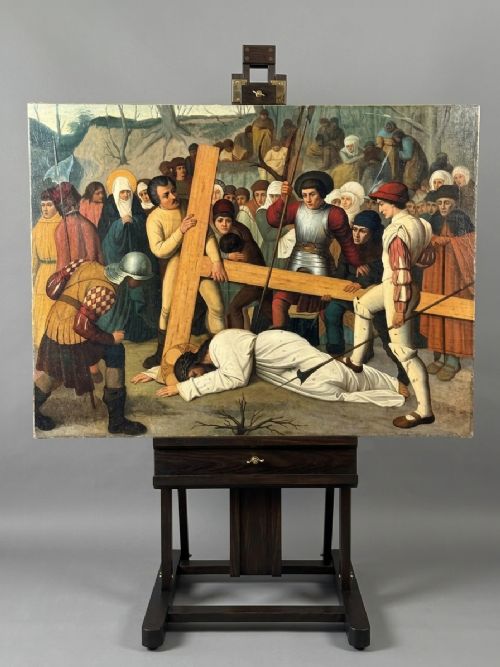
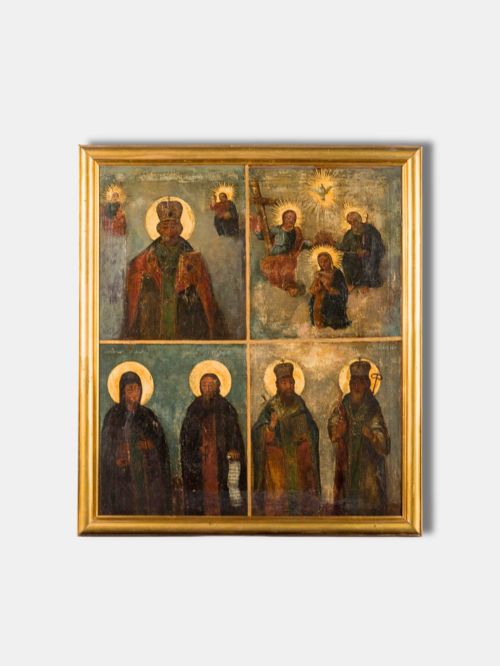
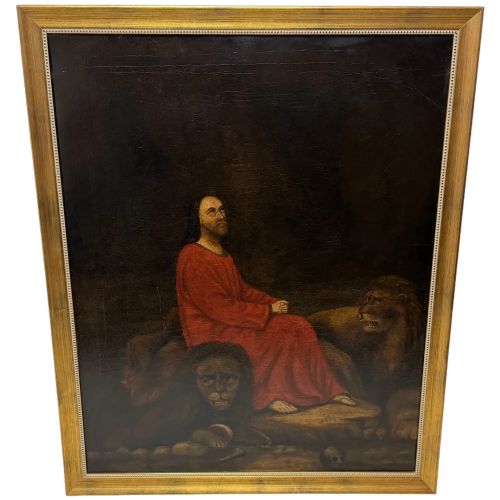
A 19th century religious painting typically takes the form of an oil on canvas, a tempera icon on wood, or a hand-painted porcelain plaque. Subjects span biblical narratives such as Daniel in the den, portraits of saints and holy figures, and copies after Renaissance masters like Raphael.
Buyers frequently encounter works reflecting specific traditions, including Russian Orthodox icons and European Continental school paintings. Pieces range from large-scale devotional canvases to smaller devotional panels meant for domestic prayer.
Beyond standard framed pictures, the selection includes related devotional objects such as painted wood panels and illuminated religious texts. These diverse works share a common purpose of spiritual devotion and liturgical expression.
How they were made
Painters applied oil pigments onto stretched canvas or prepared wood panels, frequently building up rich compositions with fine brushwork. Many icon panels incorporated gesso grounds beneath the paint surface to provide a smooth base.
Gilding techniques added sacred brilliance, utilising gold leaf applied over bole or gesso. Certain pieces integrated physical relief elements, combining carved wood structures with painted surfaces.
Several pieces capture dramatic biblical moments, including Daniel sharing space with very patient lions.
What varies in quality
Technical execution distinguishes workshop output, particularly in the rendering of facial expressions, drapery folds, and anatomical proportions. Masterful handling of light and shadow creates depth that separates finer interpretations from simpler decorative copies.
Material preservation dictates the integrity of a piece, with the stability of the paint layer and the condition of the underlying canvas or wood panel playing a crucial role. Original gilding and untouched surface patinas retain historical authenticity.
Costantino Frixione·Ernst Stierhof·John Jackson·Guido Reni·Raphael
The 19th Century Religious Painting Glossary
- Icon
- A sacred image representing Christ, saints, or angels, typically painted on wood panels within Eastern Orthodox traditions.
- Tempera
- A permanent, fast-drying painting medium consisting of coloured pigments mixed with a water-soluble binder such as egg yolk.
- Gesso
- A white paint mixture consisting of a binder mixed with chalk, gypsum, or pigment, used to prepare a surface for painting.
- Triptych
- A picture or relief carving on three panels, typically hinged together side by side and used as an altarpiece.
- Gilding
- The decorative application of gold leaf or gold powder onto solid surfaces such as wood or canvas.
19th Century Religious Painting: Frequently Asked Questions
What is a 19th century religious painting?
These works are devotional artworks created during the eighteen-hundreds, depicting sacred narratives, biblical figures, and revered saints. They served both public liturgical functions and private domestic prayer.
Artists across Europe and Asia produced these pieces in various styles, ranging from folk art traditions to academic copies of Renaissance masterpieces.
How do I identify Russian icons?
Russian icons are typically painted on solid wood panels using tempera and feature distinctive theological iconography. They frequently incorporate gold leaf embellishments and halos around sacred figures.
Many bear Cyrillic inscriptions identifying the depicted saint or feast day, adhering to strict canonical rules established over centuries.
Where were these paintings displayed?
Works of this nature hung in churches, domestic altars, and private chapels to aid in contemplation and prayer. Smaller icons and panels were often kept in living spaces for daily devotions.
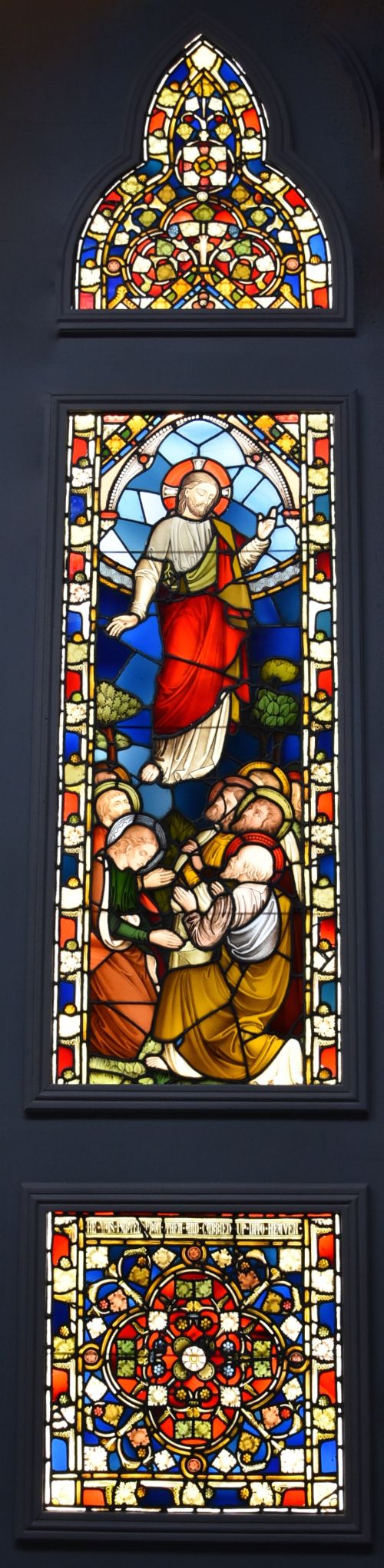
Larger narrative canvases adorned ecclesiastical interiors, while specialised items like stained glass triptychs filtered light into sacred spaces.
How do I care for antique oil paintings?
Keep painted canvases away from direct sunlight and dramatic fluctuations in temperature and humidity to prevent cracking. Dust the surface gently with a soft, dry brush without applying pressure.
Avoid using liquid cleaners or abrasive materials on the delicate paint or gilded frames, consulting a professional conservator for deep cleaning.