
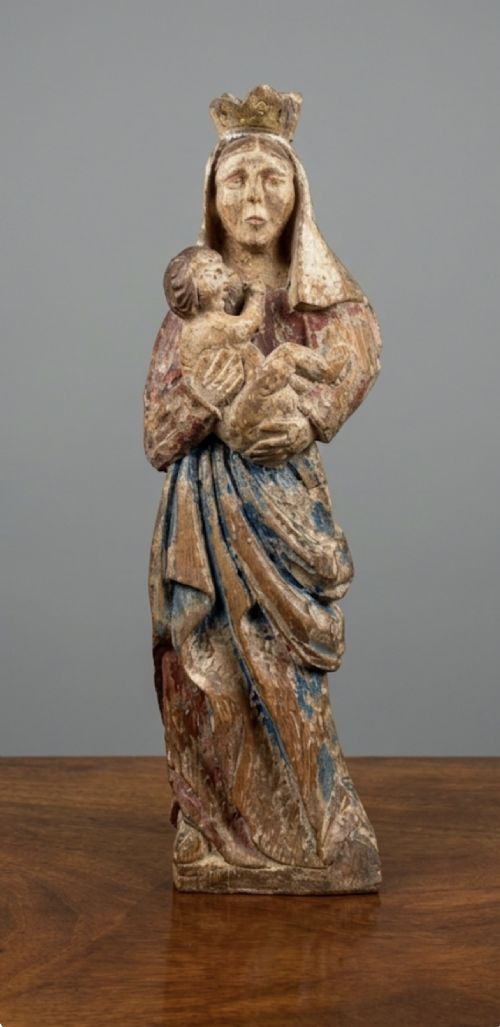
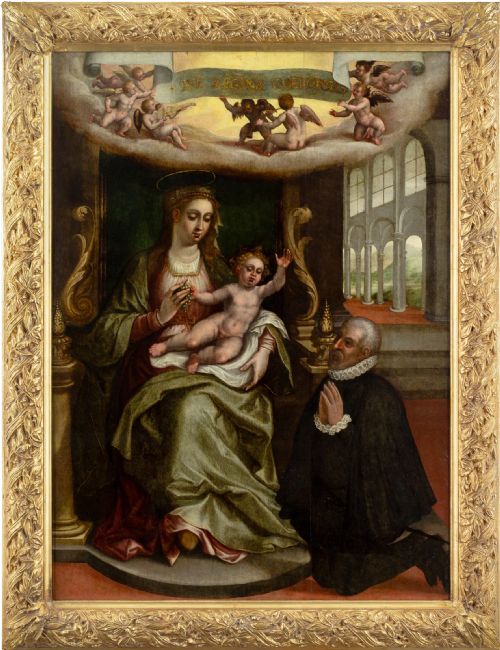


Madonna and Child Painting
These devotional madonna and child painting works bring centuries of sacred portraiture and devotional focus into your interior.
Understanding the selection
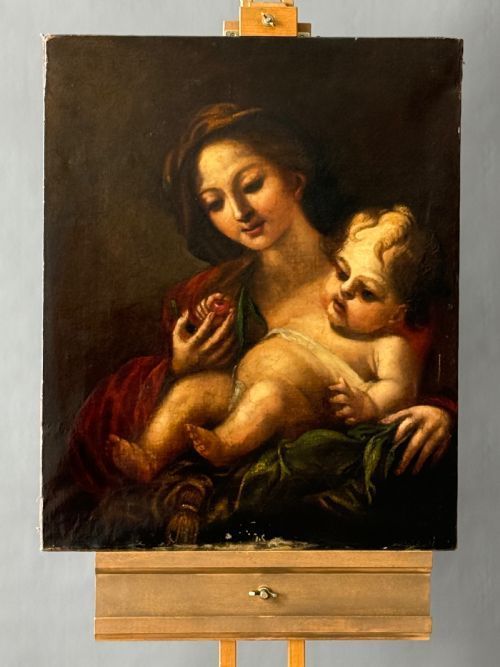
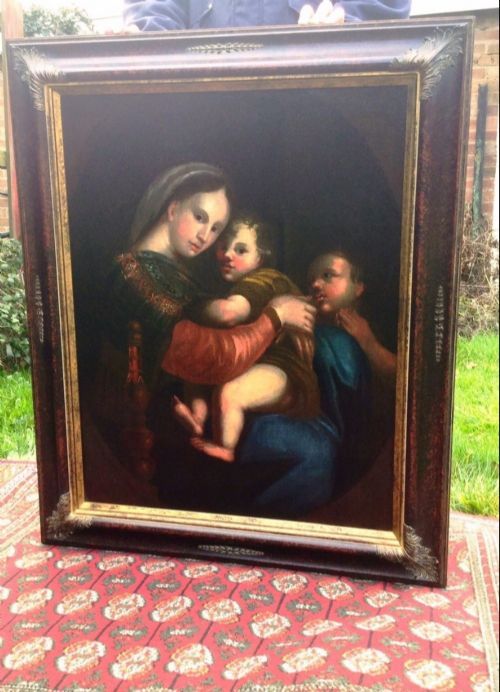
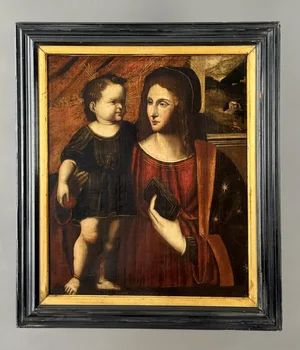
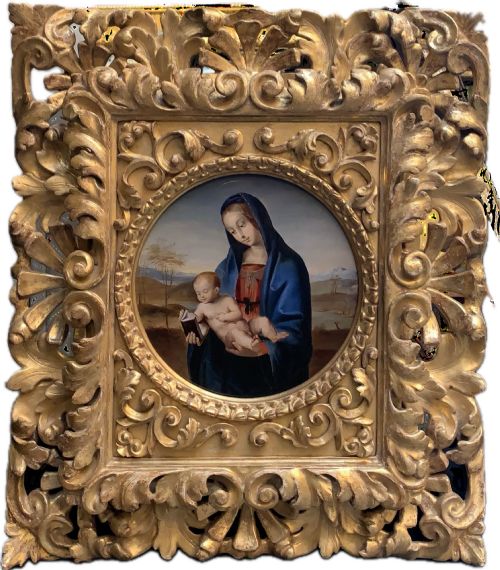
A madonna and child painting centres on the traditional Christian image of the Virgin Mary holding the infant Jesus. The examples you encounter span Italian Renaissance, Italian Baroque, Northern Renaissance, and Andean Colonial traditions.
The assortment on this page includes seventeenth and eighteenth-century works alongside nineteenth-century pieces, featuring oil on canvas, oil on panel, watercolour, and porcelain supports. You find works after masters alongside regional school pieces and independent compositions.
Materials and methods
Makers utilised oil paint applied to canvas, wood panels, or porcelain bases, sometimes enhanced with gold leaf and giltwood framing. Panels provided a rigid foundation for detailed brushwork, whilst canvas allowed for larger compositions.
Artists created these devotional pieces using traditional painting techniques of the sixteenth through nineteenth centuries. Layers of pigment build the forms of the figures, with certain works incorporating gold embellishment to highlight sacred elements.
Retail Price Guide 2026
Typical UK retail prices for madonna and child painting, calculated from the Sellingantiques database of over a million retail prices indexed since 2003. This retail price guide relies exclusively on Sellingantiques data; no external sources or auction records are used, so the figures do not describe the wider market.
One orthodox icon cleverly hides the infant within a composition depicting the madonna of the three hands.
Distinctions in execution
The quality of a madonna and child painting depends on the refinement of the brushwork and the expressive depth given to the faces of the figures. Stronger works display confident handling of drapery and anatomy that elevates them above standard devotional copies.
The integrity of the support and the preservation of the painted surface dictate the visual impact of each piece. Finer examples retain their original luminosity and subtle tonal gradations across the canvas or panel.
The Madonna and Child Painting Glossary
- Oil on panel
- A painting executed with oil-based pigments upon a prepared wooden board. This support was favoured in earlier centuries before canvas became dominant.
- Giltwood
- Wood that has been treated and covered with a thin layer of gold leaf or metallic gilt. It frequently frames devotional panels and oil paintings.
- Triptych
- A painting divided into three sections, typically featuring a central panel with two folding wings. These portable altarpieces allowed for private prayer.
- Old Master
- A European artist of high skill working before the nineteenth century. These painters established the foundational styles seen in later religious works.
- Icon
- A religious work of art, most commonly depicting sacred figures on wood panels. They serve as objects of veneration in Eastern Christian traditions.
Frequently Asked Questions
How do I date an old painting?
Dating relies on examining the support materials, framing methods, and stylistic conventions used by the artist. Pigments and canvas preparation also offer clues to the period of creation.
Comparing the brushwork to known regional schools helps narrow down the century in which the piece was produced.
Where were these paintings displayed originally?
Devotional paintings hung in domestic spaces for private prayer, or formed part of larger church altarpieces and monastic settings. Smaller works and triptychs were suited for travel and intimate reflection.
Owners placed them in quiet rooms or private chapels to aid daily contemplation.
What is an after-master painting?
An after-master painting is a later work that copies or interprets a famous composition by an established artist. These were often created by students or followers to study technique.
Such pieces allowed collectors to own representations of celebrated artworks housed in major galleries.
How should I care for panel paintings?
Wooden panels react to changes in humidity and temperature, requiring stable environmental conditions to prevent warping. Keep them away from direct sunlight and heat sources.
Avoid using liquid cleaners on the painted surface and consult a conservator for any maintenance.