22,723  PAGES BROWSED TODAY PAGES TODAY 71  ANTIQUES UPLOADED TODAY NEW ARRIVALS
ID #SA1226452
FOR SALE
£7,500
Email
Save
After Raphael Conestabile Madonna
Darnley Fine Art
for sale €8,775     $9,525
£7,500

Darnley Fine Art

Sellingantiques Verified Since Jul 2026
View Dealers Stock Page
Id #SA1226452
PDF SHARE
SAVE

After Raphael Conestabile Madonna

16th century
For Sale by Darnley Fine Art
Description

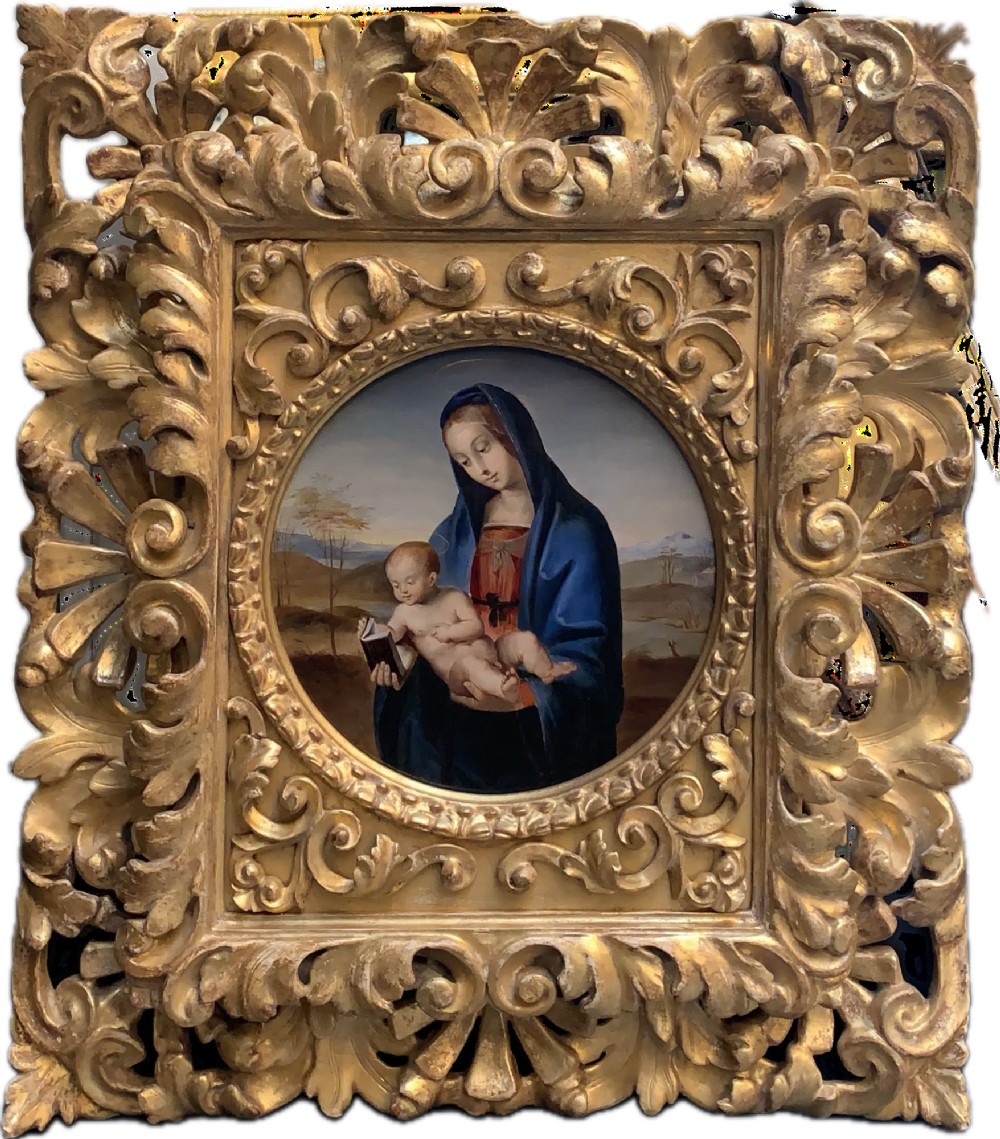
Oil on poplar panel

Image size: 8 x 8 inches (20.5 x 20.5 cm)

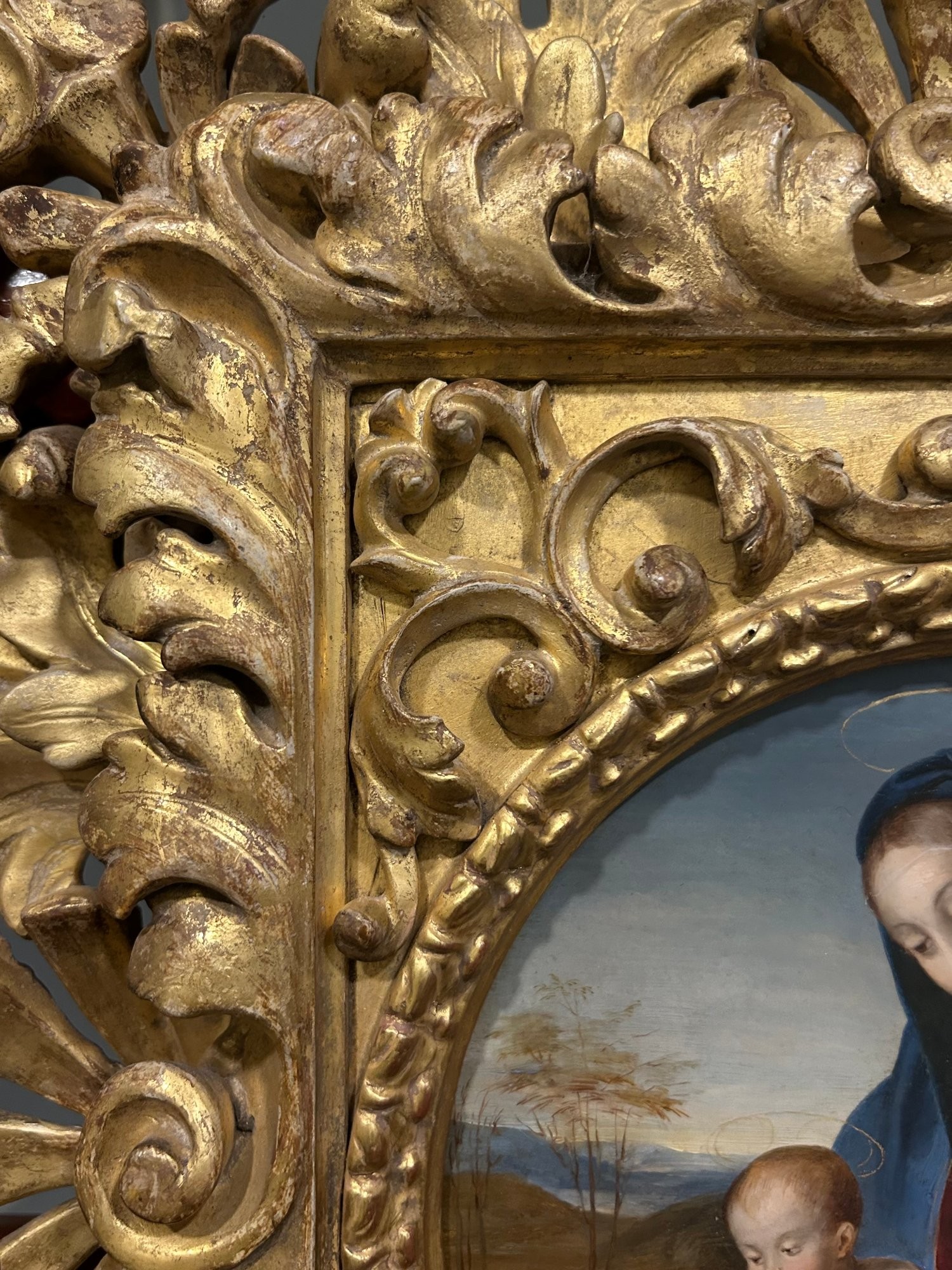
Ornate gilt frame

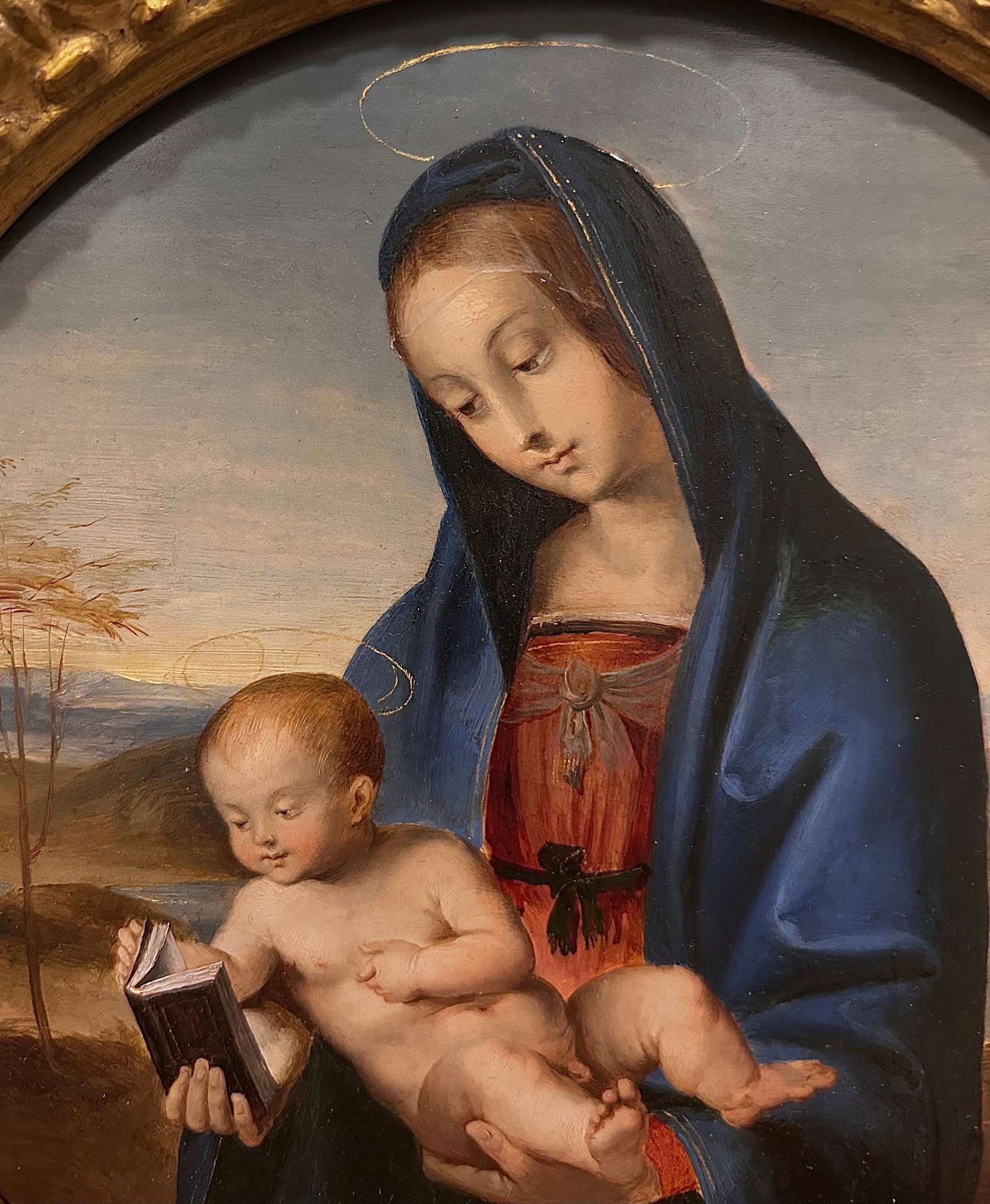
Conestabile Madonna

Made in compositional likeness to Raphael’s last painting, Conestabile Madonna, now held in the Hermitage Museum of St Petersburg, the work was originally painted for the Conestabile Della Staffa family of Perugia before it was then gifted to the Russian Tzaress, Maria Alexandrovna in 1871.

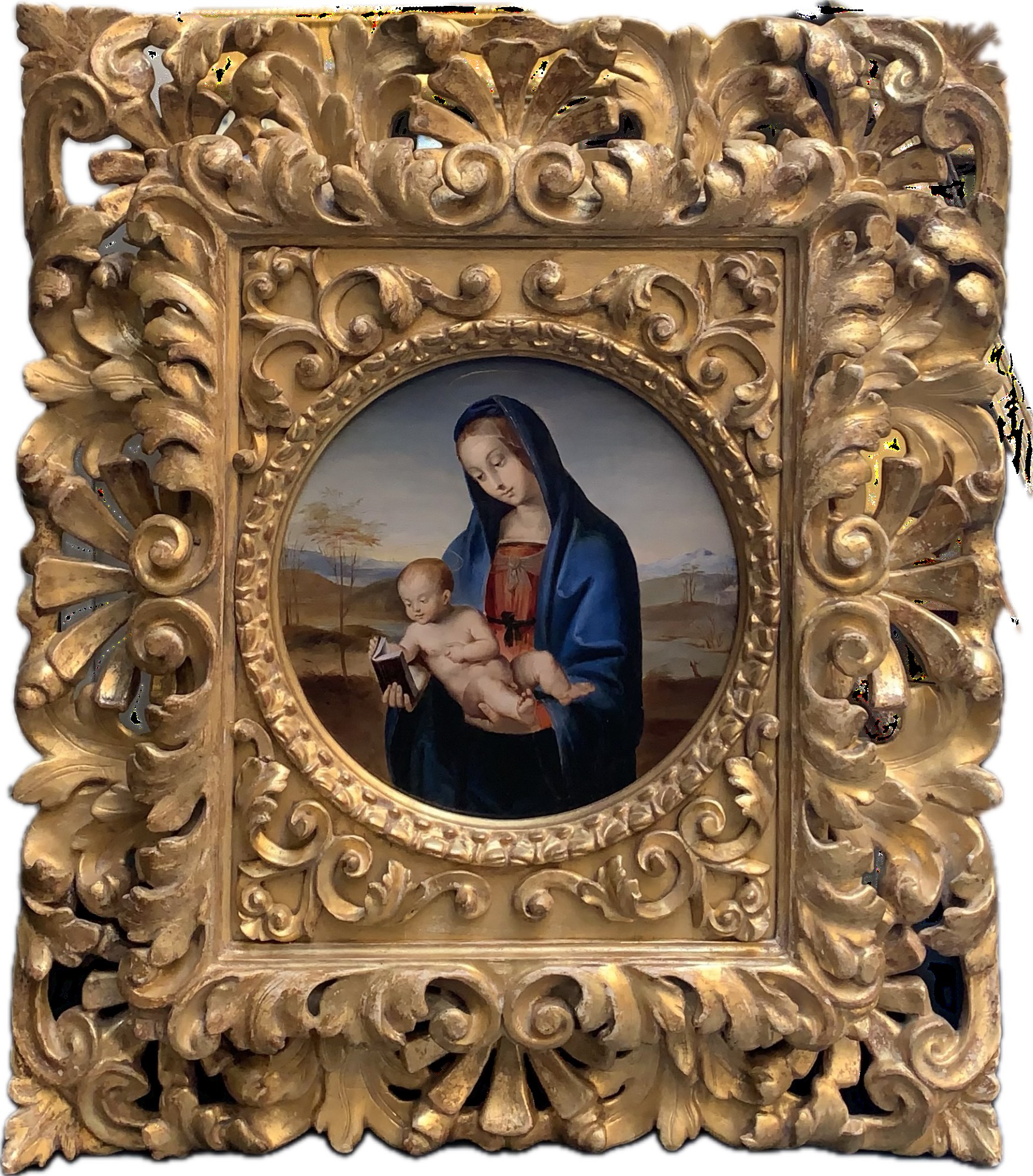
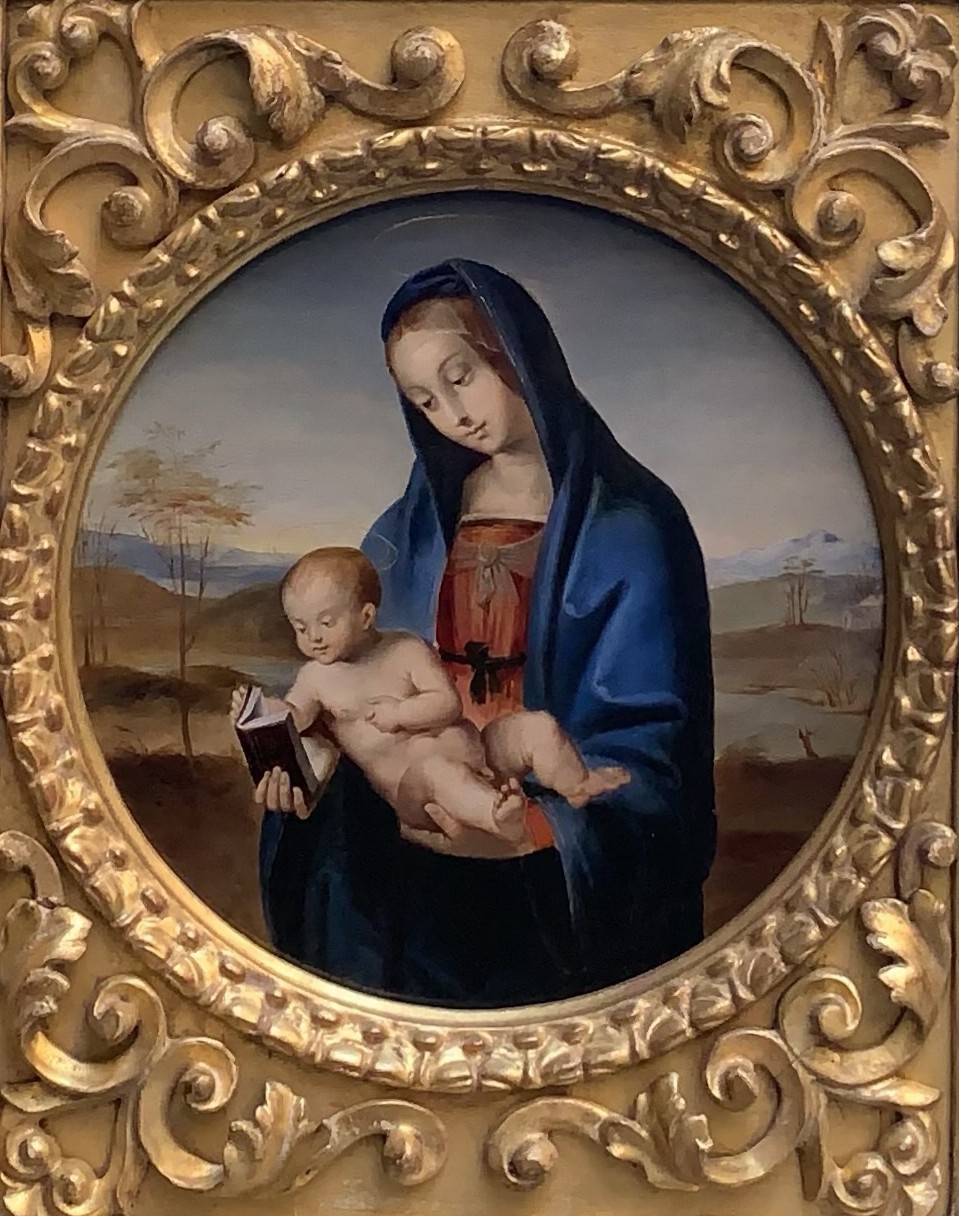
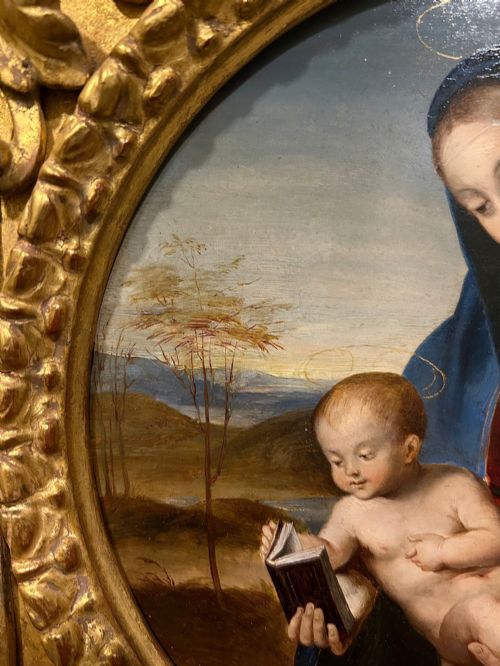
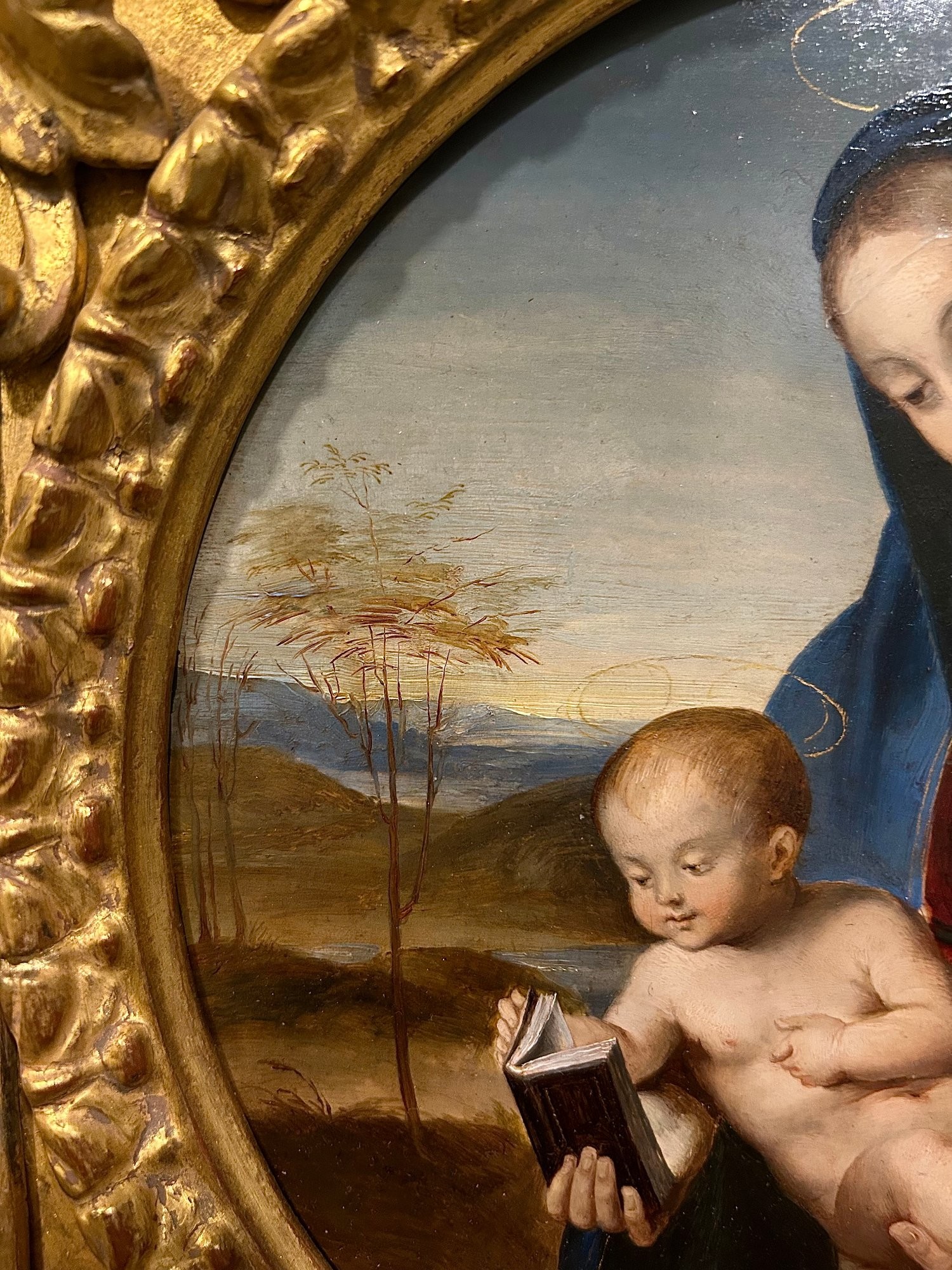
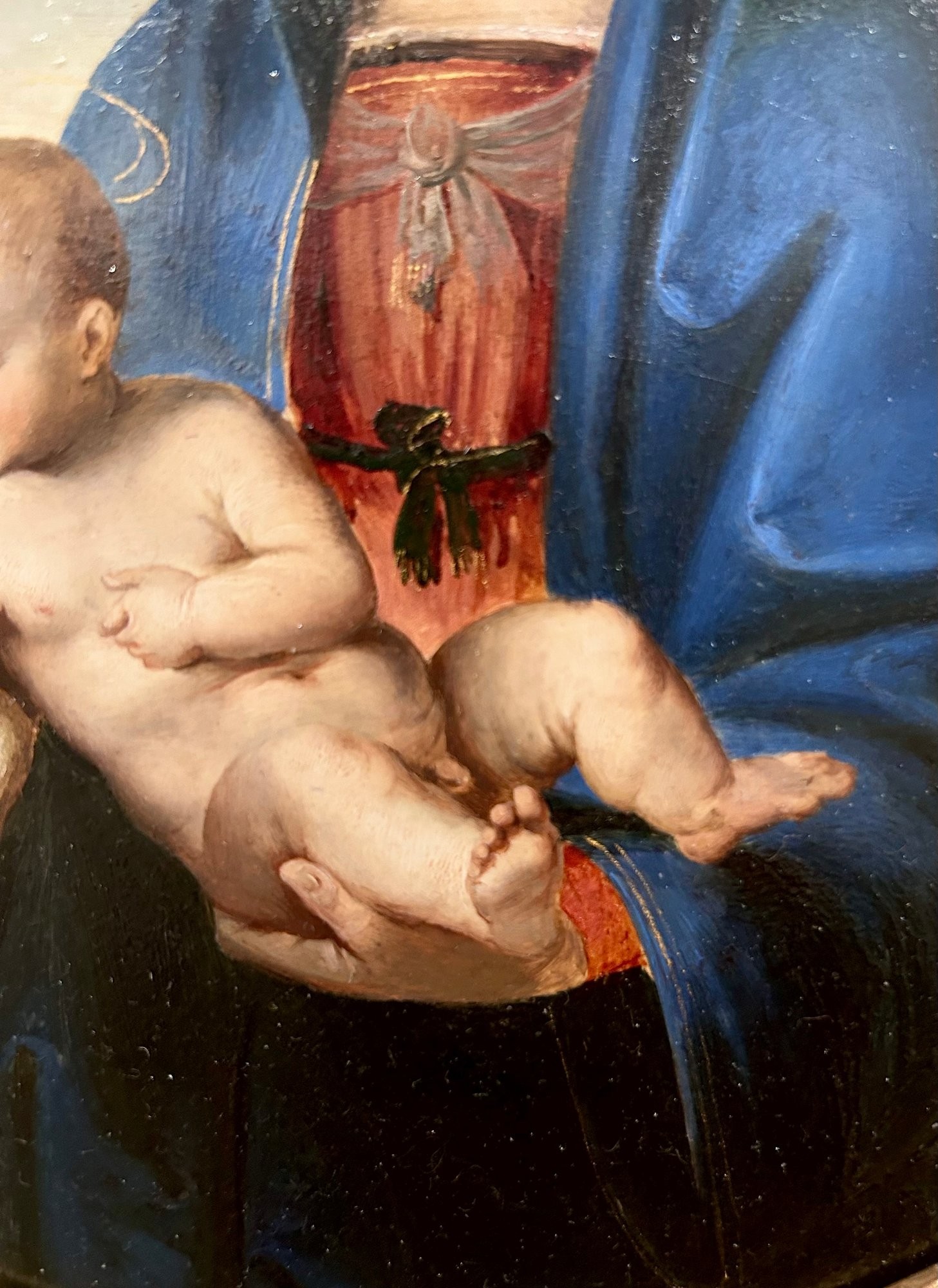
This religious tondo painting portrays an intimate moment between Madonna and Child. The Virgin is depicted with a thoughtful expression as she holds the curious Christ who is depicted engaging with the book in her hand. Wearing a red robe and cloaked in her signature blue mantle, Mary is portrayed against the vast yet tranquil landscape, whose snow-capped peaks stretch out beyond the figures.
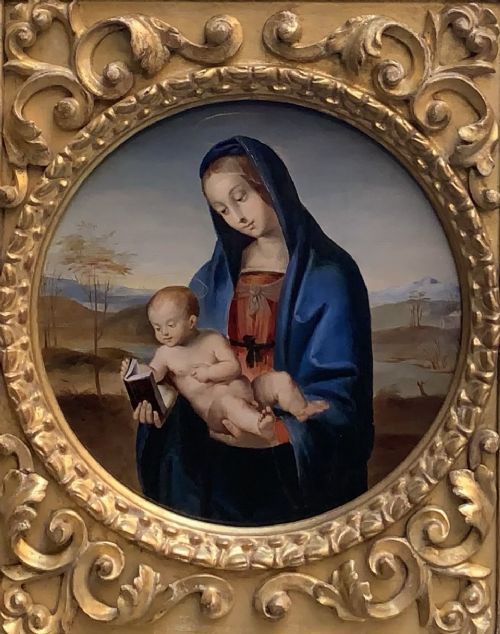
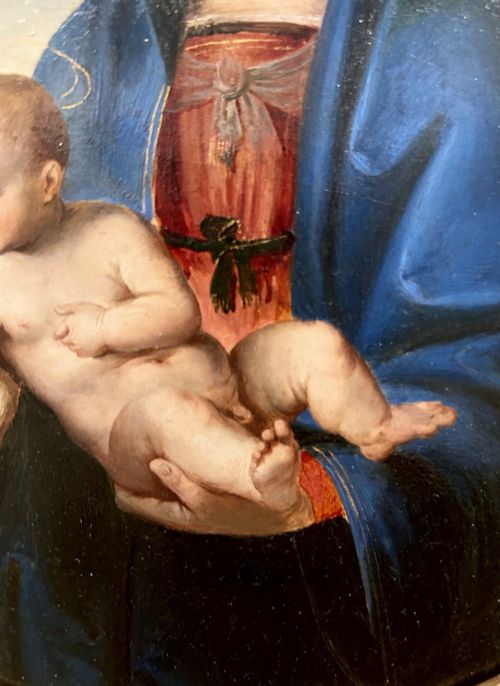
In 1881, when the painting was moved to canvas, it was discovered that in the original version the Madonna contemplated a pomegranate instead of a book-  a symbol of the Passion, the short period before Jesus’ death as well as resurrection and eternal life often found in devotional paintings of the Virgin and Child. The use of the vertical figures of the Madonna and the horizontal lines of the landscape creates a stability against the round composition. Simultaneously, the gentle bowing of the Madonna’s head and the curving of her hand, as she holds the twisting Christ compliments the circular form.
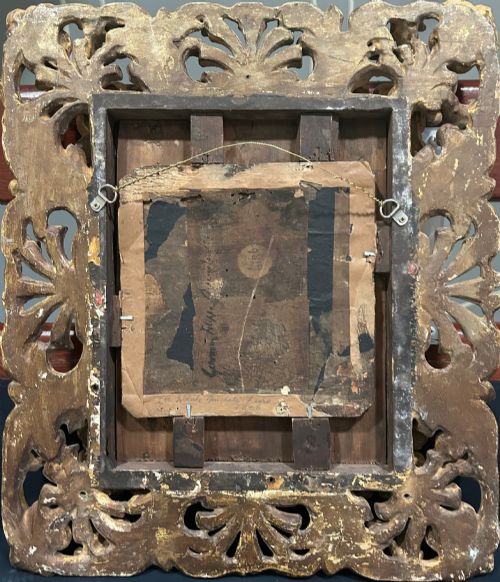
Raphael

Raphaello Sanzio da Urbano, commonly known as Raphael was an Italian painter and architect of the High Renaissance, who worked in the period of the masters such as Leonardo Da Vinci and Michelangelo. 
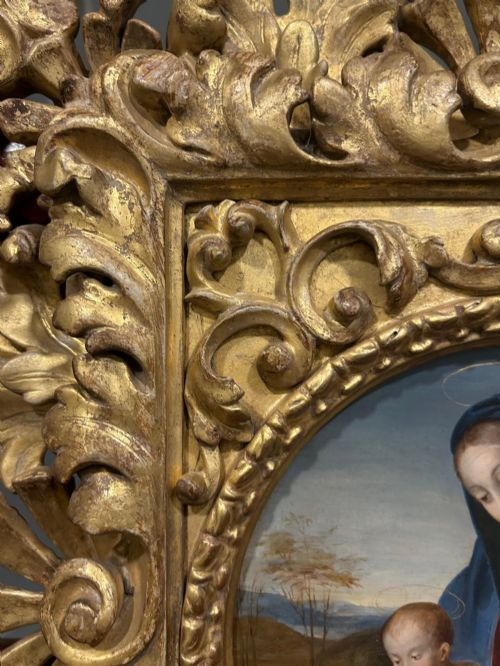
Raphael grew up around the craft, with his father Giovanni Santi, being the court painter to Federico da Montefeltro the Duke of Urbino, a small but highly cultured hilltop town in the Italian region of Marche. Upon his father’s death Raphael, aged eleven took over his father’s workshop while simultaneously training in the workshop of Pietro Perugino, becoming a trained master by 1500, aged seventeen.
Raphael, after working for a number of Northern Italian cities in 1508, moved to Rome at the invitation of Pope Julius II to work on the Apostolic Palace at the Vatican. It was in Rome that Raphael began to work as an architect, being commissioned for the new Papal Basilica of St Peter after the death of Bramante.
Raphael was still at the peak of his success when he died in 1520 at the age of 37. 

His work is highly praised for its clarity of form, ease of composition and visual achievement of the Neoplatonic ideal of human grandeur, as revised from classical antiquity, and as first described by biographer Giorgio Vasari was categorised by three phases and subsequent styles. Firstly, his Umbrian years, then a brief period of four years in which he absorbed the styles and tradition of Florence, followed by a triumphant twelve years in Rome, working for two popes and their close associates. Raphael was extremely influential in his lifetime, though outside of Rome he was mostly known for his collaborative printmaking.

Museums

The National Gallery, London

The Louvre, Paris Uffizi gallery, Florence

The Metropolitan Museum, New York

Rijksmusum, Amsterdam

Palazzo Pitti, Florence

Physical Dimensions
Height
20.5cm (8.07")
Width
20.5cm (8.07")
Declaration

Darnley Fine Art has dated this Conestabile Madonna Oil Painting to the 16th Century.

Reference Numbers
Sellingantiques Reference
SA1226452
Description
Oil on poplar panel

Image size: 8 x 8 inches (20.5 x 20.5 cm)

Ornate gilt frame

Conestabile Madonna

Made in compositional likeness to Raphael’s last painting, Conestabile Madonna, now held in the Hermitage Museum of St Petersburg, the work was originally painted for the Conestabile Della Staffa family of Perugia before it was then gifted to the Russian Tzaress, Maria Alexandrovna in 1871.

This religious tondo painting portrays an intimate moment between Madonna and Child.

The Virgin is depicted with a thoughtful expression as she holds the curious Christ who is depicted engaging with the book in her hand.
Darnley Fine Art

Wearing a red robe and cloaked in her signature blue mantle, Mary is portrayed against the vast yet tranquil landscape, whose snow-capped peaks stretch out beyond the figures.

fig 1. A circular oil painting depicting the Virgin Mary in a blue cloak holding the Christ Child, enclosed within an ornate rectangular carved giltwood frame.
fig 1. After Raphael Conestabile Madonna

In 1881, when the painting was moved to canvas, it was discovered that in the original version the Madonna contemplated a pomegranate instead of a book-  a symbol of the Passion, the short period before Jesus’ death as well as resurrection and eternal life often found in devotional paintings of the Virgin and Child. The use of the vertical figures of the Madonna and the horizontal lines of the landscape creates a stability against the round composition. Simultaneously, the gentle bowing of the Madonna’s head and the curving of her hand, as she holds the twisting Christ compliments the circular form.

fig 2. A circular oil painting depicting the Virgin Mary in a blue cloak holding the Christ Child, enclosed within an ornate rectangular carved giltwood frame.
fig 2. After Raphael Conestabile Madonna

Raphael

Raphaello Sanzio da Urbano, commonly known as Raphael was an Italian painter and architect of the High Renaissance, who worked in the period of the masters such as Leonardo Da Vinci and Michelangelo. 

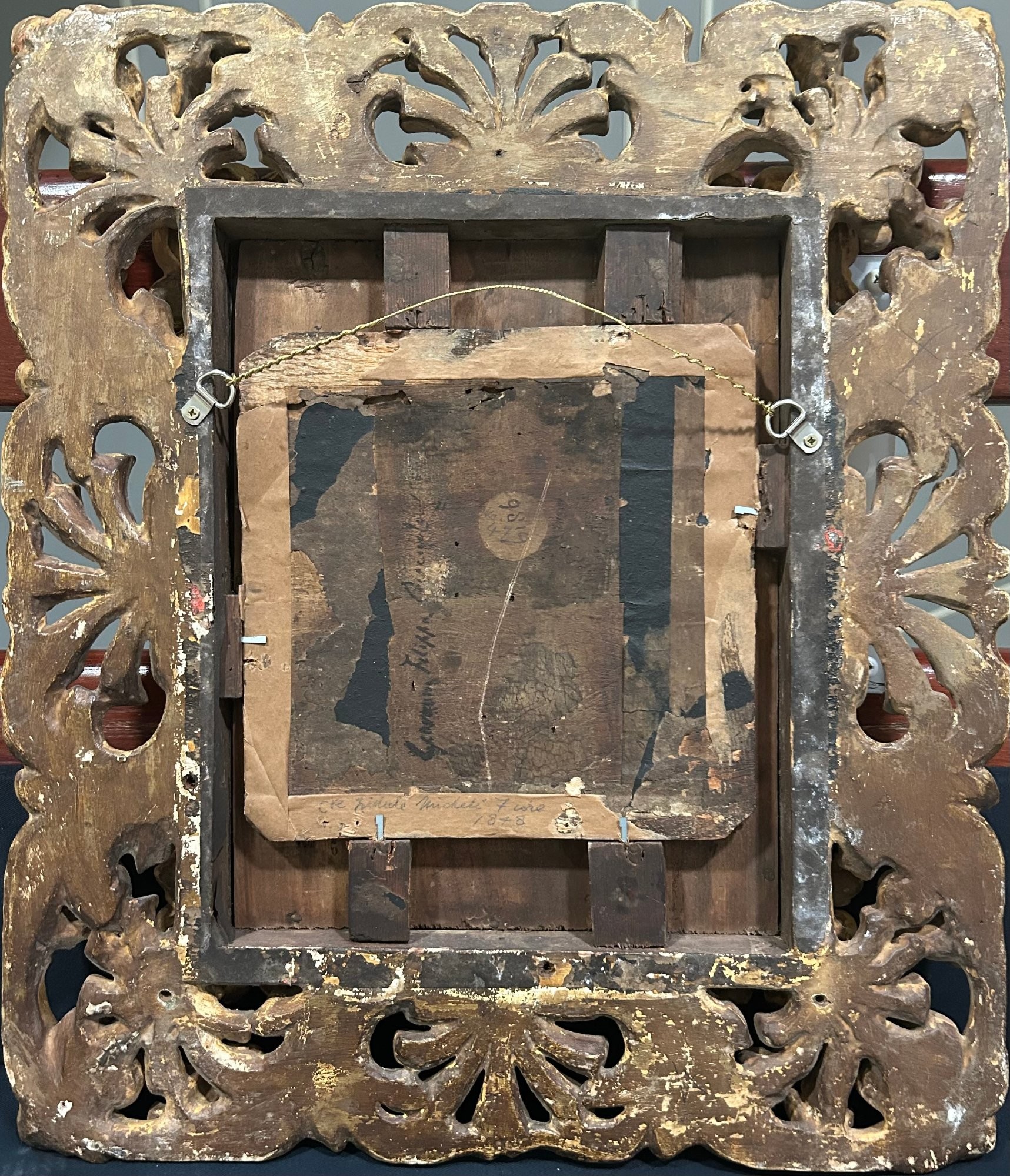
fig 3. A circular oil painting depicting the Virgin Mary in a blue cloak holding the Christ Child, enclosed within an ornate rectangular carved giltwood frame.
fig 3. After Raphael Conestabile Madonna

Raphael grew up around the craft, with his father Giovanni Santi, being the court painter to Federico da Montefeltro the Duke of Urbino, a small but highly cultured hilltop town in the Italian region of Marche. Upon his father’s death Raphael, aged eleven took over his father’s workshop while simultaneously training in the workshop of Pietro Perugino, becoming a trained master by 1500, aged seventeen.

fig 4. A circular oil painting depicting the Virgin Mary in a blue cloak holding the Christ Child, enclosed within an ornate rectangular carved giltwood frame.
fig 4. After Raphael Conestabile Madonna

Raphael, after working for a number of Northern Italian cities in 1508, moved to Rome at the invitation of Pope Julius II to work on the Apostolic Palace at the Vatican. It was in Rome that Raphael began to work as an architect, being commissioned for the new Papal Basilica of St Peter after the death of Bramante.

fig 5. A circular oil painting depicting the Virgin Mary in a blue cloak holding the Christ Child, enclosed within an ornate rectangular carved giltwood frame.
fig 5. After Raphael Conestabile Madonna

Raphael was still at the peak of his success when he died in 1520 at the age of 37. 

His work is highly praised for its clarity of form, ease of composition and visual achievement of the Neoplatonic ideal of human grandeur, as revised from classical antiquity, and as first described by biographer Giorgio Vasari was categorised by three phases and subsequent styles. Firstly, his Umbrian years, then a brief period of four years in which he absorbed the styles and tradition of Florence, followed by a triumphant twelve years in Rome, working for two popes and their close associates. Raphael was extremely influential in his lifetime, though outside of Rome he was mostly known for his collaborative printmaking.

Museums

The National Gallery, London

The Louvre, Paris Uffizi gallery, Florence

The Metropolitan Museum, New York

Rijksmusum, Amsterdam

Palazzo Pitti, Florence

Height
20.5cm (8.07")
Width
20.5cm (8.07")
Date of Manufacture

Darnley Fine Art has dated this Conestabile Madonna Oil Painting to the 16th Century.

Reference Numbers
Sellingantiques Ref
SA1226452
Darnley Fine Art
Sellingantiques verified Since Jul 2026
Dealer Profile

You can view the stock and full dealer information on the Darnley Fine Art Profile Page
PDF SHARE
SAVE
A circular oil painting depicting the Virgin Mary in a blue cloak holding the Christ Child, enclosed within an ornate rectangular carved giltwood frame.
1 / 7
Archive I A circular oil painting depicting the Virgin Mary in a blue cloak holding the Christ Child, enclosed within an ornate rectangular carved giltwood frame.

After Raphael Conestabile Madonna
Archive II A circular oil painting depicting the Virgin Mary in a blue cloak holding the Christ Child, enclosed within an ornate rectangular carved giltwood frame. View II
Archive III A circular oil painting depicting the Virgin Mary in a blue cloak holding the Christ Child, enclosed within an ornate rectangular carved giltwood frame. View III
Archive IV A circular oil painting depicting the Virgin Mary in a blue cloak holding the Christ Child, enclosed within an ornate rectangular carved giltwood frame. View IV
Archive V A circular oil painting depicting the Virgin Mary in a blue cloak holding the Christ Child, enclosed within an ornate rectangular carved giltwood frame. View V
Archive VI A circular oil painting depicting the Virgin Mary in a blue cloak holding the Christ Child, enclosed within an ornate rectangular carved giltwood frame. View VI
Archive VII A circular oil painting depicting the Virgin Mary in a blue cloak holding the Christ Child, enclosed within an ornate rectangular carved giltwood frame. View VII
Enlarged Archival View
Telephone 0207 379 0499
Location
2-4 Cecil Court
London
WC2N 4HE
United Kingdom

Opening Times
Monday to Saturday: 10:30 - 5:30
(excluding Bank Holidays)
Dealer Profile Page sellingantiques.co.uk/dfa
Verified Since Jul 2026
Items For Sale 76
Darnley Fine Art
Verified Since Jul 2026
View Dealer Info
Location: 2-4 Cecil Court, London, WC2N 4HE, United Kingdom, , Opening Times, Monday to Saturday: 10:30 - 5:30, (excluding Bank Holidays)
Verified
Jul 2026
For Sale
76
A circular oil painting depicting the Virgin Mary in a blue cloak holding the Christ Child, enclosed within an ornate rectangular carved giltwood frame.
After Raphael Conestabile Madonna
Ref: SA1226452
A circular oil painting depicting the Virgin Mary in a blue cloak holding the Christ Child, enclosed within an ornate rectangular carved giltwood frame.
Detail View 1
Detail View 2
Detail View 3
Detail View 4
Detail View 5
Detail View 6
Archival Detail
Every single antique dealer on our platform is individually approved by our internal team. We verify their professional trade history, ethical standards, and photographic quality to ensure a secure, high-standard buying environment. Upon joining, every dealer agrees to a strict 9-point code of conduct. While issues can occasionally arise, our dealers typically resolve them swiftly and directly with the buyer. In fact, since our founding in 2002, Sellingantiques has only had to step in to help resolve an issue on roughly five occasions—a true testament to the quality of our dealers and their dedication to your happiness.
Our dealers are highly experienced in packing and shipping fragile, high-value antiques. Because you are in direct contact with the dealer, you will be able to easily go through all available shipping and insurance options together to ensure your item arrives safely.
Antiques are the ultimate green purchase. By choosing historical pieces over newly manufactured goods, you completely eliminate the carbon footprint of modern mass production while preserving exceptional, timeless craftsmanship.

The Conestabile Madonna originates from a circa 1504 artwork executed by Italian High Renaissance master Raphael, depicting the Virgin Mary holding the Infant Christ reading a prayer book.

These pieces typically feature oil paint applied to wooden panels or canvas, enclosed within hand-carved timber frames finished with gold leaf over gesso.

Identification relies on examining timber frame construction, paint craquelure patterns, brushwork technique, and natural oxidisation on the gilded frame reverse.

Position the artwork as a central focal point above a console table or mantelpiece, contrasting its intricate gilt carving against neutral, contemporary wall surfaces.

Dust the gilded frame gently using a dry, soft-bristled brush, avoiding liquid cleaners or moisture that can damage the delicate gold leaf and underlying gesso.
items
Add keywords to the filter
Price
£100
£250000
Era
Movements
Material
Origin
Stock Location
Freshness
Online Payments
Categories