
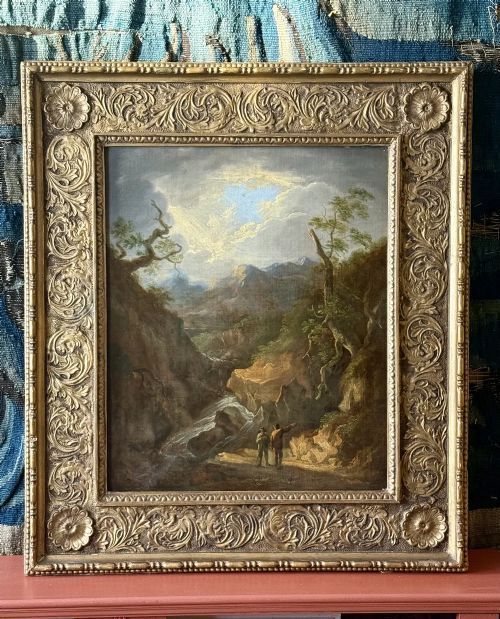
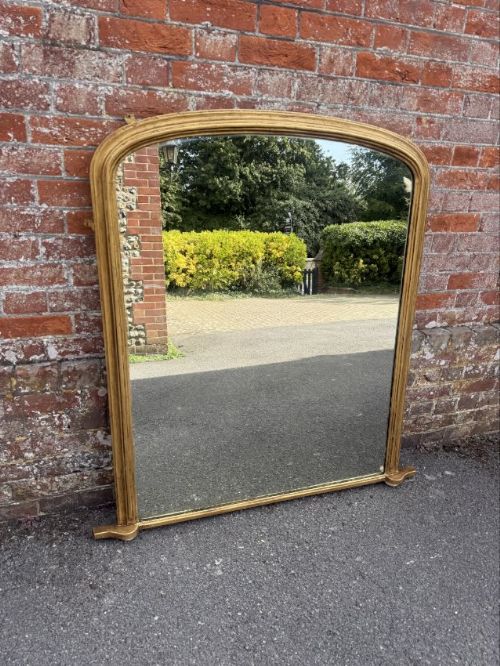
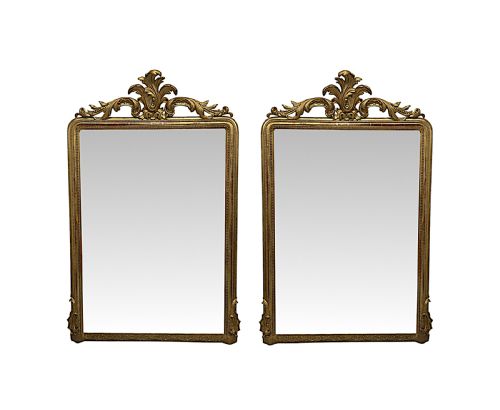
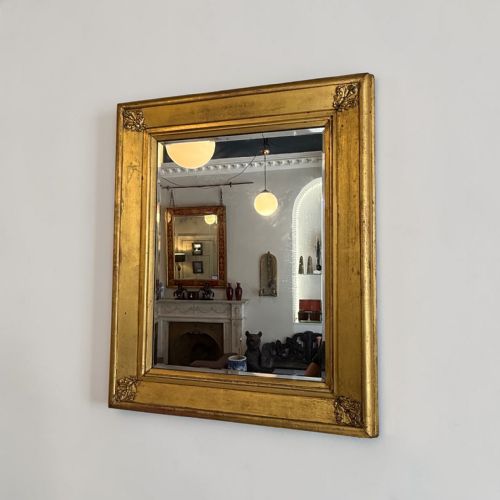
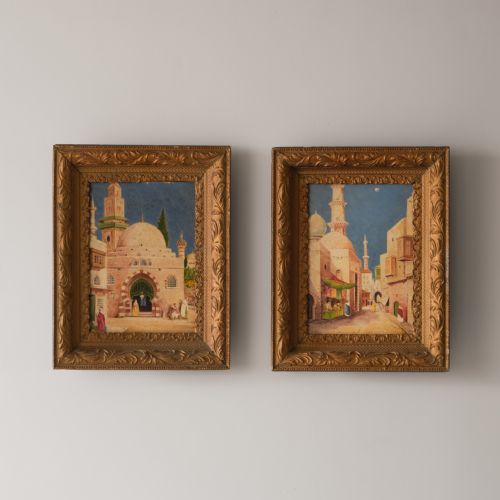


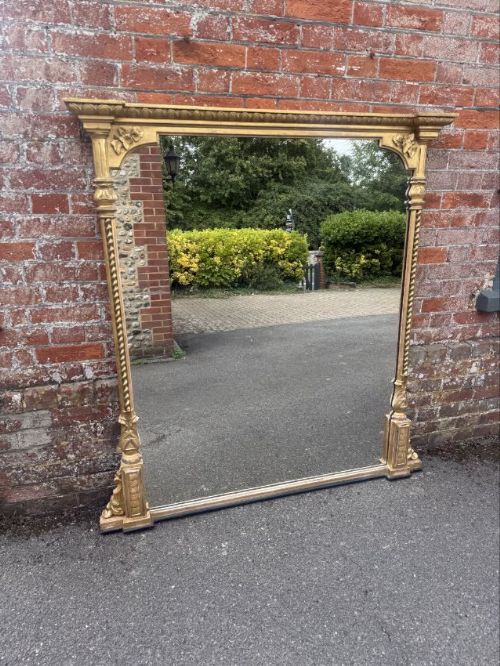
Gold Leaf Carved Frame
A gold leaf carved frame brings warmth and historic depth to a room, holding centuries of craftsmanship within its gilded borders.
Gold Leaf Carved Frame
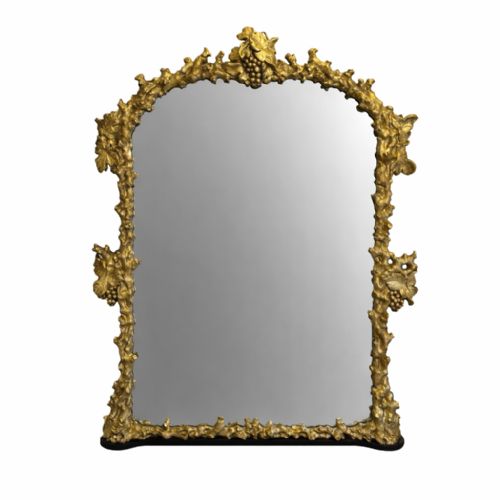
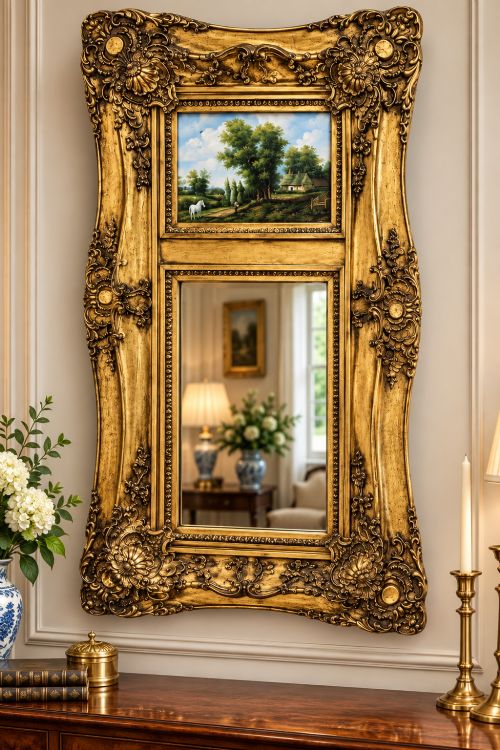
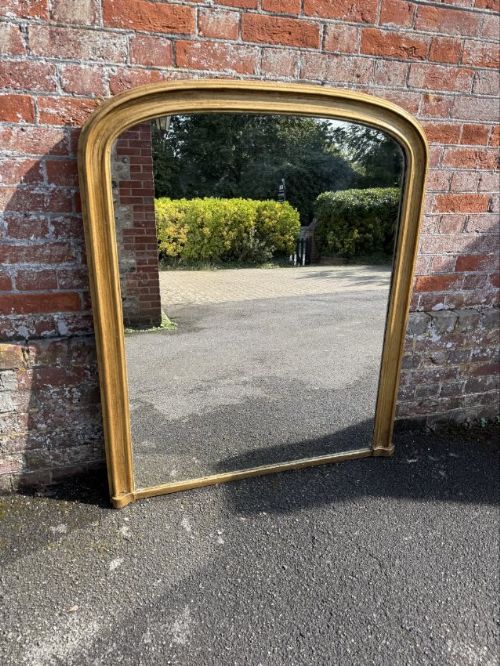
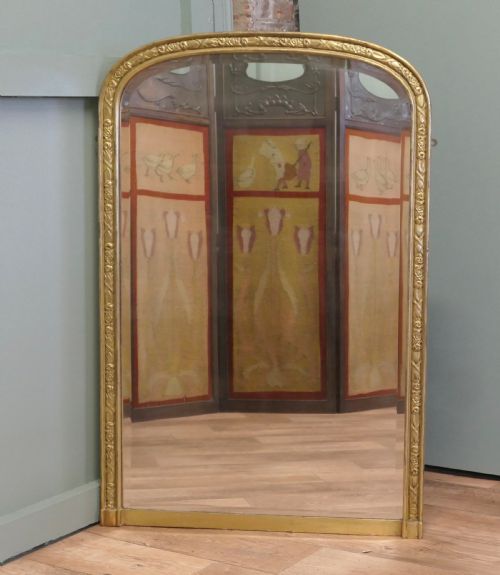
When you search for a gold leaf carved frame, you encounter substantial overmantle mirrors, grand wall looking-glasses, and decorative picture surrounds dating from the eighteenth century through to the Edwardian era. English and French workshops dominate the selection, offering substantial proportions designed to anchor a formal interior.
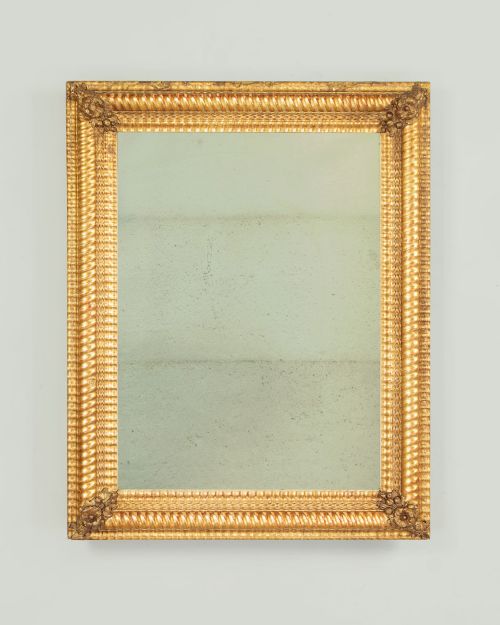
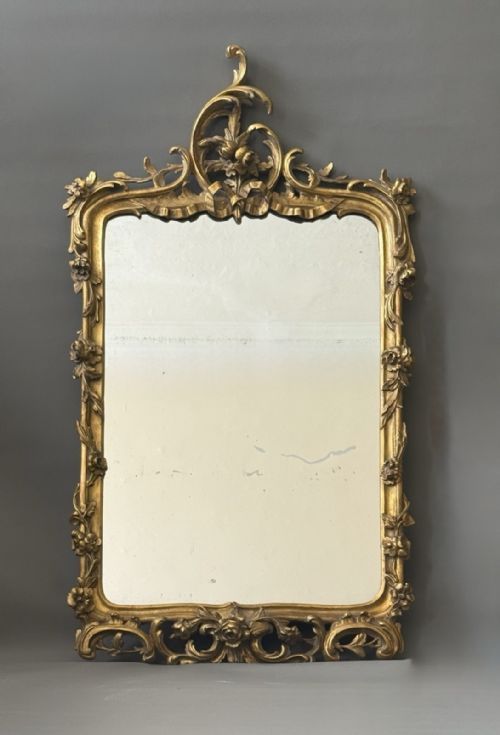
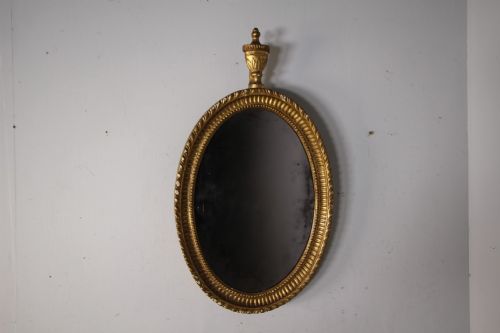
The nineteenth-century pieces on this page lean heavily towards architectural overmantle mirrors with rope twist, ribbon crest, and acanthus leaf decorations. Earlier eighteenth-century examples present simpler oval and rectangular geometries built from walnut and parcel gilt, alongside French Rococo designs.
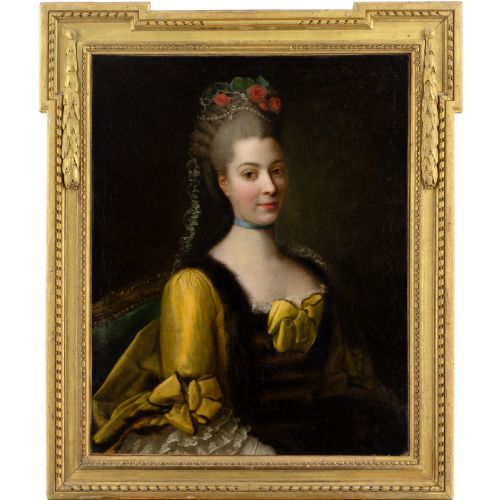
Beyond mirrors, the selection includes framed oil paintings and upholstered seating with carved wooden rails. These items reflect classical styles such as Regency, Louis XVI, and Rococo Revival, each piece shaped by the aesthetic demands of its period.
Materials and construction methods
Carved timber forms the structural core of these items, using woods such as pine, walnut, and oak to create the underlying shape. Gesso, a mixture of chalk and binder, is applied over the wood to build up smooth surfaces for detailed ornamentation.
Fine layers of gold leaf are then laid over a base preparation, often water-gilded or oil-gilded to achieve a luminous metallic finish. Composition ornament, a mouldable paste pressed into shape, frequently supplements hand-carved wooden details on nineteenth-century mouldings.
Factors of quality and craftsmanship
The distinction between standard items and the finest work lies in the depth and sharpness of the hand-carved wood compared to moulded composition relief. Crisp undercut foliage and distinct rope twists indicate skilled hand labour rather than mass production.
The condition and age of the glass plate also define the piece, with original mercury glass and foxed silvering commanding greater interest than modern replacement mirrors. The integrity of the underlying gesso and the warmth of the original gilding complete the evaluation.
The Gold Leaf Carved Frame Glossary
- Giltwood
- Wood that has been coated with gold leaf or gold paint. This finish provides the characteristic metallic sheen seen on antique mirrors and frames.
- Gesso
- A plaster-like mixture applied to wood frames to create a smooth surface for carving and gilding. It allows for intricate relief ornamentation.
- Overmantle mirror
- A large mirror designed to hang above a fireplace mantelpiece. These pieces often feature architectural columns or arched tops.
- Foxed glass
- Mirror glass that has developed spots and discolouration due to age and oxidisation. It creates a soft, mottled reflection preferred by collectors.
- Composition
- A mouldable mixture of whiting, resin, glue, and oil pressed into decorative shapes. It was widely used for ornamentation on nineteenth-century frames.
Gold Leaf Carved Frame: Frequently Asked Questions
How do I hang a heavy overmantle mirror?
These substantial frames require secure attachment directly into wall studs using heavy-duty brackets and fixings suited to the weight of the timber and glass.
Professional installation is recommended to ensure the wall structure safely supports the substantial load of a nineteenth-century mirror.
What is the difference between gesso and carved wood?
Carved wood involves shaping the timber directly with chisels and gouges to create three-dimensional motifs. Gesso is a plaster layer applied over the base to create a smooth ground for gilding or shallow decorative relief.
Finer antique pieces rely primarily on hand carving, while later examples often use moulded composition pressed over gesso.
How should I clean a gilded frame?
Dust the surface gently with a soft, dry brush to remove particles without disturbing the delicate gold leaf layer. Avoid water, solvents, and modern cleaning sprays entirely.
Moisture can penetrate the gesso and cause the historic gilding to flake or lift away from the timber beneath.
Are original mirror plates common?
Many surviving pieces retain their original glass plates, often showing signs of age such as foxing, light scratches, and subtle distortion. These characteristics confirm the period authenticity of the mirror.
Clear, unblemished glass in an antique frame frequently indicates a later nineteenth- or twentieth-century replacement.