
19th Century Porcelain Ornaments
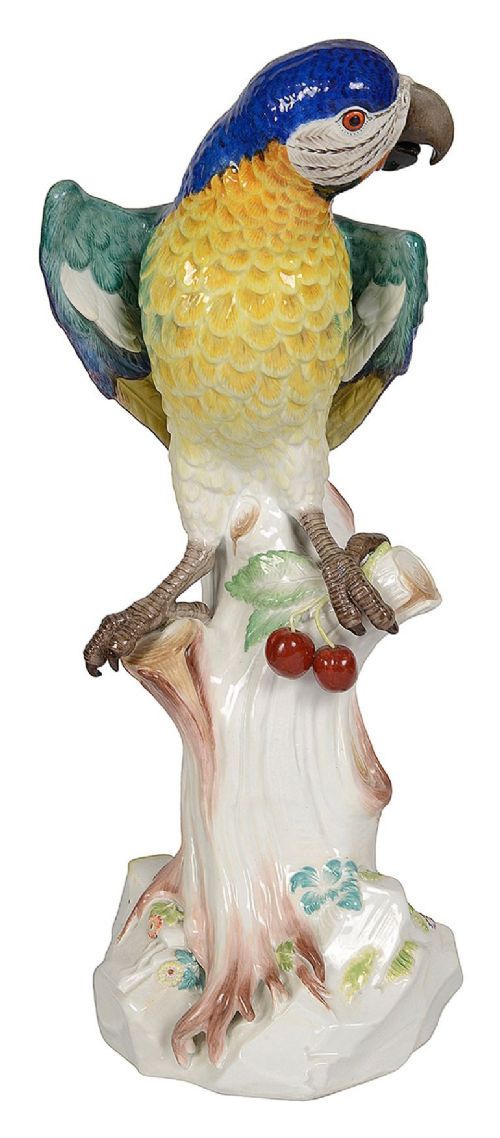
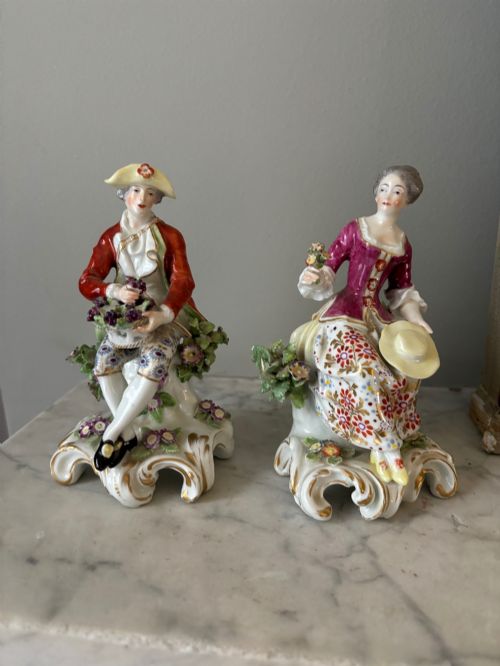
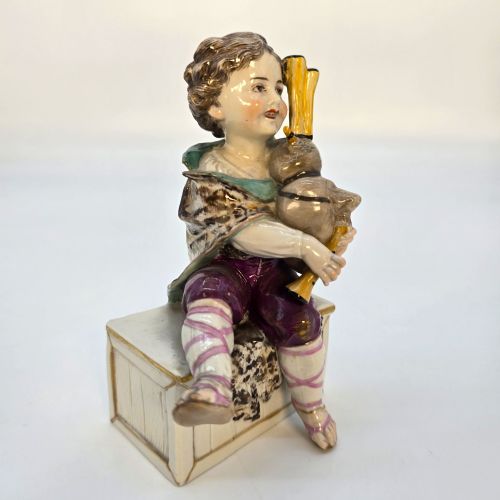
These 19th century porcelain ornaments bring Victorian rooms alive with birds, figures, and animals.
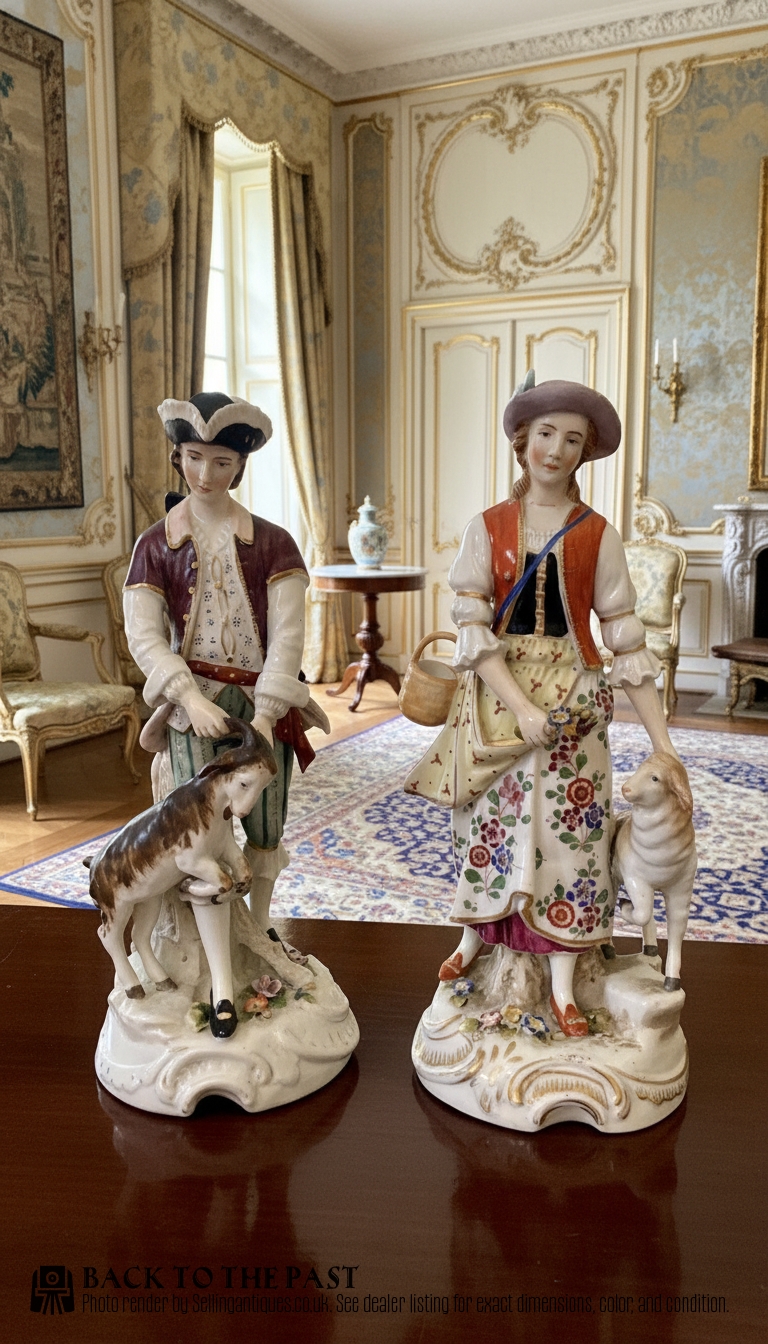
19th Century Porcelain Ornaments
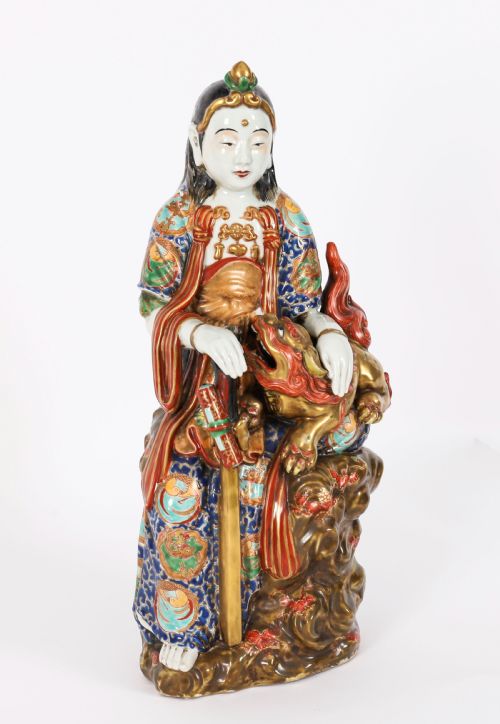
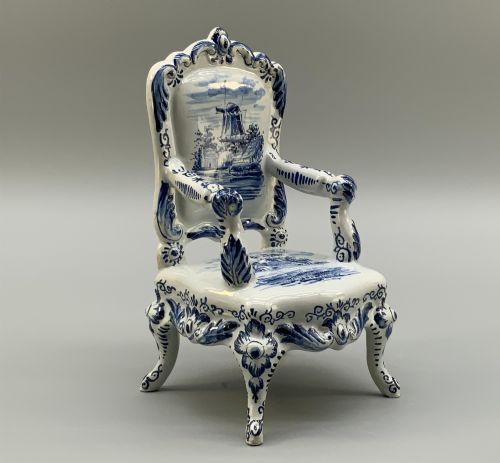
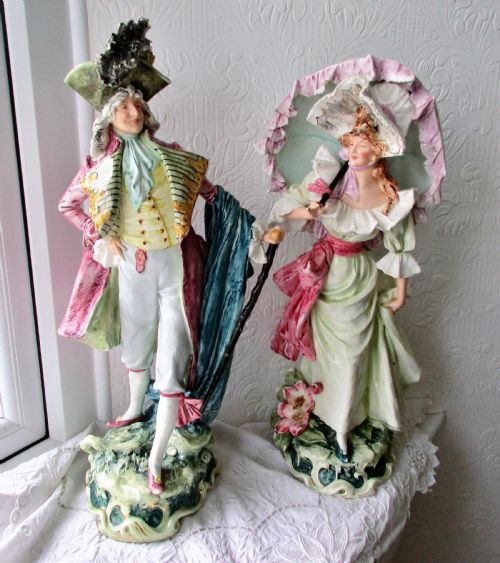
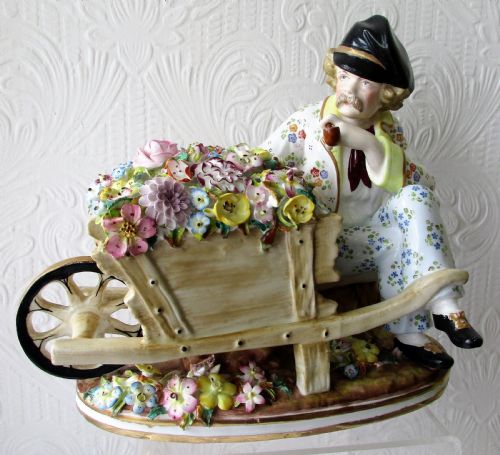
When searching for 19th century porcelain ornaments, a buyer encounters a broad array of decorative objects including figurines, spill vases, and sculptural groups. These pieces stem from various periods such as the Victorian era, Georgian times, and the Regency period, capturing the domestic and artistic tastes of the nineteenth century.
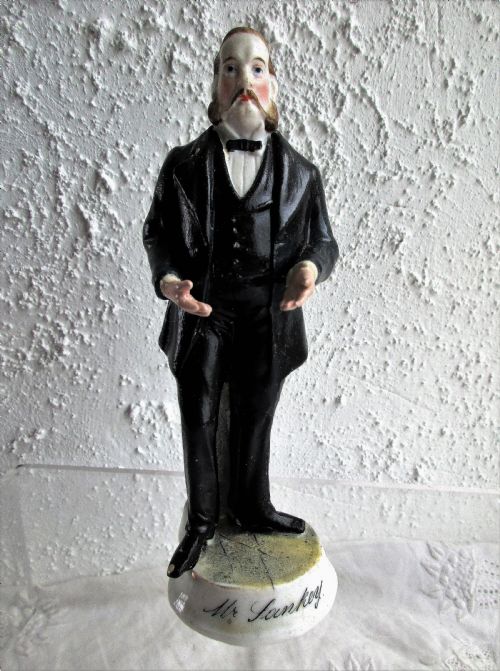
The inventory on this page ranges widely in origin and style, encompassing English factories, German manufactories like Meissen and Volkstedt, French makers such as Samson of Paris, and Japanese Kutani works. Figurines of animals, human figures, and architectural cottage models form the core of the selection available to collectors.
How they were made
Makers utilised ceramic materials such as porcelain, hard-paste porcelain, earthenware, and pottery to form the bodies of these decorative objects. Techniques combined moulded or cast clay finished with smooth glazes, which provided a durable surface for subsequent painting.
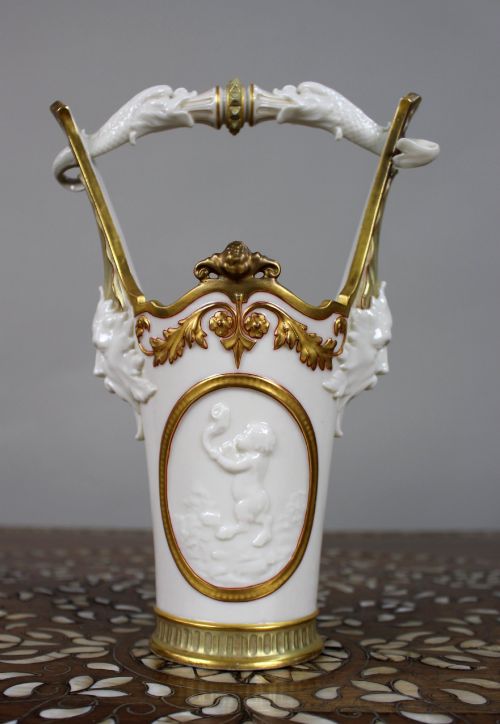
Decoration relied heavily on applied enamel colours, gold leaf, and gilding to highlight details on figures, foliage, and garments. Skilled hands applied these metallic and pigment accents before a final firing set the finish.
19th Century Porcelain Ornaments Retail Price Guide 2026
Typical asking prices for 19th century porcelain ornaments among the pieces listed under this phrase on Sellingantiques today, from the lower quarter to the upper quarter. They describe what is for sale here now, not the wider market.
German porcelain spitz dog lamps stand ready to illuminate Victorian writing desks.
What varies in quality
The standard of modeling separates the finer sculptural ornaments from simpler production pieces, seen in the sharpness of facial expressions, drapery folds, and animal anatomy. Master modelers at factories like Meissen or Royal Worcester achieved a lifelike presence that lesser workshops missed.
The application of paint and gilding also dictates the grade of an ornament, with delicate brushwork and rich gold leaf indicating superior studio execution. Pieces retaining crisp, hand-painted details and clean glaze surfaces represent the upper tier of the range.
Meissen·Royal Worcester·Volkstedt Rudolstadt Factory·Samson Paris·John Bevington·Thomas Parr·Bloor Derby·Letu & Mauger
The 19th Century Porcelain Ornaments Glossary
- Hard-paste porcelain
- A dense, durable ceramic composed of kaolin and petuntse fired at high temperatures. It resists scratching and forms the body of many continental figures.
- Spill vase
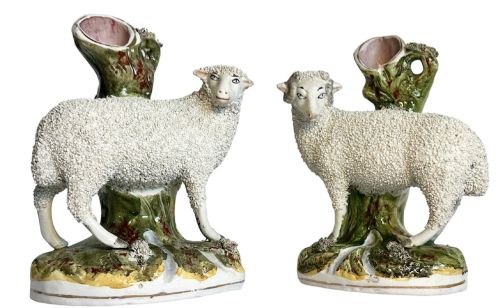
- A small hollow cylindrical vessel designed to hold taper spills for lighting candles or fires. Staffordshire potters frequently shaped these as animals or cottages.
- Gilding
- The application of gold leaf or powdered gold onto the ceramic surface for decorative accent. This technique adds metallic highlights to clothing, bases, or decorative borders.
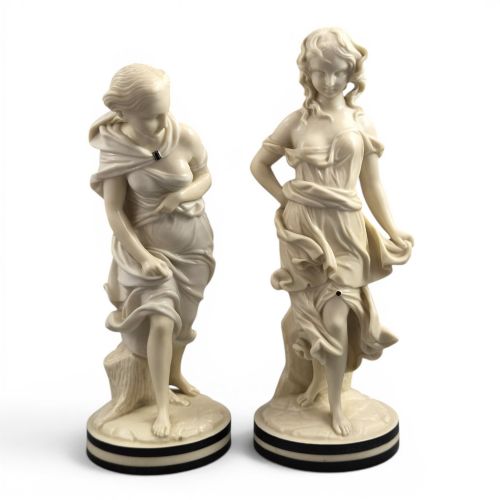
- Parian ware
- A type of fine unglazed biscuit porcelain developed in the Victorian era to imitate white marble. It found frequent use for portrait busts and classical sculptures.
- Enamel
- Vitrified glass paste applied as colour over the glaze and fired at a lower temperature. It provides the vibrant hues seen on garments and natural elements.
19th Century Porcelain Ornaments: Frequently Asked Questions
What are porcelain ornaments?
Porcelain ornaments are decorative ceramic objects made during the nineteenth century to adorn mantelpieces, tables, and cabinets. They include modeled figures, animals, vases, and architectural models.
These pieces reflect the manufacturing styles and aesthetic preferences of English, French, German, and Asian kilns during the Victorian and preceding eras.
How were spill vases used?
Spill vases served a practical function in nineteenth-century homes by holding thin rolled paper spills used to transfer fire from the hearth to candles or pipes. Their hollow tubes kept these tapers ready near the fireplace.
Potters combined this utility with figural designs, placing vases beside pairs of animals or miniature cottages to entertain the eye.
How do I identify a Meissen piece?
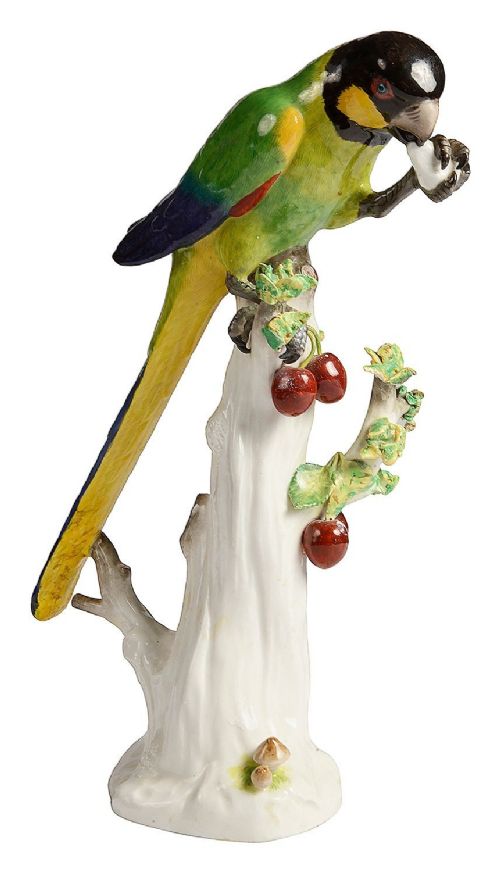
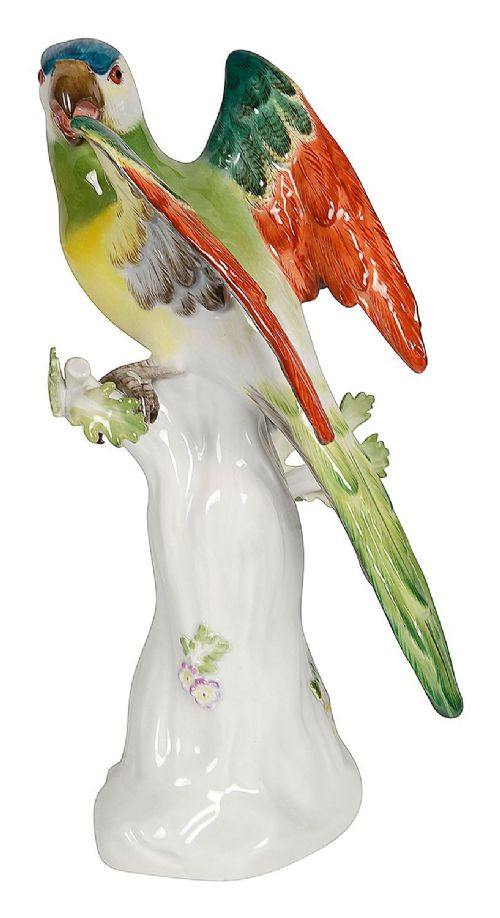
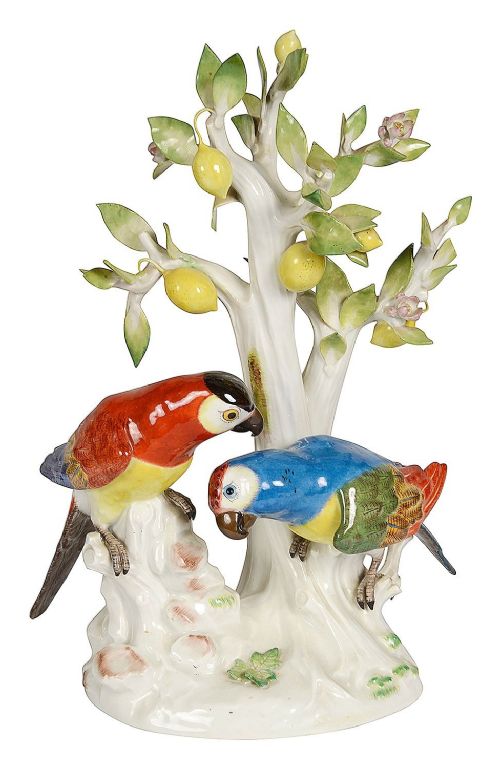
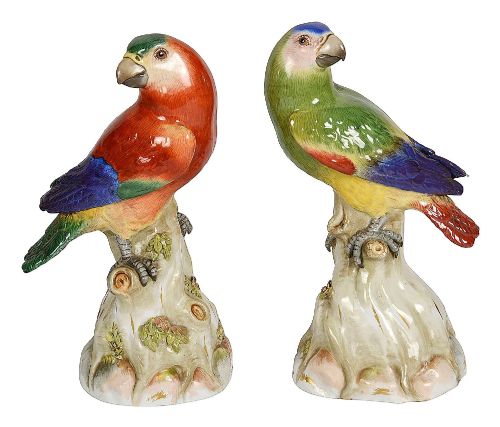
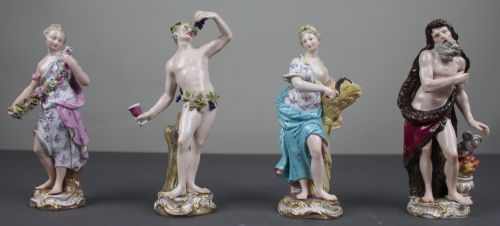
Meissen pieces often feature detailed modeling, such as birds perched on branches or complex mythological groups, produced by the German manufactory. Collectors look at the style of the sculpture and the finish of the porcelain body.
Many examples date to the nineteenth century, showing the refined enamel painting and sculptural ambition typical of the works.
What is Parian ware?
Parian ware is a type of fine white porcelain that resembles carved marble, introduced during the Victorian period. It lacks a glossy glaze, which allows the matte surface to catch the light and show sculptural detail.
Sculptures and portrait figures utilised this material to achieve a classical, monumental appearance on a domestic scale.