

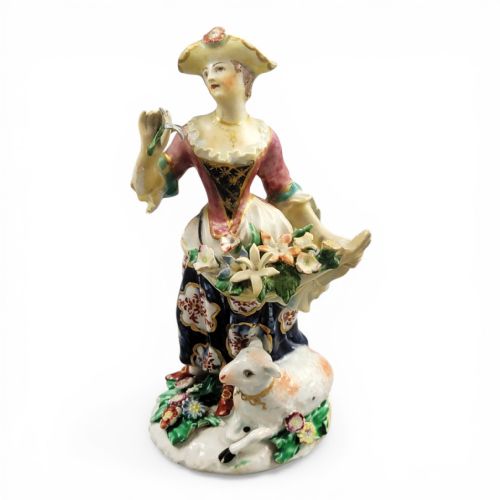


Antique Ceramic Shepherdess
These porcelain figures and candlesticks bring pastoral pastoral charm to a room, offering the classic antique ceramic shepherdess in soft-paste, hard-paste, and bisque ceramic.
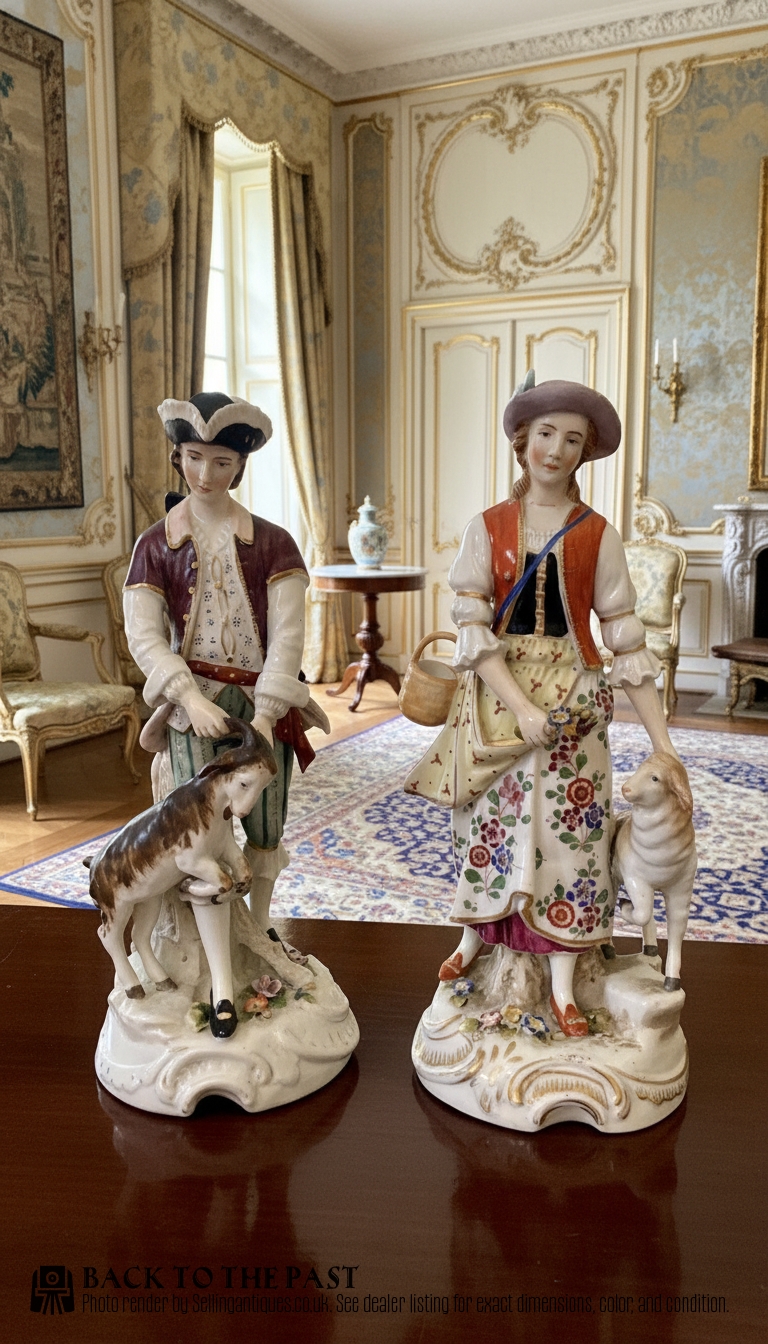
Antique Ceramic Shepherdess
An antique ceramic shepherdess depicts a pastoral figure, often accompanied by sheep, lambs, or flowers in sculptural or functional forms such as candlesticks and statuettes. These pieces appear across Georgian, 18th century, and 19th century periods, reflecting Rococo, Victorian, and Art Nouveau styles.
The versions most commonly met on this page span English factories from the Georgian era alongside later continental European revivals from German and French makers. Buyers encounter single figures, matched pairs, and larger figural groups modelled with pastoral motifs.
Forms range from early soft-paste porcelain figures with delicate enamel painting to later bisque sculptures and gilt-accented porcelain candlesticks. Each piece captures pastoral themes through traditional ceramic modelling and hand-painted detail.
Materials and production methods
Potters shaped these figures using soft-paste porcelain, hard-paste porcelain, and unglazed bisque porcelain, often strengthening delicate compositions with internal supports during firing. Early English examples rely on soft-paste bodies that respond to high heat with distinct translucency.
Makers applied enamel colours and gold leaf highlights by hand before secondary low-temperature firings fixed the pigments to the glaze. Gilt and enamel details bring definition to garments, foliage, and the accompanying animals.
Even porcelain sheep need pastoral company, which explains why lonely shepherdesses rarely travel without a trusty lamb.
Judging quality and execution
The application of gilding and the delicacy of applied floral elements indicate the level of craftsmanship invested in the piece. Well-preserved painted surfaces and clean potting define the upper tier of these figures.
Derby Porcelain·Bow Porcelain·Samson·Sitzendorf·Bloor Derby·Vion and Baury·Royal Dux
The Antique Ceramic Shepherdess Glossary
- Soft-paste porcelain
- A glassy ceramic composition fired at lower temperatures than hard-paste porcelain, common in early English factories. It produces a warm, slightly creamy body under the glaze.
- Hard-paste porcelain
- A durable ceramic material containing kaolin and petuntse, fired at high temperatures. It resists scratching and presents a bright, vitrified surface.
- Bisque porcelain
- Unglazed ceramic fired to a matte, porous finish that resembles marble. It highlights fine sculptural detail without surface gloss.
- Enamel
- Vitreous pigments applied over the fired glaze and fixed in a muffle kiln. These colours provide the bright hues on garments and flowers.
- Gilt
- Gold or gold-coloured leaf applied to ceramic surfaces for decorative emphasis. It accentuates borders, bases, and raised details.
Antique Ceramic Shepherdess: Frequently Asked Questions
What periods do these figures come from?
The pieces span the Georgian era through the 19th century, including specific dates from the mid-18th century up to the 1930s. Georgian and Victorian examples predominate in the selection.
Continental factories continued producing revival styles throughout the 19th century, echoing earlier English models.
How do soft-paste and hard-paste porcelain differ?
Soft-paste porcelain contains glass and clay mixtures fired at lower temperatures, resulting in a softer body often found in early English pieces. Hard-paste porcelain uses kaolin fired at higher temperatures for a harder, whiter finish.
Both materials support detailed enamel painting and sculptural modelling.
Where were these figures made?
Production centres include English potteries such as Derby and Bow, alongside continental workshops in Germany and France. German factories like Sitzendorf and Dresden produced notable figural groups.
French makers including Samson and Vion and Baury also contributed significant pastoral sculptures.
How were these ceramic figures used?
These pieces served primarily as decorative mantel ornaments, table centrepieces, and figural candlesticks in period interiors. Their pastoral themes reflected a romanticised view of rural life popular among collectors.
Some examples formed parts of larger matched pairs or multi-figure groups.