

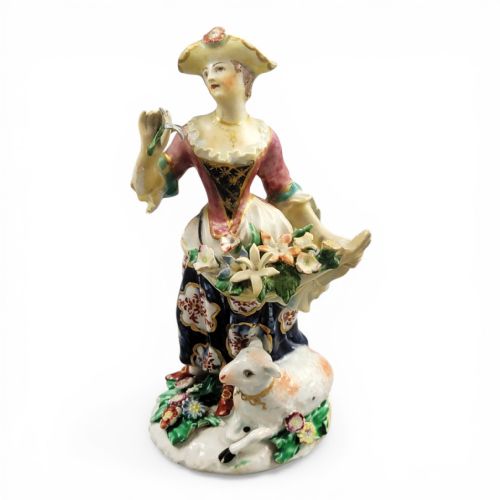


Antique Ceramic Shepherdess Figure
An antique ceramic shepherdess figure brings pastoral charm to a room, capturing rural life in porcelain and enamel.
Antique Ceramic Shepherdess Figure
An antique ceramic shepherdess figure represents pastoral ideals through porcelain sculpture, often depicting women alongside lambs, sheep, or floral garlands. These pieces range from eighteenth-century Georgian origins to nineteenth-century Continental interpretations.
Buyers frequently encounter nineteenth-century German and French reproductions or stylised pairs alongside earlier English figures. Forms include single statuettes, pairs, and figural candlesticks created in rococo and Victorian aesthetics.
English factories like Derby and Bow established early examples, while later nineteenth-century makers such as Samson, Sitzendorf, and Vion and Baury continued the pastoral tradition.
How they were made
Makers utilised soft-paste and hard-paste porcelain, shaping the clay into sculptural forms often finished with detailed enamel painting. Biscuit porcelain appears in French works, offering an unglazed, matte texture.
What varies in quality
The application of gilding and gold leaf indicates the tier of the piece, with finer works showing precise brushwork. Preservation of delicate extremities such as fingers, sheep, and floral garlands dictates desirability among collectors.
Derby Porcelain·Bow Porcelain·Samson Paris·Sitzendorf·Vion and Baury·Royal Dux
The Antique Ceramic Shepherdess Figure Glossary
- Soft-paste porcelain
- An artificial ceramic body composed of clay and glass frit, fired at lower temperatures than hard-paste porcelain. It produces a warm, slightly translucent glaze.
- Hard-paste porcelain
- A true ceramic composed of kaolin and petuntse, fired at high temperatures to create a durable, vitreous body. It resists scratching and holds bright enamel colours.
- Enamel
- Opaque vitreous pigments applied to the porcelain surface and fired to fuse with the glaze. It provides the vibrant colours seen on garments and flowers.
- Gilt
- A thin layer of gold applied to the porcelain surface for decoration. It is often used to highlight rococo scroll bases and clothing details.
- Biscuits
- Unglazed porcelain fired once to a porous state, producing a matte surface resembling marble. It is characteristic of nineteenth-century French sculptural figures.
- Rococo revival
- A nineteenth-century design style emulating eighteenth-century asymmetry, C-scrolls, and naturalistic motifs. It frequently frames these pastoral figures.
Antique Ceramic Shepherdess Figure: Frequently Asked Questions
How do I identify early figures?
Early figures from the eighteenth century typically employ soft-paste porcelain and feature hand-painted enamel details with restrained gilding. The modelling tends to show greater depth in facial expressions and botanical elements.
Later nineteenth-century examples often utilise hard-paste porcelain or biscuit finishes with brighter, more uniform colour application. Examining the base and manufacturing marks helps clarify the production period.
What is a figural candlestick?
A figural candlestick integrates a functional candle socket into a sculptural pastoral scene. These pieces combine decorative porcelain artistry with domestic utility.
They appear frequently in nineteenth-century German manufacturing, often produced as symmetrical pairs to adorn mantelpieces.
Are these pieces usually found in pairs?
Many pastoral figures were originally produced as companion pieces featuring a shepherd and a shepherdess. These matched sets often represented romantic ideals of rural life popular in the eighteenth and nineteenth centuries.
Finding intact pairs remains common, though individual figures also appear in listings.
How should I clean porcelain figures?
Cleaning requires a soft, dry brush to remove dust from delicate crevices such as floral garlands and wool textures. Moisture can damage exposed enamel and gold leaf if applied improperly.
Avoid chemical cleaners and abrasive cloths to preserve the original glaze and hand-painted decorations.