


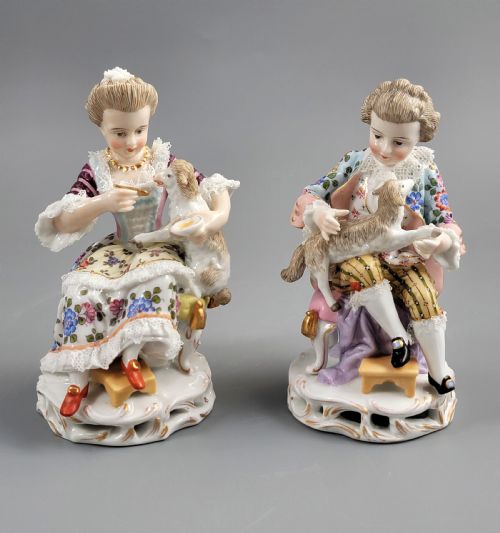


German Porcelain Pastoral Figures
German porcelain pastoral figures bring rural charm to a room through delicate modelling and painted scenes of shepherds, gardeners and children.
German Porcelain Pastoral Figures
German porcelain pastoral figures encompass figurines, figural candlesticks and decorative groups depicting rural subjects such as gardeners, grape harvesters, shepherds and children with lambs. You are most likely to meet 19th-century pieces, alongside occasional 18th-century examples, fashioned as pairs or individual ornaments.
The styles range from elaborate Rococo Revival designs to Chelsea-Derby and Meissen styles, reflecting European fascination with idealised country life. These works take the form of freestanding figurines, porcelain groups in garden settings, and candlesticks incorporating figures into the ceramic body.
Materials and Manufacture
Makers shaped these pieces from hard-paste porcelain, finished with glaze or left in bisque, then decorated them with enamel and gold leaf or gilt. Artisans employed detailed hand modelling to render fabrics, foliage, baskets and animals before firing the ceramic bodies.
Colour application relied on enamel pigments fixed by heat, often enhanced with gold gilt highlights on bases and garments. Some works combined glazed surfaces with unglazed bisque sections to contrast skin tones and clothing textures.
Listings feature 18th-century and 19th-century periods, utilising hard-paste porcelain, glaze, enamel, and gold leaf across figurine and candlestick forms.
Assessing Quality and Execution
The retention of intricate applied details like petals, baskets and ribbons without excessive loss marks the better specimens. Early 18th-century and fine factory productions demonstrate greater sculptural ambition than later derivative studio pieces.
Meissen Porcelain Figurine·Limbach Porcelain Figure·Sitzendorf porcelain figural candlesticks·Carl Thieme Dresden Porcelain·Ludwigsburg porcelain group
The German Porcelain Pastoral Figures Glossary
- Hard-Paste Porcelain
- A dense, vitrified ceramic composed of kaolin and petuntse fired at high temperatures. It forms the durable body of traditional German figures.
- Bisque
- Unglazed porcelain with a matte, white texture resembling marble. It highlights sculptural detail without surface shine.
- Enamel
- Coloured glass powder fused to the ceramic surface during a secondary firing. It provides the permanent hues of clothing and natural elements.
- Gilt
- A thin layer of gold applied to the porcelain surface for decoration. It accents bases, borders and garment details.
- Rococo Revival
- A 19th-century design movement resurrecting 18th-century asymmetrical curves, scrolls and natural motifs. It heavily influences the bases and framing of these figures.
German Porcelain Pastoral Figures: Frequently Asked Questions
Were these figures meant to be used?
Most of these items served a purely decorative purpose on mantelpieces, side tables and cabinet shelves. Figural candlesticks combined ornamental subjects with functional lighting, holding candles in domestic interiors.
Larger groups and pairs populated drawing rooms as conversation pieces reflecting refined European tastes. They remained display objects rather than items of daily utility.
How can I distinguish 18th-century pieces from later copies?
Eighteenth-century works generally exhibit lighter, thinner porcelain bodies and more spontaneous hand-modelling. Later 19th-century revival pieces often feel heavier and show mechanical precision in mould lines.
Examine the palette and paste texture under magnification to understand the firing period. Revival factories frequently reproduced earlier Meissen or Derby styles, making the base marks and wear patterns vital clues.
Why are pastoral subjects so common?
European porcelain factories drew inspiration from romanticised views of rural life popular among the aristocracy. Shepherds, shepherdesses and gardeners represented an untroubled, harmonious existence removed from court politics.
These pastoral themes allowed modellers to showcase dynamic movement and charming rustic costumes. The enduring appeal ensured factories continued producing these subjects well into the Victorian era and beyond.