
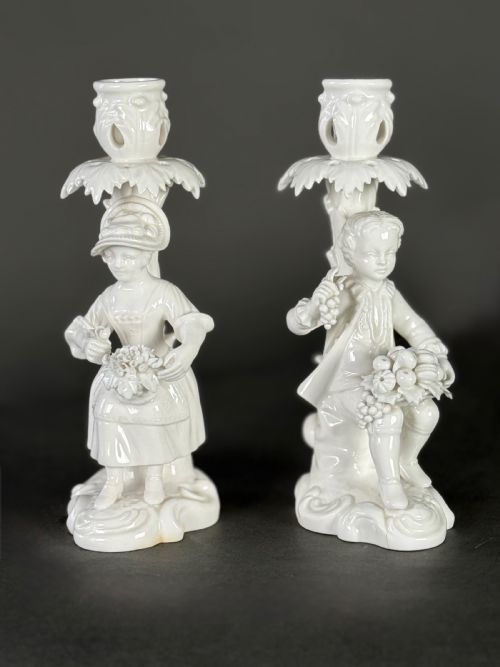


Derby Style Porcelain Figures
These derby style porcelain figures bring animated historical character and vibrant colour to a mantelpiece.
Derby Style Porcelain Figures
Derby style porcelain figures capture pastoral scenes, musicians, street sellers, and classical characters modelled in dynamic poses. These decorative objects draw inspiration from eighteenth-century English traditions and later nineteenth-century continental interpretations.
You will most frequently meet nineteenth-century examples produced by European makers such as Samson of Paris or German factories working after earlier English models. These pieces range from solitary figures of shepherds and gardeners to symmetrical pairs of candlesticks and dwarves.
The subjects span traditional allegorical figures representing the seasons alongside rustic pastoral groups. Each piece relies on expressive modelling and traditional forms to recreate the distinct aesthetic of early porcelain manufacture.
Materials and Manufacture
These figures utilise hard-paste and soft-paste porcelain shaped through historic moulding techniques before undergoing high-temperature firing. The resulting ceramic body provides a smooth, durable foundation for subsequent painting and glazing.
Makers applied polychrome enamel pigments by hand to bring detail to clothing, flora, and facial expressions. Touches of gold leaf and gilt work were often added to highlight rococo scrolls and bases.
Glazed ceramic surfaces protect the painted details beneath a glossy finish, while unglazed porcelain or blanc de chine variations emphasise the sculptural quality of the modelling alone.
Listings feature hard-paste porcelain, soft-paste porcelain, and blanc de chine materials decorated with polychrome enamel and gold leaf.
Assessing Quality
The complexity of the composition also dictates distinction, as multi-figure groups with intricate scrolling bases demand greater technical skill from the modeller than singular standing figures. Condition of the delicate porcelain flowers and limbs remains a central factor in the integrity of each piece.
Samson of Paris·Dresden Manufactory
The Derby Style Porcelain Figures Glossary
- Blanc de Chine
- A French term for white Chinese porcelain that inspired European factories to produce unglazed or white-glazed sculptural figures.
- Polychrome Enamel
- A vitreous composition applied in multiple colours to the fired porcelain body before a secondary low-temperature firing fuses it to the surface.
- Rococo Revival
- A nineteenth-century design style reviving the asymmetrical scrolls, shell motifs, and exuberant curves characteristic of the mid-eighteenth century.
- Hard-Paste Porcelain
- A dense, durable ceramic composed of kaolin and petuntse fired at very high temperatures, producing a ringing sound when struck.
- Gilt
- A thin layer of gold applied to the porcelain surface, frequently used to accent garments, bases, and candle sockets.
Derby Style Porcelain Figures: Frequently Asked Questions
How do I identify derby style figures?
Derby style figures are typically identified by their pastoral subjects, rich polychrome enamel palettes, and rococo scrollwork bases. Many pieces echo eighteenth-century English prototypes but date from the nineteenth century.
Examination of the paste, modelling style, and any base markings helps distinguish original eighteenth-century productions from later continental revivals and tributes.
Are these figures English or continental?
While the style originates from the Derby porcelain factory in England, many surviving pieces on the market were actually produced by continental workshops in France and Germany. Factories such as Samson of Paris and various German makers extensively produced figures after Derby.
These continental pieces often replicate the charm and subject matter of English models while exhibiting distinct paste characteristics and manufacturing techniques typical of their local kilns.
How were porcelain candlesticks used?
Porcelain candlesticks served both functional lighting purposes and decorative display roles within wealthy nineteenth-century interiors. Placed upon mantelpieces or side tables, they held wax candles while contributing to the room's overarching decorative scheme.
The figural elements often integrated mythological or pastoral themes, turning a practical household object into a sculptural centrepiece.
How should I care for antique porcelain?
Antique porcelain figures require gentle handling and placement away from direct sunlight or areas prone to sudden temperature fluctuations. Dusting should be performed softly with a dry, clean brush to protect delicate painted details and protruding ceramic elements.
Avoid using water or liquid cleaners on pieces with gilt highlights or delicate enamel work, as moisture can damage fragile surface decorations over time.