


19th Century Dresden Porcelain
These pieces of 19th century dresden porcelain bring ornate Continental charm into a room through elaborate painted scenes and sculptural figures.
19th Century Dresden Porcelain
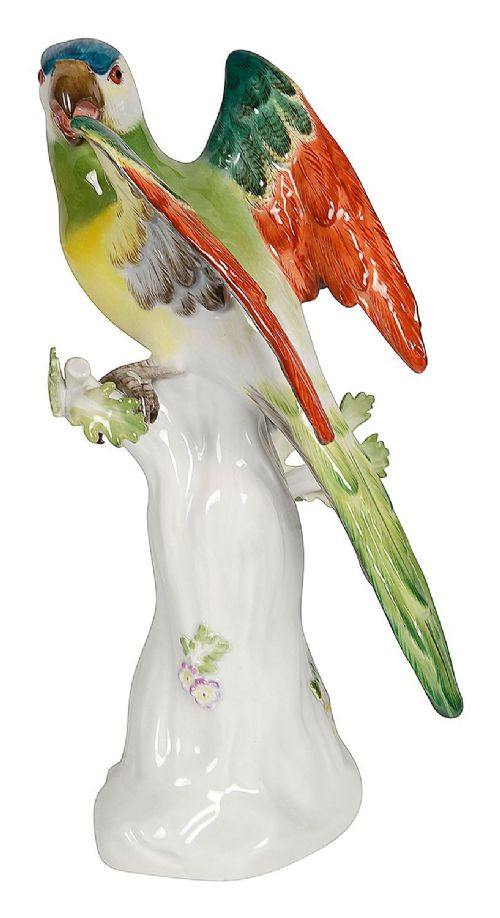
When searching for 19th century dresden porcelain, collectors encounter a diverse array of decorative items ranging from intricate figurines and figural candlesticks to large lidded vases, urns, and centrepieces. These works capture the ornamental tastes of the Victorian era, heavily influenced by earlier aesthetic movements.
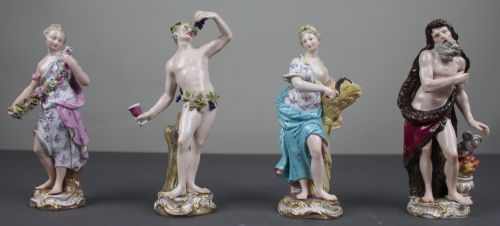
The objects most frequently met on this page include pastoral figures, allegorical groups depicting the seasons, and elaborately painted vessels such as potpourri bowls and cabinet plates. Many of these pieces originate from German factories and studios, reflecting traditional craftsmanship from regions renowned for ceramic production.
Materials and Techniques
The items listed rely primarily on hard-paste porcelain as a durable and refined foundation for intricate modelling and detail work. Artisans shaped this ceramic material into complex sculptural forms, from human figures to pierced baskets and lidded jars.
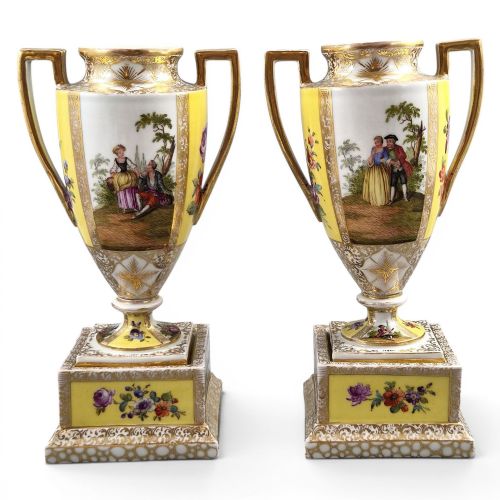
Surface decoration frequently combines detailed enamel paintwork with generous applications of gold leaf and gilding to highlight raised motifs. Artisans applied hand-painted scenes, such as Watteau subjects and floral sprays, directly onto the glazed porcelain surfaces.
The listings demonstrate a strong presence of mid to late nineteenth-century manufacturing dates, particularly around 1880 and 1890.
Qualities That Set Pieces Apart
The precision and complexity of the hand-painted enamel work also determine quality. Pieces featuring detailed pictorial panels with multiple figures and careful gilding demonstrate a higher level of artistic execution than simpler, repetitive floral patterns.
Meissen·Helena Wolfsohn·Sitzendorf·Bourdois and Bloch·Volkstedt
The 19th Century Dresden Porcelain Glossary
- Hard-paste porcelain
- A dense, vitrified ceramic material fired at high temperatures, providing a durable base for detailed porcelain sculpture and vessels.
- Gilding
- The application of gold leaf or gold paint to highlight rims, handles, and raised sculptural details on ceramics.
- Potpourri
- A lidded bowl or jar perforated to allow the scent of dried flowers and spices to permeate a room.
- Centrepiece
- A large decorative vessel or figurative group designed to occupy the middle of a dining or display table.
- Enamel
- Opaque vitreous material applied in colours to the surface of porcelain and fired to create permanent painted decoration.
19th Century Dresden Porcelain: Frequently Asked Questions
What defines the Dresden style?
The style draws heavily on Rococo Revival aesthetics, featuring asymmetrical scrolls, pastel colour palettes, and abundant floral appliques. It often incorporates pastoral scenes and romantic motifs inspired by eighteenth-century French art.
Items decorated in this manner prioritise ornate decoration and sculptural complexity over plain utility, making them purely decorative focal points for a room.
Were these items meant for daily use?
Most of these porcelain objects served purely decorative and ornamental functions within nineteenth-century bourgeois interiors. Items like cabinet plates, cache pots, and figural groups were intended for visual display rather than practical dining purposes.
Containers such as potpourri jars and lidded vases held dried aromatics or simply stood empty as decorative statements on mantelpieces and pedestals.
How do factory marks help identify these pieces?
Factory marks stamped or painted on the underside provide clues to the origin and production period of the ceramic. Common ciphers include blue crossed swords and various monogram stamps associated with German decorating studios.
Studying these marks alongside the painting style and modelling technique allows collectors to distinguish between original factory output and independent decorator studios.