



Dresden Porcelain Bowl
These dresden porcelain bowl pieces bring elaborate floral modelling and rococo revival forms to a table, offering tactile historical charm for an interior.
Dresden Porcelain Bowl
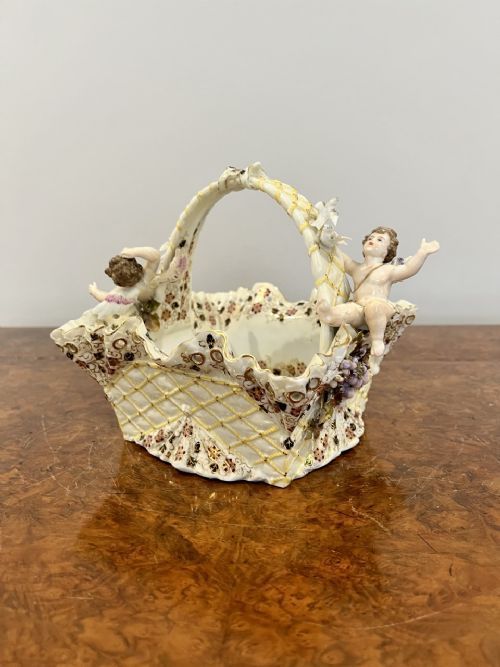
A dresden porcelain bowl typically appears as a large centrepiece, a sweetmeat dish, or a decorative basket shaped by nineteenth-century European makers. The selection here leans heavily towards late nineteenth-century and Edwardian examples, spanning the 1880s through to the early 1900s.
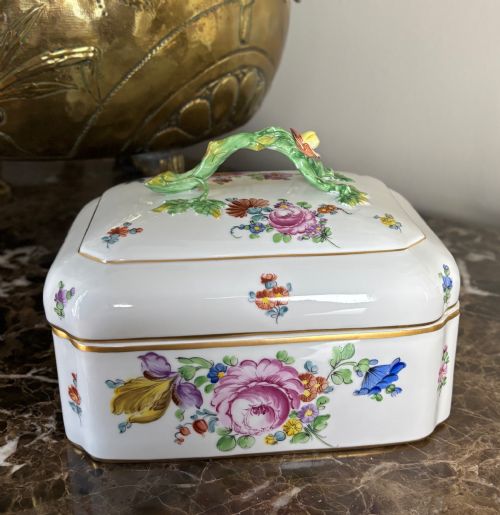
Makers often drew inspiration from earlier forms, resulting in pieces adorned with applied roses, cherubs, and putti. Alongside these grand centrepieces, visitors will find smaller sugar boxes, potpourri lidded bowls, and work basket dishes.
While the regional attribution of Dresden encompasses various Saxon potteries and decorators, the overall aesthetic remains anchored in ornate nineteenth-century Revival styles. These items served primarily as ornamental centrepieces for dining tables and drawing rooms.
Materials and technique
Hard-paste porcelain forms the physical foundation of these items, providing a durable and smooth white ceramic body. Artisans then shaped this ceramic through complex moulding and hand-modelling techniques to create intricate openwork baskets and figural supports.
Surface decoration relies on painted enamel and hand-gilded highlights, often utilising gold leaf to accentuate moulded scrollwork and rims. Applied elements such as porcelain flowers and putti were separately formed and meticulously attached before firing.
Dresden Porcelain Bowl Retail Price Guide 2026
Typical asking prices for dresden porcelain bowl among the pieces listed under this phrase on Sellingantiques today, from the lower quarter to the upper quarter. They describe what is for sale here now, not the wider market.
Listings feature hard-paste porcelain and ceramic materials decorated with enamel, gilding, and gold leaf across the Victorian and Edwardian periods.
Judging the work
Quality in a dresden porcelain bowl rests largely on the crispness of the modelling and the delicacy of applied floral work. Pieces with finely sculpted putti and intricately pierced baskets demonstrate a higher tier of craftsmanship than simpler, flatter moulded versions.
The precision and vibrancy of the hand-painted enamels, coupled with the generous use of gilding, distinguish standard decorative items from exceptional examples. Furthermore, the overall structural integrity of fragile applied elements determines the surviving quality of an antique piece.
Paul Müller Selb·R Wehsner·C G Schierholz und Sohn·Carl Thieme·Helena Wolfsohn
The Dresden Porcelain Bowl Glossary
- Centrepiece
- A large ornamental bowl or basket placed in the middle of a table. These items dominate the visual weight of a dining arrangement.
- Putti
- Representations of small winged infants, frequently styled as cherubs in these ceramic groups. They often climb upon baskets or support central bowls.
- Comport
- A raised dish or bowl on a foot, used for serving fruit or sweets. They elevate the presentation of decorative table ceramics.
- Potpourri
- A covered vessel pierced to allow scented dried plant materials to release their fragrance. These lidded bowls combine utility with sculptural form.
- Gilding
- The application of gold leaf or gold paint to ceramic surfaces. This technique highlights rims, handles, and raised rococo scrollwork.
Dresden Porcelain Bowl: Frequently Asked Questions
What is a Dresden porcelain bowl used for?
These pieces functioned historically as decorative centrepieces or serving vessels for fruit and sweetmeats on grand dining tables. Today, they serve primarily as ornamental focal points within period interiors.
Their ornate forms and painted surfaces make them suitable for display on sideboards, tables, or within cabinets.
How do I identify a Victorian centrepiece?
Victorian examples often display heavy rococo revival influence, featuring elaborate scrollwork, applied roses, and figural putti supports. They rely on hard-paste porcelain combined with detailed enamel painting and gilding.
Examining the manufacturing style and stylistic cues helps separate these nineteenth-century items from earlier eighteenth-century productions.
Are these bowls made of hard-paste porcelain?
Yes, the material used is typically a durable ceramic body known as hard-paste porcelain. This substance accepts detailed moulding and supports intricate applied elements like flowers and figures.
The fired ceramic provides a smooth, impervious surface that holds enamel painting and gilding securely.
Where were these German porcelain items made?
These decorative items originate from German manufacturing regions, specifically Saxony and Dresden-associated workshops. Various factories and decorators produced these pieces throughout the nineteenth and early twentieth centuries.
Names such as Schierholz and Carl Thieme represent the traditional manufacturing output of these areas.