

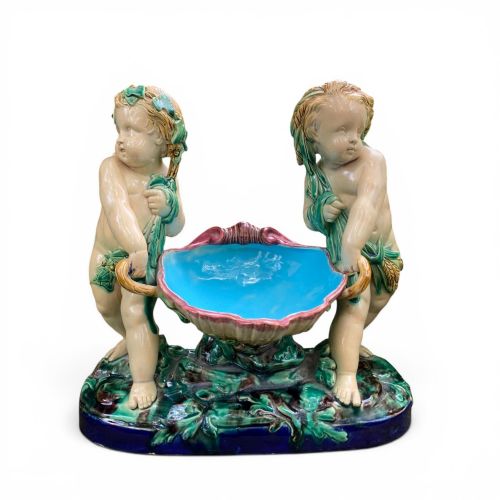


Ceramic Putti Centrepiece
A ceramic putti centrepiece anchors a grand dining table with sculpted infant figures and ornate bowls, offering a dramatic focal point for period interiors.
Ceramic Putti Centrepiece
A ceramic putti centrepiece brings sculptural drama to a table setting, combining functional vessels like bowls, baskets, or compotes with modelled infant figures. These dramatic table ornaments emerge from periods spanning the Victorian era through the early twentieth century, reflecting elaborate dining customs.
The versions most commonly met on this page range from Victorian majolica and continental porcelain groups to German manufactory productions featuring applied roses and musical figures. Makers utilise forms such as sweetmeat dishes, figural candelabra, and centrepiece vases supported by cherubs.
Moulded porcelain, earthenware, and glazed ceramic form the structural foundation of these elaborate table decorations. Styles lean heavily towards Rococo Revival and Art Nouveau aesthetics, displaying intricate hand-painting, enamel, and occasional gold leaf details.
Materials and manufacture
Manufacture relies on shaped porcelain, earthenware, and glazed ceramic, often formed through multi-part moulds to accommodate the complex anatomy of the figures and the sweeping contours of the bowls or baskets. Artisans assemble these sections before firing, applying glazes to seal the porous clay bodies.
Detailing involves meticulous hand-painting using enamel pigments, alongside the application of delicate elements like applied roses and gold leaf highlights. Makers such as Minton, Royal Dux, and Meissen employed skilled modellers to shape the cherubs and mount them onto shells, bases, or vessels.
Ceramic Putti Centrepiece Retail Price Guide 2026
Typical asking prices for ceramic putti centrepiece among the pieces listed under this phrase on Sellingantiques today, from the lower quarter to the upper quarter. They describe what is for sale here now, not the wider market.
Listings feature pieces spanning the Victorian and Edwardian periods, utilising porcelain, earthenware, and majolica across Rococo Revival and Art Nouveau styles.
Assessing quality and craftsmanship
The sophistication of the overall composition also dictates quality, distinguishing standard continental factory output from works by renowned manufactories like Meissen or Minton. Proportion between the supporting putti and the central vessel, alongside the integration of gilt or enamel accents, reveals the original ambition of the piece.
Minton·Royal Dux Bohemia·Plaue Schierholz·Volkstedt·Meissen
The Ceramic Putti Centrepiece Glossary
- Putti
- Plumed or unwinged infant figures, often resembling cherubs or cupids, frequently depicted supporting bowls or playing instruments in decorative ceramics. These sculptural figures derive from classical art and Renaissance motifs.
- Majolica
- A type of earthenware coated with an opaque tin glaze and painted with metallic oxide colours, notable for its rich, saturated hues. Minton produced notable examples in this technique during the Victorian era.
- Compote
- A raised bowl or dish standing on a stem, used for serving fruit or sweetmeats at the table. These vessels often incorporate figural supports.
- Sweetmeat dish
- A small decorative container designed for holding confectionery, nuts, or sweet delicacies during formal dining. They frequently appear modelled with flanking figures.
- Candelabra
- A branched candlestick holder designed to hold multiple tapers, sometimes combined with a central decorative bowl or figural group. These items served as functional illumination and ornamental centerpieces.
Ceramic Putti Centrepiece: Frequently Asked Questions
What is a ceramic putti centrepiece?
A ceramic putti centrepiece is an elaborate table decoration featuring sculpted infant figures combined with a bowl, basket, or vase. These pieces served as dramatic focal points for formal dining tables.
They were produced by European manufactories during the nineteenth and early twentieth centuries, incorporating styles from Rococo Revival to Art Nouveau.
How were centrepieces used?
These large ornaments occupied the middle of the dining table during formal meals, often holding fruit, sweetmeats, or flowers. They acted as conversation pieces that displayed the host's taste and wealth.
Some variants doubled as candelabra to provide illumination alongside their decorative function.
How do I date a porcelain centrepiece?
Dating relies on identifying factory marks stamped or painted on the underside, stylistic cues such as Art Nouveau curves or Victorian ornamentation, and the specific composition of the ceramic body. Examining the application of enamel colours and gilding also helps narrow the period of manufacture.
Comparing the modelling style to documented pieces by makers like Meissen or Minton provides further chronological context.
How do I care for antique porcelain?
Antique porcelain and glazed ceramic require gentle handling and should be cleaned only with a dry cloth or a very soft, slightly damp brush to remove dust. Avoid submerging pieces with applied elements like roses or delicate gold leaf in water.
Display them away from direct sunlight and secure them on stable, level surfaces to protect fragile projecting fingers and rims.