



Samson Porcelain Figurines
Samson porcelain figurines are nineteenth-century Parisian interpretations of earlier English and Chinese ceramic models, prized for their decorative presence and historical mimicry.
Samson Porcelain Figurines
Samson porcelain figurines comprise nineteenth-century French decorative objects produced in Paris by the Samson firm, replicating historical models from famous factories such as Chelsea, Derby, and Chinese kilns. The pieces on this page span the nineteenth century, including specific dates from eighteen-fifty to eighteen-ninety alongside broader Victorian eras.
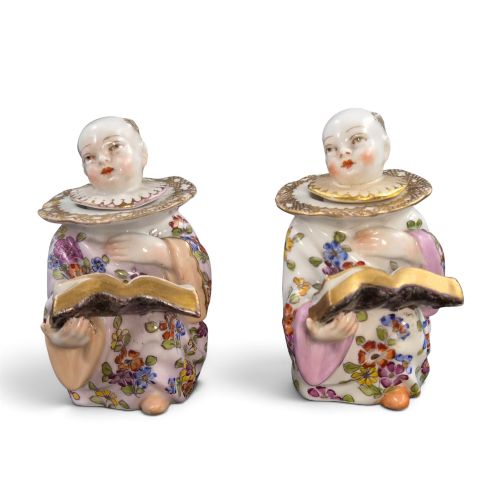
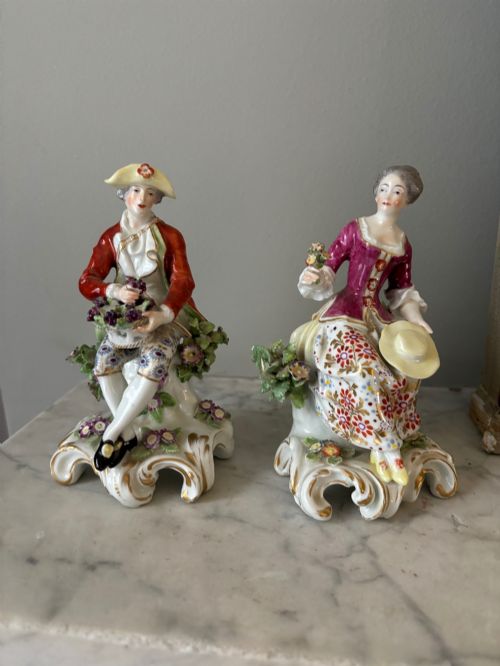
Buyers encounter diverse forms including pairs of figural inkwells, allegorical representations of the seasons, street vendors, mythological figures like Venus and Cupid, and musicians. These decorative objects frequently appropriate eighteenth-century styles such as Rococo Revival, French Rococo, and Chinoiserie.
The aesthetic borrows heavily from earlier English porcelain traditions, often incorporating imitation anchor marks or Derby styling. They serve as collectible display items that capture the elaborate taste of the Victorian period while paying homage to earlier ceramic artistry.
Materials and Technique
These figurines are constructed from hard-paste porcelain, a durable ceramic material suited to intricate modelling and fine detail. Workshops utilised skilled moulding techniques to recreate the elaborate postures and drapery associated with eighteenth-century prototypes.
Polychrome enamel and plain enamel pigments provide the vibrant surface decoration seen across the figures. Gilding and gold leaf accents are frequently applied to highlight base borders, clothing details, and decorative elements.
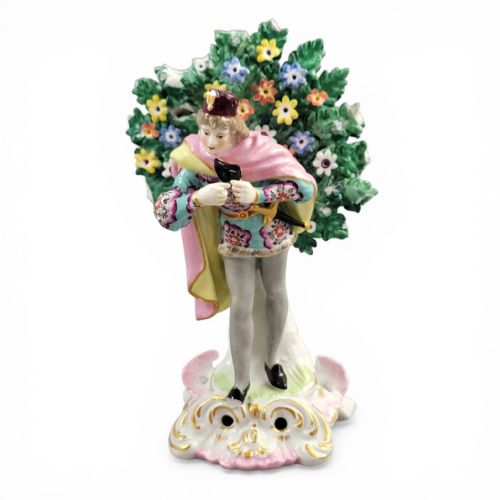
Parisian modellers spared no imagination, populating nineteenth-century mantelpieces with theatrical actors wearing masks and tiny dwarves straight from Mansion House.
Quality Variations
The fineness of the modelling separates superior examples from simpler production, particularly in the rendering of facial expressions, fingers, and intricate foliage such as bocage work. Tighter control during the firing and painting processes results in cleaner enamel separation and more precise gilding.
The depth of historical understanding and the fidelity with which the Parisian workshop translated the original Chelsea or Derby aesthetics influence the overall success of the piece. Stronger examples maintain balanced proportions and crisp surface detail despite the complexity of the revival style.
Edmé Samson·Samson of Paris
The Samson Porcelain Figurines Glossary
- Hard-Paste Porcelain
- A dense, vitrified ceramic compound fired at high temperatures. It provides a durable body that resists scratching and supports detailed sculptural forms.
- Bocage
- An ornamental background of applied ceramic leaves and branches surrounding a figure. This technique is frequently seen on eighteenth-century English models and their nineteenth-century Paris copies.
- Polychrome Enamel
- Multi-coloured glass-based paints fused to the porcelain surface during a secondary firing. This method yields stable, bright hues across garments and decorative motifs.
- Rococo Revival
- A nineteenth-century design movement resurrecting the curved lines, asymmetrical scrolls, and ornamental exuberance of the mid-eighteenth century. It heavily influences the stances and bases of these figures.
- Gilding
- The application of gold or gold leaf to ceramic surfaces for decorative emphasis. It accentuates borders, clothing trims, and sculptural accessories.
Samson Porcelain Figurines: Frequently Asked Questions
What are Samson porcelain figurines?
These pieces are nineteenth-century ceramic reproductions and interpretations produced by the Samson workshop in Paris, designed to emulate earlier works from factories like Chelsea, Derby, and Chinese export kilns.
Collectors value them for their skilled craftsmanship and their playful engagement with historical ceramic traditions rather than as deceptive forgeries.
How can I tell a Samson figure from an original?
Samson figures often carry subtle differences in the paste quality, enamel brightness, and factory marks compared to eighteenth-century prototypes. Many bear the firm's own subtle identifying traits or modified versions of historic anchor and crown marks.
Close examination of the gilding style and the crispness of the porcelain body helps separate the Parisian nineteenth-century production from earlier English or continental originals.
What subjects do these figures depict?
The subjects range widely from allegories of the seasons and theatrical actors to street vendors, musicians, and mythological pairs like Venus and Cupid. Many draw directly upon specific eighteenth-century English porcelain models.
Animal figures, putti with goats, and Chinese-inspired figural inkwells also appear frequently within this grouping.
How should I care for antique porcelain figures?
Keep these decorative objects away from direct sunlight and areas subject to sudden temperature fluctuations to protect the enamel colours and fragile elements like bocage leaves. Dust them gently with a soft, dry brush.
Avoid using liquid cleaners or abrasive cloths, as these can wear away the delicate gilding and surface enamel over time.