




Porcelain Allegorical Seasons
Porcelain allegorical seasons bring classical mythology into the drawing room through delicate figural sculpture.
Porcelain Allegorical Seasons
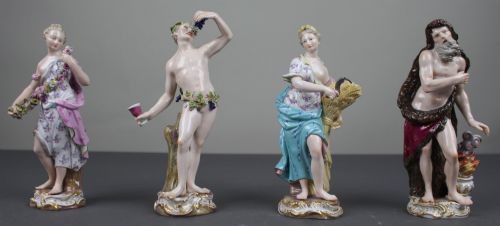
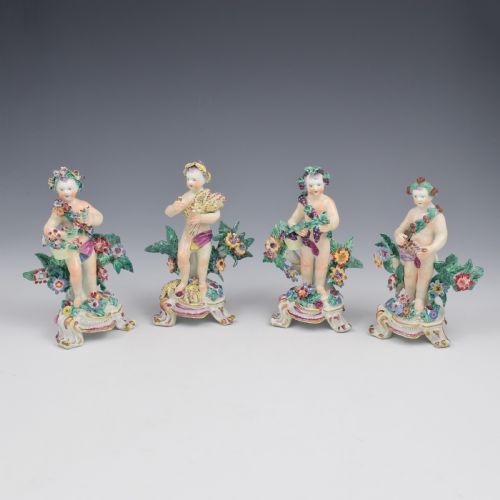
Porcelain allegorical seasons depict human or putti figures embodying Spring, Summer, Autumn, and Winter, often holding traditional attributes such as flowers, wheat sheaves, grapes, or braziers. You will encounter these pieces rendered as individual standing figures, matched pairs, or complete sets representing the cycle of the year.
The objects take the form of freestanding decorative figurines, figure groups, and figural candlesticks designed for display on mantelpieces and tables. Eighteenth-century examples appear alongside nineteenth-century revivals, showing how potteries continued to demand these classic decorative subjects over generations.
How they were made
Makers shaped hard-paste and soft-paste porcelain in moulds, applying fine details by hand before firing the pieces at high temperatures. Artisans then added polychrome enamel colours and gold leaf highlights, fixing the decoration in a second kiln firing.
Gilding and overglaze enamel provide the surface richness seen on these figures, accentuating drapery folds and natural motifs. Potters combined these pigments with moulded porcelain scrolls characteristic of the Rococo and Neoclassical styles.
Porcelain Allegorical Seasons Retail Price Guide 2026
Typical asking prices for porcelain allegorical seasons among the pieces listed under this phrase on Sellingantiques today, from the lower quarter to the upper quarter. They describe what is for sale here now, not the wider market.
Winter is typically depicted as a shivering rustic huddled near a brazier, refusing to let the cold spoil the allegory.
What varies in quality
Sculptural fidelity defines the upper tier of these figures, where facial expressions, hand gestures, and botanical elements retain crispness and individual character. Weaker examples show soft modelling and heavy enamel application that obscures the underlying porcelain form.
The application of gold leaf and enamel painting determines the visual depth of a piece. Finer works display meticulous hand-painting on garments and attributes, whereas secondary versions rely on simpler, repetitive colour placement.
Meissen·Bow Porcelain·Volkstedt·Carl Thieme Dresden·Samson
The Porcelain Allegorical Seasons Glossary
- Putti
- Winged infant figures often used to represent allegorical subjects like the seasons. They appear frequently in eighteenth-century British and continental compositions.
- Hard-paste porcelain
- A dense, vitrified ceramic material composed of kaolin and petuntse. It was widely adopted by European factories during the eighteenth and nineteenth centuries.
- Soft-paste porcelain
- An artificial porcelain paste fired at lower temperatures than hard-paste bodies. It yields a warmer texture and softer glaze surface.
- Overglaze enamel
- Vitreous colours applied on top of a fired glaze surface and fixed in a muffle kiln. This technique allows for a broad palette of bright decorative hues.
- Rococo Revival
- A nineteenth-century design movement favouring asymmetrical scrollwork, naturalistic motifs, and ornate curves. It heavily influenced the presentation of later figural ceramics.
Porcelain Allegorical Seasons: Frequently Asked Questions
What do the seasons represent?
These figures symbolise agricultural cycles and seasonal changes through traditional imagery. Spring brings flowers, Summer carries wheat, Autumn gathers grapes, and Winter endures the cold.
Craftsmen drew upon classical mythology and Renaissance art to personify these periods. Each attribute helps the viewer identify the specific time of year represented.
Were they sold individually?
Factories produced these figures both as complete sets of four and as individual pieces or pairs. Buyers could acquire single figures representing their favourite time of year.
Over time, many original sets became separated through inheritance or damage. Finding a complete group remains less common than encountering isolated figures.
How do I care for them?
Keep these porcelain figures away from direct sunlight and areas subject to sudden temperature changes. Dust them gently using a soft, dry brush to protect fragile painted details.
Avoid using water or chemical cleaners on antique porcelain surfaces, particularly where gold leaf and enamel decoration are present. Proper handling prevents accidental chips to delicate fingers and floral elements.
How can I tell the period?
Examine the paste, glaze, and painting style to help determine the age of a figure. Eighteenth-century pieces often display softer glazes and hand-modelled botanical elements.
Nineteenth-century revivals tend to feature crisper moulding and different factory marks on the underside. Comparing the base and potting characteristics with known examples clarifies the date of manufacture.