

19th Century Pitcher
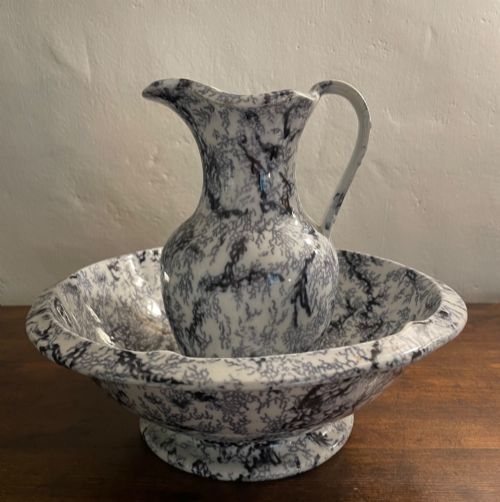
When you handle a 19th century pitcher, you hold a functional vessel carrying the bold transfer prints, lustres, and blown glass forms of the Victorian and Georgian eras.
19th Century Pitcher
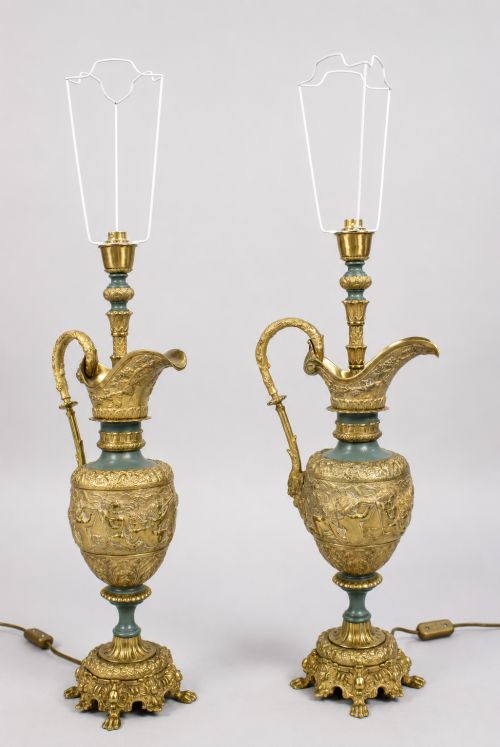
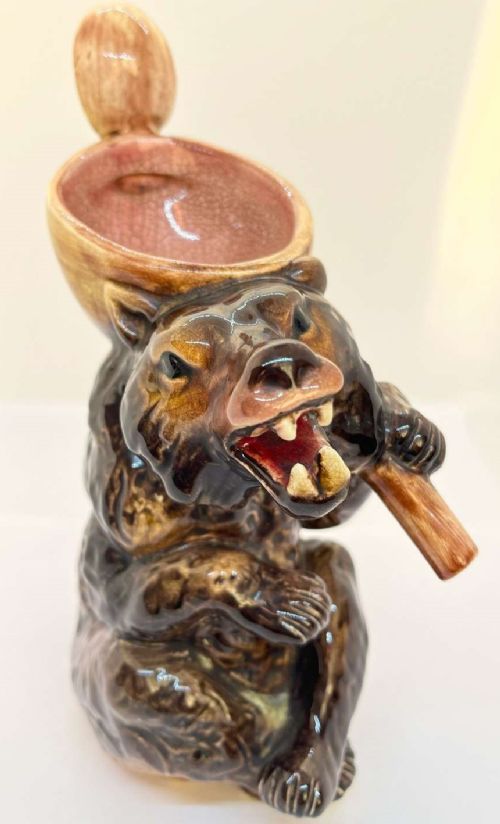
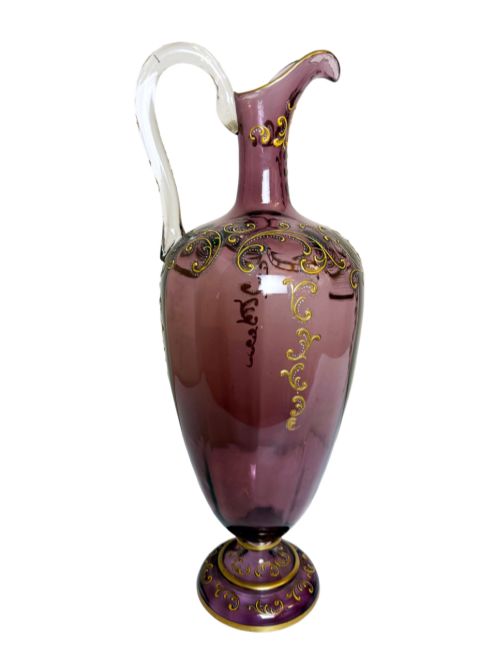
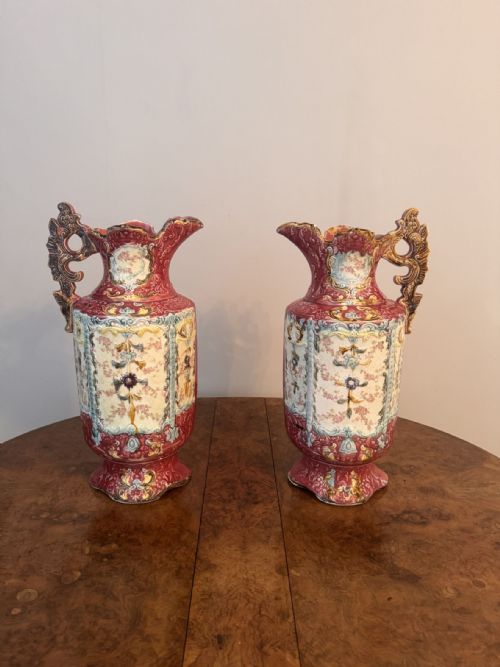
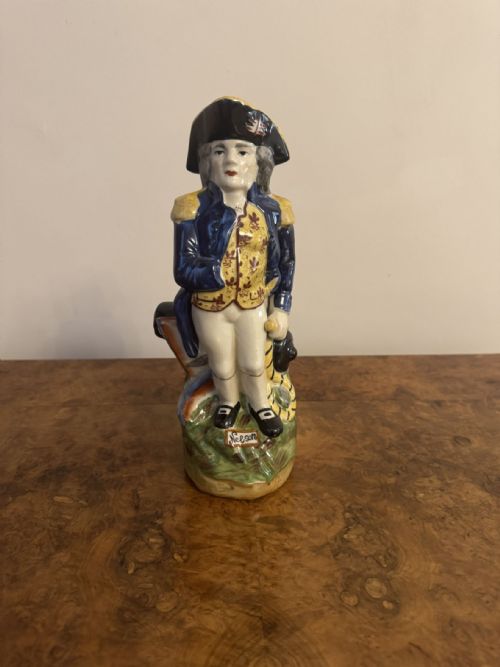
A 19th century pitcher serves primarily as a utilitarian pouring vessel for water, milk, or ale, evolving from simple tavern ware into decorative mantelpieces. The selection on this page ranges from Georgian creamware and earthenware jugs to Victorian lustreware, pressed glass, and Italian majolica ewers.
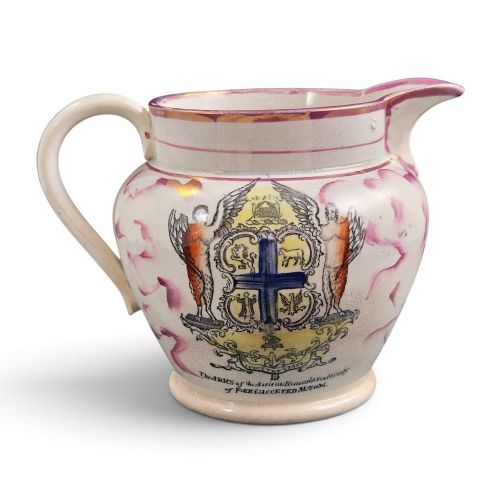
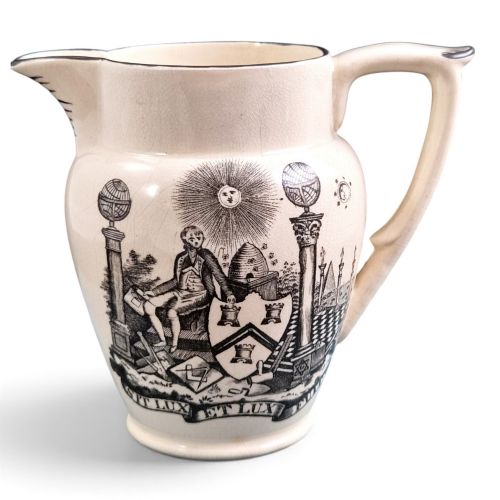
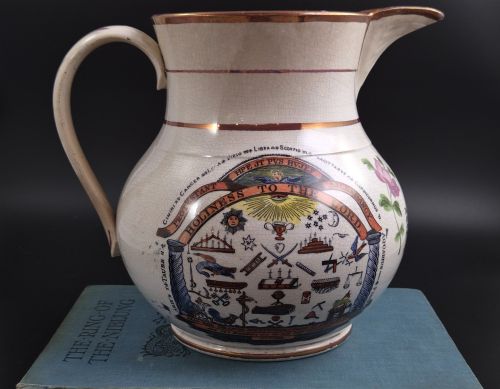
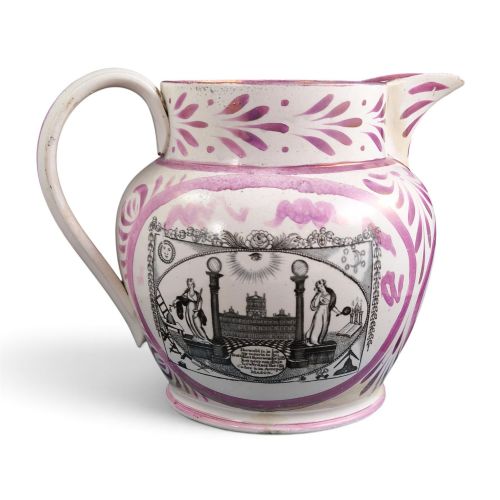
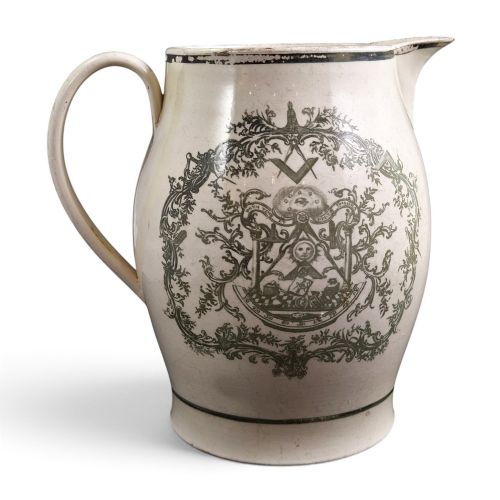
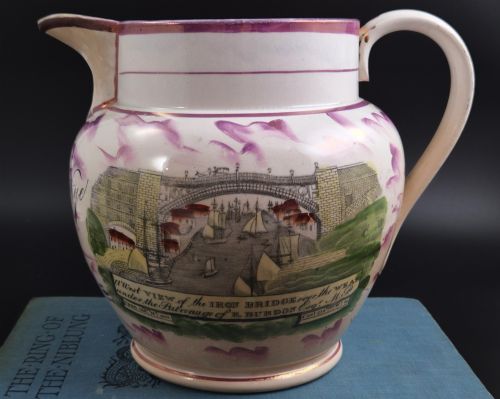
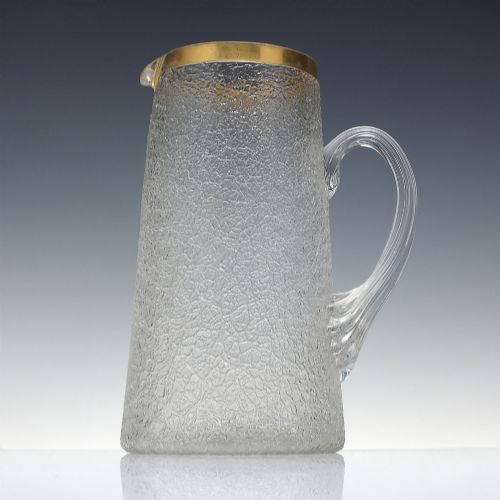
Buyers will encounter earthenware vessels featuring transfer-printed masonic emblems or maritime scenes alongside blown glass water jugs embellished with gilt rims. Staffordshire potteries and regional English makers dominate the earthenware forms, while continental workshops supply majolica and glass iterations.
The utility of these pieces dictated their sturdy construction, yet many survived precisely because they transitioned into decorative display items during the latter half of the nineteenth century.
How they were made
Potters shaped earthenware and creamware bodies either by throwing on a wheel or by press-moulding in clay pieces, applying glazes and metallic lustre washes before a second kiln firing. Transfer printing allowed manufacturers to apply complex monochrome or polychrome scenes onto the ceramic surface before glazing.
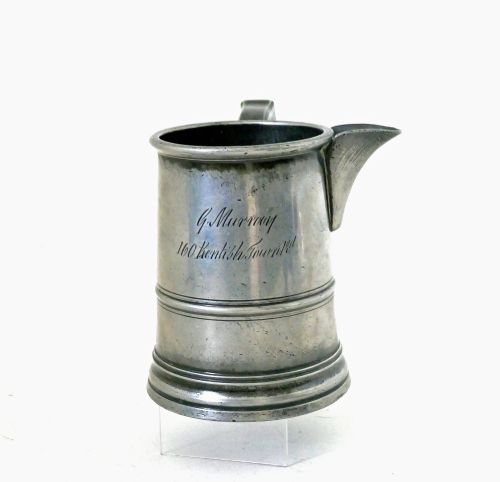
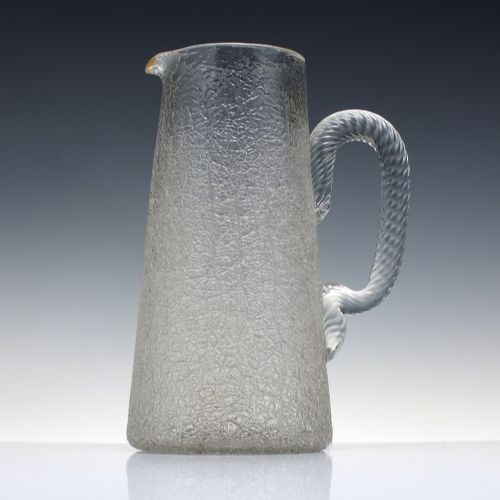
Glass water jugs and ewers relied on free-blowing or mould-blowing techniques, occasionally finished with hand-painted gilt appliques or overshot glass threads applied while hot. Metalware examples involved hammering copper, brass, or pewter sheets and joining seams with solder or rivets.
Several jugs proudly record local infrastructure, featuring transfer prints of the Iron Bridge over the Wear alongside masonic emblems.
What varies in quality
Quality rests in the crispness of the transfer print and the uniformity of the metallic lustre finish, where well-struck details indicate superior copper or pink splash applications. In glass, the clarity of the metal and the precision of the cut facets or applied overshot threads mark the distinction between standard tavern ware and fine display pieces.
The hand-painted polychrome decoration on Gaudy Welsh and majolica pieces shows varying degrees of control, with superior examples maintaining sharp borders and rich pigment saturation without bleeding into the surrounding glaze.
Sunderland Garrison Pottery·Cantagalli Florence·Mason's Ironstone·Minton
The 19th Century Pitcher Glossary
- Creamware
- A fine-grained earthenware with a pale yellowish-cream glaze, developed in Staffordshire during the eighteenth century and widely produced into the nineteenth.
- Lustreware
- Pottery decorated with a metallic glaze that produces an iridescent sheen, achieved by firing metallic oxides in a reducing atmosphere.
- Ewers
- Large jugs featuring a wide spout and a looped handle, traditionally utilised for pouring water at a washstand or table.
- Transfer-printing
- A decorating technique where an engraved copper plate transfers a design onto tissue paper, which is then pressed onto the ceramic body.
- Overshot glass
- Glassware rolled over hot trailing threads of glass to create a textured, web-like exterior surface.
19th Century Pitcher: Frequently Asked Questions
How were nineteenth century pitchers used?
These vessels served everyday domestic functions including holding water at washstands, pouring milk at tea, and serving ale in taverns. Many later pieces transitioned into decorative ornaments displayed on sideboards or mantelpieces.
Larger earthenware jugs often commemorated specific events, lodges, or maritime milestones, shifting their role from simple utility to commemorative display.
How do I identify a Georgian pitcher?
Georgian examples typically feature creamware or early earthenware bodies with simple lead glazes or early black transfer prints. Their forms remain understated compared to the ornate Victorian styles that followed.
Look for characteristics such as straightforward utilitarian handles and hand-painted polychrome motifs associated with Staffordshire production before the mid-nineteenth century.
What is pink lustre pottery?
Pink lustre is a ceramic finish created by applying a thin wash of gold in solution over a white or cream glaze. When fired, it produces a distinctive shimmering pink or violet metallic effect.
Potteries in Sunderland utilised this technique extensively for nautical and commemorative jugs featuring ships or bridges.
Can I use these pitchers for serving?
While many ceramic and glass pitchers remain structurally sound, antique earthenware and lustreware often feature crazing in the glaze that absorbs liquids. It is generally safer to treat them as decorative objects rather than functional tableware.
Glass and ironstone examples are less porous, but age-related weaknesses in handles mean cautious handling is required.