


Country House Pottery
Country house pottery brings rustic charm and everyday utility straight to your kitchen table.
Country House Pottery
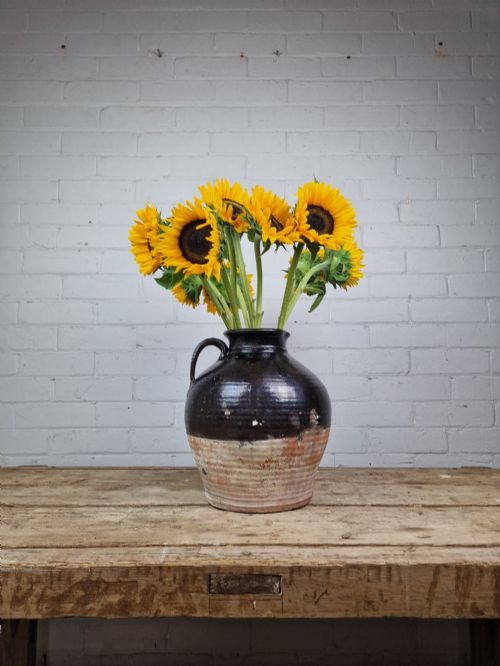
Country house pottery encompasses domestic earthenware, jugs, pitchers, and decorative ornaments rooted in traditional domestic use. When you search for country house pottery, you encounter utilitarian wares and decorative figures from periods spanning the seventeenth to the early twentieth century. The selections available typically display regional British and European styles, including Victorian folk art and Georgian transferware.
You are most likely to meet sturdy earthenware jugs, creamers, and blue and white plates on this page. These pieces reflect everyday rural life, table service, and interior display from eras past. The forms range from functional kitchen vessels to ornamental mantel figures.
Materials and construction
Potters shaped these vessels from local clay and earthenware, throwing them on wheels or casting them into moulds before firing. Workers then applied lead glazes, slip, or transfer-printed patterns to the surface to seal the porous body and provide decoration.
The combination of native clay bodies and traditional glazing techniques produced robust wares designed for daily use. Skilled hands finished each item, leaving subtle tool marks and variations in the surface texture that reveal the manual labour behind their creation.
Scottish lairds and English queens share the mantelpiece alongside ceramic cows.
Distinguishing quality in the wares
Quality in these pieces rests upon the crispness of the moulded form, the depth and evenness of the glaze, and the precision of the transfer print or slip trail. Superior items maintain balanced proportions and clear, sharp details that survive the kiln firing intact.
The skill of the decorator dictates the artistic merit, particularly in hand-painted figures and slipware trails where steady brushwork defines the expression. Lesser examples exhibit muddy glazes, blurred transfers, or clumsy modelling that detract from the visual appeal.
Staffordshire·Pettys and Co Leeds
The Country House Pottery Glossary
- Slipware
- Pottery decorated with slip, which is a liquid mixture of clay and water applied to the unfired body. Potters trail or brush this mixture to create linear patterns before glazing and firing.
- Earthenware
- Porous ceramic pottery fired at lower temperatures than stoneware or porcelain. It requires a glaze to become impermeable to liquids.
- Transferware
- Ceramic ware decorated by transferring a design from an engraved copper plate onto tissue paper, which is then pressed onto the unfired or biscuit-fired pottery. This technique allowed intricate blue and white patterns to be mass-produced.
- Flatback
- A ceramic figure designed with a finished front and a flat, unadorned back meant to stand against a wall or mantelpiece. Staffordshire potteries produced these extensively during the nineteenth century.
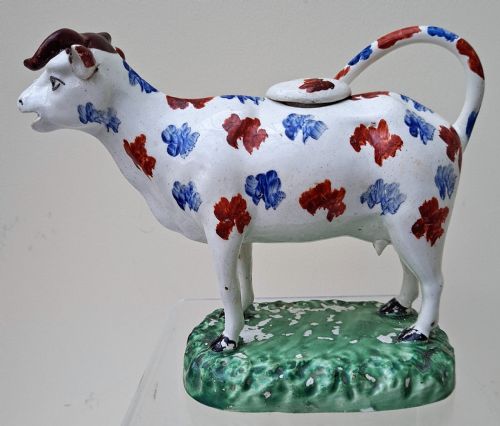
- Cow creamer
- A small ceramic vessel shaped like a cow, used for serving cream or milk through an opening on the back with a tail forming the handle. These whimsical items became popular in Georgian and Victorian households.
Country House Pottery: Frequently Asked Questions
What is country house pottery?
Country house pottery refers to utilitarian and decorative ceramic wares used in domestic rural settings across Britain and Europe. These items include kitchen jugs, decorative figures, and tableware.
They reflect the tastes and practical needs of households from the seventeenth century through to the Edwardian era.
How were slipware jugs used?
Slipware jugs served practical functions in the kitchen and dining room for storing, pouring, and serving liquids such as ale, milk, and water.
Their robust earthenware construction made them durable enough for daily domestic labour.
How do I date Staffordshire figures?
Dating Staffordshire figures involves examining the modelling style, the type of glaze, and the presence of flat backs. Earlier pieces tend to show simpler forms, while Victorian examples often feature brighter colours and more detailed press-moulded construction.
Comparing the subject matter to historical events also helps narrow down the period of production.
Can I use antique earthenware plates?
Using antique earthenware plates for serving food is generally discouraged due to the porous nature of old clay bodies and the potential presence of lead in older glazes.
These pieces are best suited for display and collection rather than modern dining.