
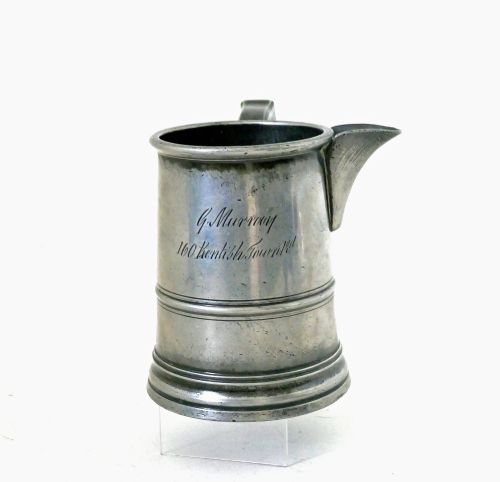


19th Century Ale Jug
A 19th century ale jug brings the weight of tavern life onto the sideboard, offering substantial metal and earthenware forms that collectors prize for their heft.
19th Century Ale Jug
When you search for a 19th century ale jug, you encounter a robust selection of drinking vessels that served communal houses and private tables alike. The selection on this page bridges the Georgian and Victorian eras, taking the form of heavy metal measures, ceramic pitchers, and tall flagons.
You are most likely to meet pewter and copper examples alongside earthenware and tin-glazed vessels, reflecting the varied materials of British and continental taverns. These pieces range from plain utilitarian measures to relief-moulded pottery designed for steady everyday pouring.
The styles span rustic country pieces and Victorian designs, occasionally touching upon German historicism through large faience steins. Each object carries the practical marks of its service, whether engraved with an old tavern name or shaped to hold a precise volume of ale.
Materials and construction methods
Pewter and copper dominate the metalware evidence, shaped through hammering, soldering, and turning to create durable vessels like the distinctive haystack measures. These metal forms rely on precise assembly of sheet and cast components to hold liquid securely without losing their structural balance.
Pottery examples utilise earthenware, buff stoneware, and tin-glazed ceramic bodies, often finished with polychrome glazes or relief-moulded decoration. The makers shaped these clay bodies in moulds or on the wheel before applying glazes that required careful firing in traditional kilns.
Listings feature 19th century and Georgian periods, utilising materials such as pewter, copper, earthenware, and tin-glazed ceramic.
Assessing quality in ale vessels
The distinction between a standard vessel and a superior piece lies in the crispness of the relief moulding and the integrity of the original metal or glaze. Finely cast handles, sharp touchmarks, and clean engraving elevate a utilitarian container into a work of skilled craftsmanship.
Proportion and weight distribution also dictate worth, as heavier copper flagons and well-balanced pewter measures demonstrate superior material density. Pieces that retain their original surface patination without excessive repair command greater interest from experienced collectors.
The 19th Century Ale Jug Glossary
- Flagons
- Large drinking vessels with handles and lids, often holding significant volumes for serving multiple patrons in a tavern setting.
- Haystack measure
- A distinctively shaped tapered metal jug with a flared base and curved neck, commonly utilised for measuring liquid capacities in Ireland and England.
- Tin-glazed earthenware
- Pottery covered with a glaze containing tin oxide to produce a smooth, opaque white surface suitable for painted polychrome decoration.
- Relief-moulded
- A technique where decorative motifs are pressed into the clay body in raised relief during the forming process.
- Old Sheffield plate
- A composite material made by fusing a thin sheet of silver to a thicker copper base, creating tableware with the appearance of solid silver.
19th Century Ale Jug: Frequently Asked Questions
How were these jugs used?
These vessels served to transport, measure, and pour ale in domestic dining rooms and bustling public taverns. Their substantial construction ensured they could withstand the heavy demands of daily hospitality.
Larger flagons and measures held gallons for distribution, while smaller ceramic jugs sat directly on the table for individual guests to pour their drinks.
What materials are most common?
Pewter, copper, and earthenware appear most frequently across these historical listings. Metal versions favoured durability, whilst pottery allowed for colourful glazes and decorative relief moulding.
Each material suited a different tier of service, from the rough-and-ready tavern counter to the refined Victorian dining table.
How do I care for antique metal?
Historic metalware requires minimal intervention to preserve the natural patination built up over centuries. Gentle dusting and occasional cleaning with a soft cloth keep the surface stable.
Avoid harsh modern abrasives that strip away the authentic finish and historical marks left by previous generations of users.
Can I still use them for drinks?
Most collectors treat these pieces as display items rather than functional kitchenware due to their age and historical value. Some metal alloys from earlier centuries may contain lead, making them unsuitable for modern consumption.
It is best to admire their craftsmanship on a shelf or sideboard rather than filling them with contemporary beverages.
How do I distinguish periods?
Georgian examples often lean towards simpler, classical proportions and restrained decoration, such as early relief moulding. Victorian pieces tend to embrace heavier ornamentation, larger capacities, and diverse regional styles like the Irish haystack.
Examining the manufacturing marks and material composition helps narrow down the exact decade of production.