


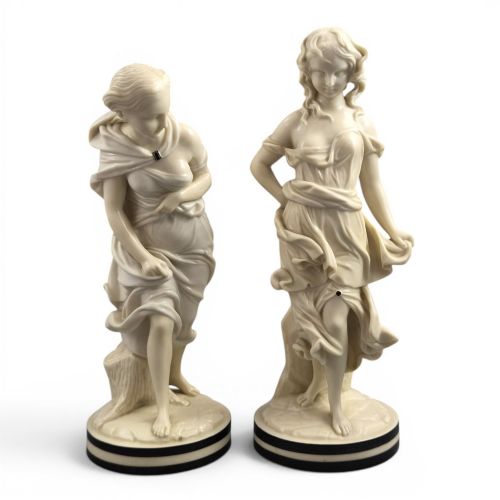


19th Century Parian
These nineteenth century parian pieces offer the matte texture of marble through porcelain, capturing classical and Victorian subjects for collectors.
19th Century Parian
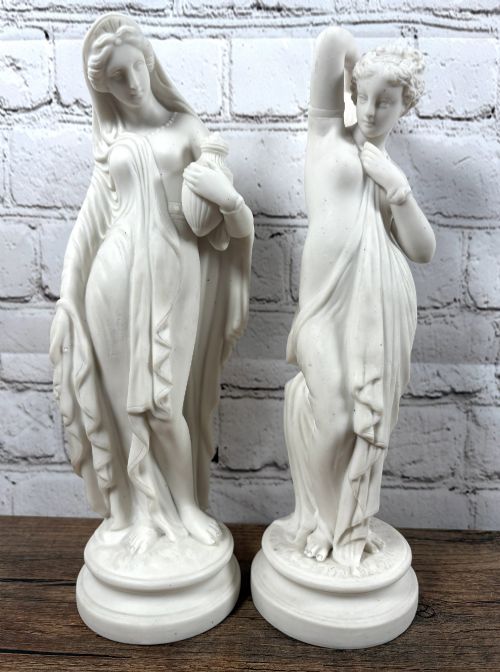
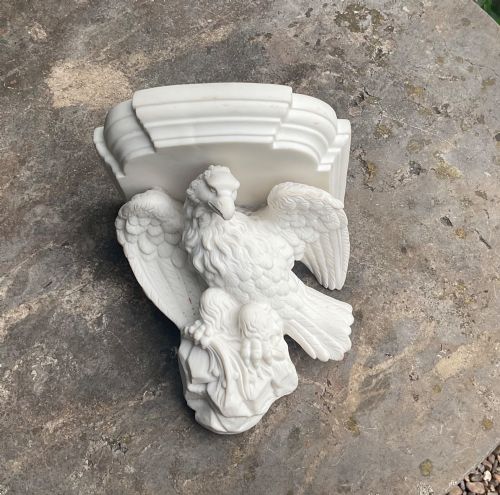
Nineteenth century parian encompasses figures, wall brackets, scent bottles, and jugs shaped during the Victorian era and the wider nineteenth century. Collectors encounter sculptural works depicting classical subjects, literary figures, and animals.
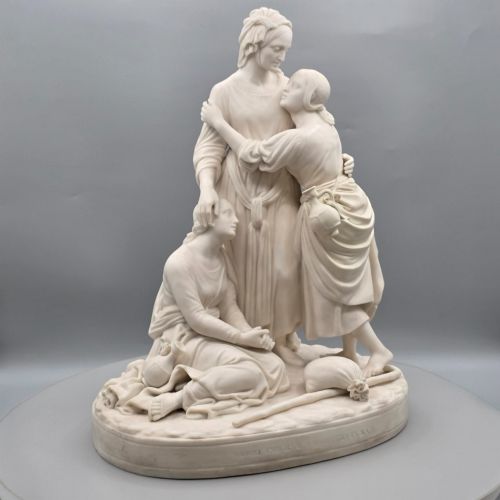
The objects span from small cabinet statuettes to larger scale studies and centrepiece dishes. Formats range from single figures to pairs and groups modelled after well-known sculptors.
Origins stretch across English potteries and European makers working in the neoclassical and Victorian classicism styles. The aesthetic mimics carved marble without the accompanying glaze.
Materials and Techniques
Parian porcelain, also recorded as bisque porcelain or parian ware, is cast in moulds rather than thrown on a wheel. This unglazed ceramic technique produces a fine-grained, matte surface resembling statuary marble.
Certain pieces incorporate gilt or gilt bronze mounts, combining the white ceramic body with metallic accents. Details are rendered through careful moulding before firing at high temperatures.
19th Century Parian Retail Price Guide 2026
Typical asking prices for 19th century parian among the pieces listed under this phrase on Sellingantiques today, from the lower quarter to the upper quarter. They describe what is for sale here now, not the wider market.
Materials extend across parian porcelain, bisque porcelain, and gilt bronze elements.
Assessing Quality
Finer items demonstrate ambitious scale and complex composition, such as multi-figure groups or intricate animals. The purity of the matte porcelain body and the subtlety of any applied gilding also distinguish the work.
Minton·Royal Worcester·Copeland·Kerr and Binns
The 19th Century Parian Glossary
- Parian ware
- A type of unglazed hard-paste porcelain developed in the nineteenth century to imitate carved marble. It fires to a dense, matte finish suited to figurative sculpture.
- Biscuit porcelain
- Ceramic fired once without glaze, leaving a porous, matte surface texture. It is frequently synonymous with parian in nineteenth-century cataloguing.
- Neoclassical
- A style drawing inspiration from classical antiquity, often featuring mythological subjects and classical drapery. It heavily influences Victorian parian sculpture.
- Statuary figure
- A sculptural piece modelled as a standalone statue rather than a functional vessel. These works often replicate monumental marble sculptures in miniature.
19th Century Parian: Frequently Asked Questions
What is nineteenth century parian?
Parian is an unglazed ceramic material developed in the nineteenth century to imitate carved marble. It takes the form of figures, jugs, and decorative objects with a distinctive matte finish.
Makers utilised moulds to capture fine sculptural detail, producing pieces that range from classical studies to Victorian genre subjects.
How do you clean parian ware?
The unglazed, porous surface requires careful handling to avoid absorbing dirt or stains. Gentle dusting with a soft brush is generally sufficient for maintenance.
Avoid abrasive cleaners or soaking the ceramic, as moisture can penetrate the unglazed biscuit body and discolour the material.
Are all parian pieces marked?
Not all pieces bear factory marks or signatures. Many nineteenth-century items relied on paper labels or were produced without impressed ciphers.
Unmarked works are attributed through stylistic comparison, modelled subjects, and the specific composition of the ceramic body.
What subjects appear on parian figures?
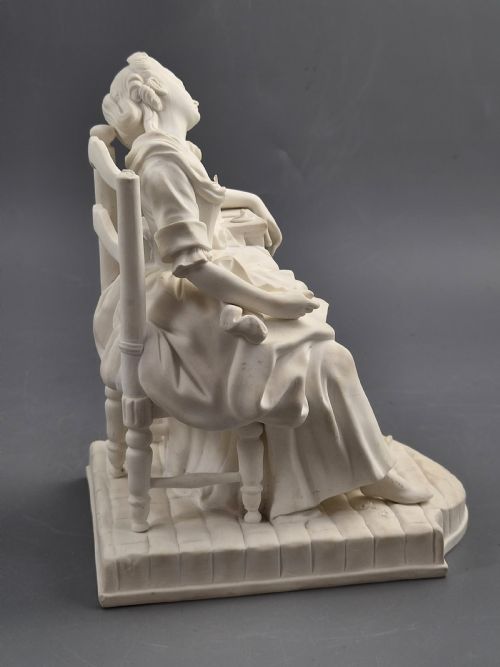
Common subjects include classical figures, literary characters, historical personages, and animals. Sculptors frequently reinterpreted antique statues or exhibited modern Victorian narratives.
Allegorical groups and children at play also feature prominently among the recorded forms.