
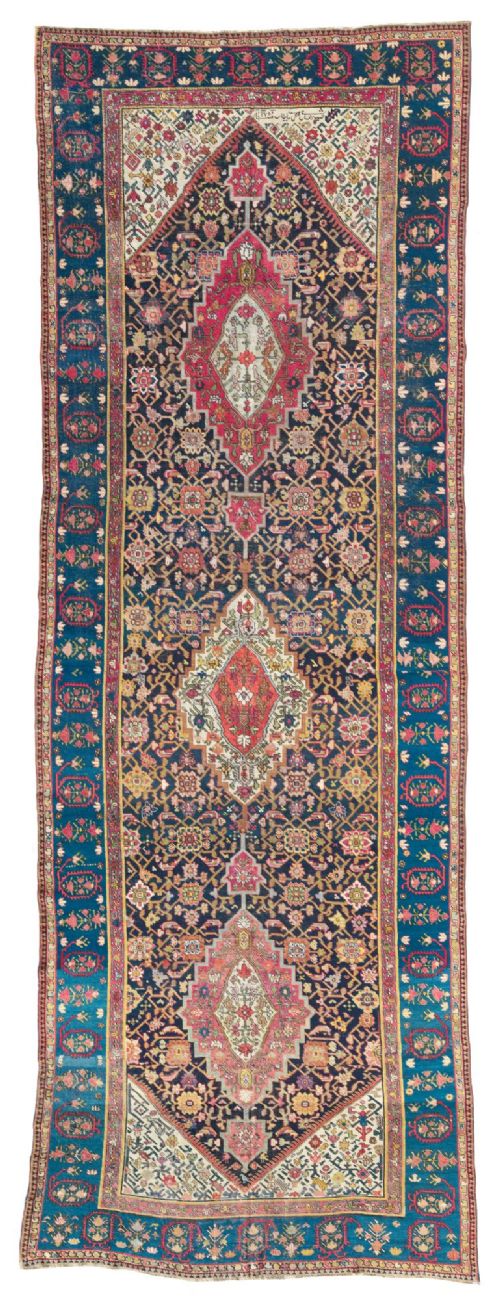
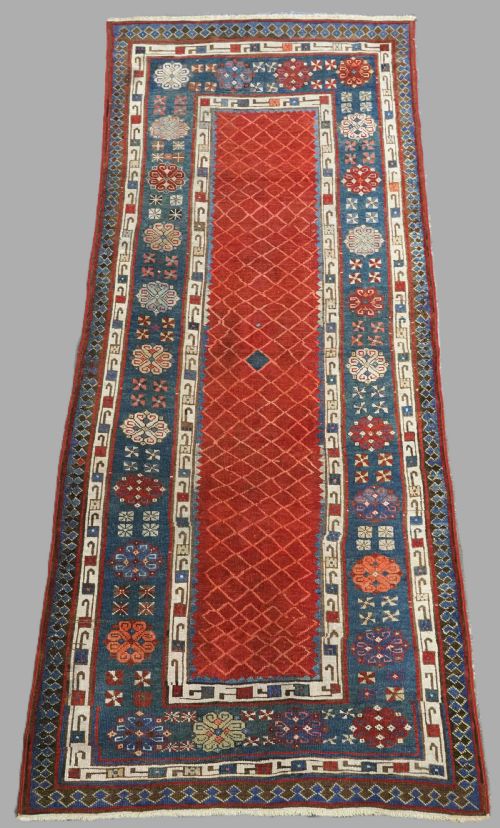
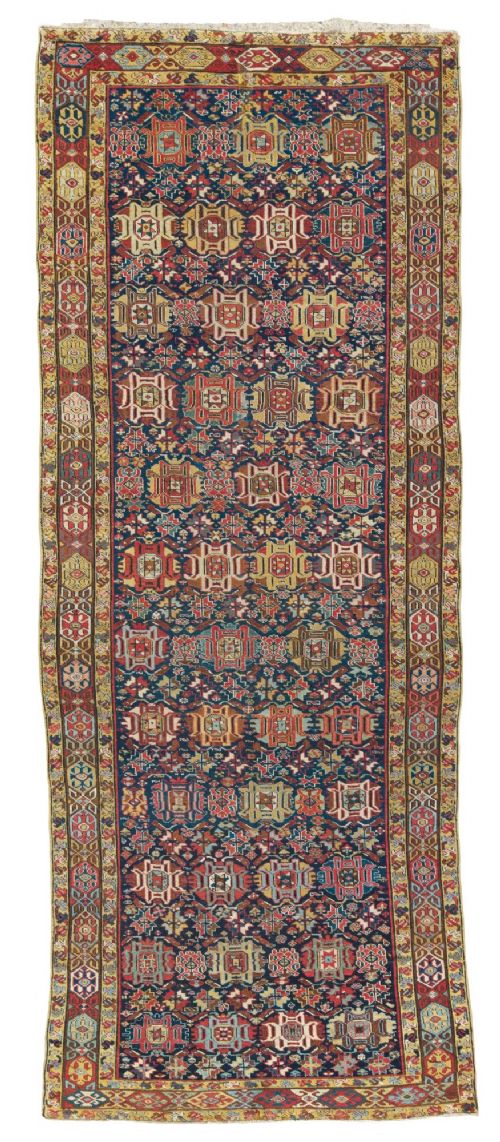


19th Century Long Rug
A 19th century long rug brings substantial proportion and historic woven geometry to corridors, galleries and long floors.
19th Century Long Rug
A 19th century long rug encompasses narrow formats, gallery carpets, and hallway runners woven across Persia and the Caucasus during the Victorian era. These textiles served practical purposes in long interior spaces while displaying the distinct tribal and regional iconography of their makers.
The pieces available originate from specific regional centres including Karabagh, Talish, Kuba, Bidjar, Serapi, and Kazak. Their formats range from narrow, linear runners to broader kelleh proportions suited for substantial gallery spaces.
Makers utilised traditional designs such as lattice patterns, medallions, boteh motifs, and geometric stars. Each weaving tradition imparted specific structural and visual qualities tied to its geographic origin.
Materials and construction
Weavers constructed these textiles primarily using wool piles knotted onto cotton or wool foundations. The quality of the wool determined the lustre and resilience of the pile under daily foot traffic.
Natural dyes sourced from plants and minerals provided the rich colour palettes seen in the wool. These dyestuffs produced subtle tonal variations and depth that developed a softer patina over decades of use.
The listings span 19th-century production across the Caucasus and Persia, featuring wool and cotton materials in runner and gallery formats.
Factors determining quality
The density and tightness of the knotting dictate the structural integrity and clarity of the woven design. Finer knot counts allow for sharper geometric lines and more intricate medallion or lattice details.
The integrity of the wool pile and the stability of the foundation threads determine how well the textile withstands movement. Surviving examples with healthy pile retention and intact original borders represent superior survival from the period.
The 19th Century Long Rug Glossary
- Kelleh
- A large format carpet that is longer than it is wide, sitting between standard room sizes and runner dimensions. These formats were traditionally utilised in grand Persian reception rooms.
- Medallion
- A central ornamental design motif placed in the field of the rug. It often anchors the geometric or floral composition of Caucasian and Persian weavings.
- Boteh
- A stylised almond or pear-shaped motif representing a-shoot or floral spray. It appears frequently in repeating rows across Persian tribal and Caucasian pieces.
- Abrash
- Gradual variations in colour shade across the field caused by changes in dye batches or wool lots. This characteristic demonstrates the hand-dyed nature of traditional wool production.
- Pile
- The upright yarn loop surface of the rug formed by individual knots. Its depth and condition dictate the tactile feel and visual texture of the weaving.
19th Century Long Rug: Frequently Asked Questions
Where were these long rugs originally placed?
These long formats were woven to fit narrow interior architectural spaces such as corridors, hallways, and large reception galleries. Their elongated proportions helped warm wooden floorboards and guide movement through domestic rooms.
In many regional homes, such pieces also defined specific seating areas or lined the perimeter of larger reception halls. Their durable wool construction handled continuous foot traffic while adding insulation to stone or timber floors.
How do I care for a historic wool runner?
Maintenance requires gentle, regular vacuuming without rotating brush heads to prevent snagging the aged wool pile. Professional conservation cleaning should occur periodically to remove embedded grit from the foundation threads.
Placing a breathable, non-slip underlay beneath the textile prevents lateral shifting and reduces friction against hard floors. Keeping the rug out of direct, harsh sunlight preserves the natural plant and mineral dyes.
How do I distinguish Caucasian designs from Persian ones?
Caucasian pieces typically display bolder geometric motifs, sharper lines, and crisper star or medallion structures. Their colour palettes often feature high-contrast combinations on dark blue or ivory fields.
Persian long rugs tend to incorporate more curvilinear floral patterns, intricate lattice networks, and densely packed boteh designs. Regional weaves from centres like Bidjar or Serapi show heavier structural foundations and softer botanical shading.
What is an abrash and is it a fault?
An abrash is a visible tonal shift within a single colour field, appearing as horizontal bands of slightly lighter or darker hue. It occurs naturally when weavers switch to a fresh batch of hand-dyed wool.
Far from being a fault, collectors view abrash as evidence of authentic traditional craft methods. It confirms that the wool was dyed in small batches using natural plant materials rather than uniform chemical agents.