

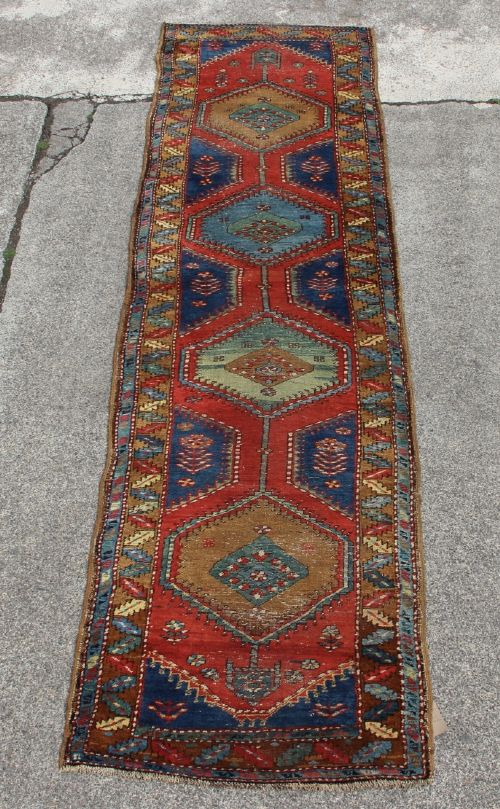

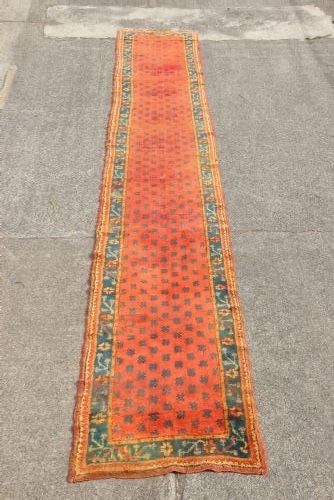
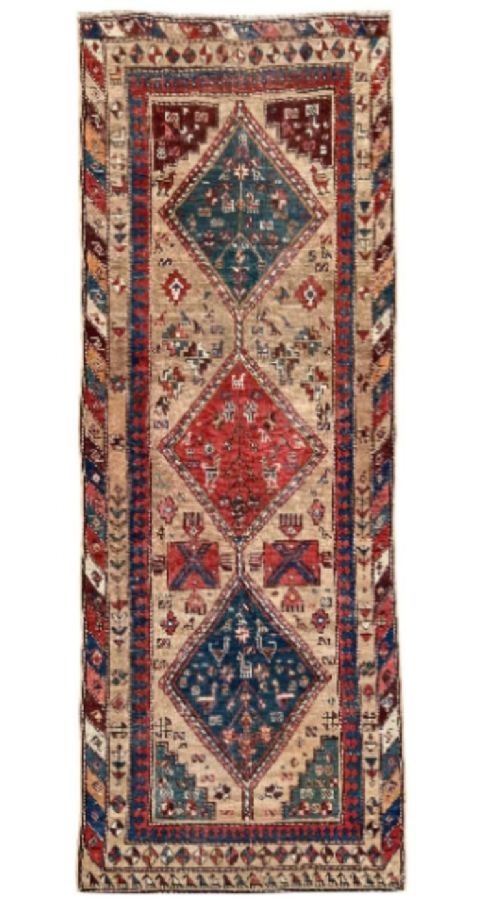
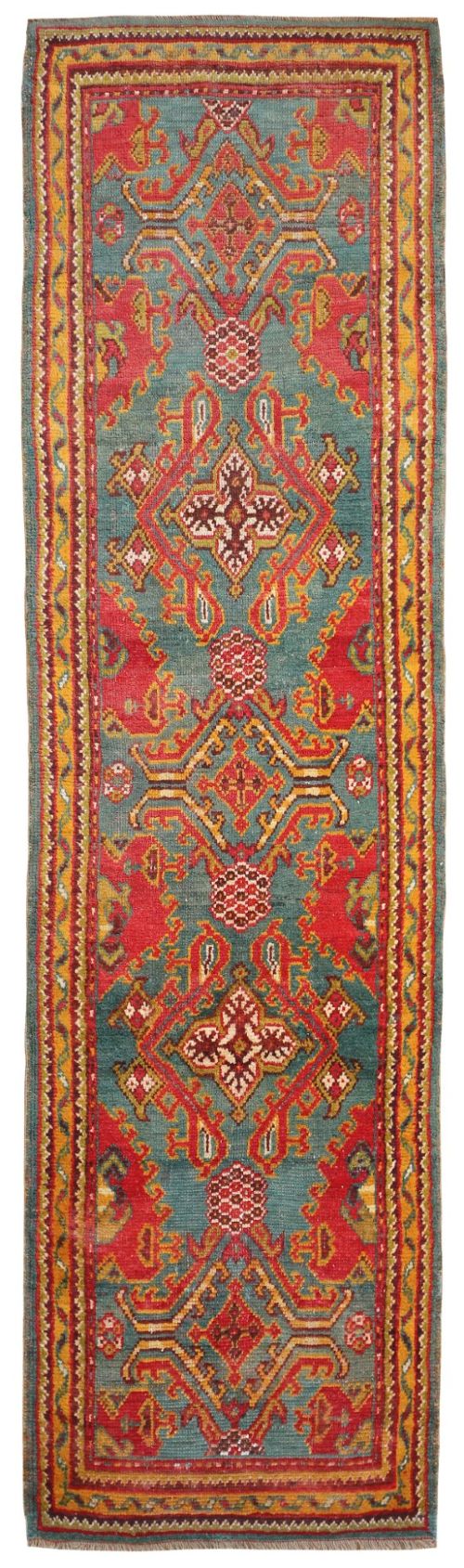
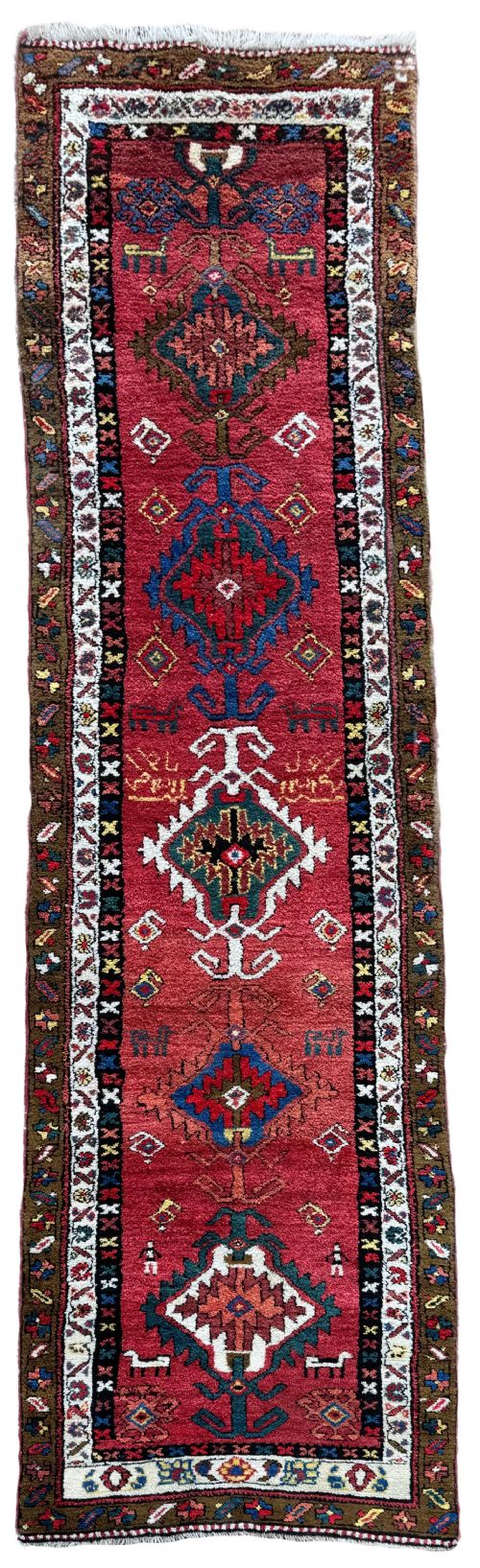
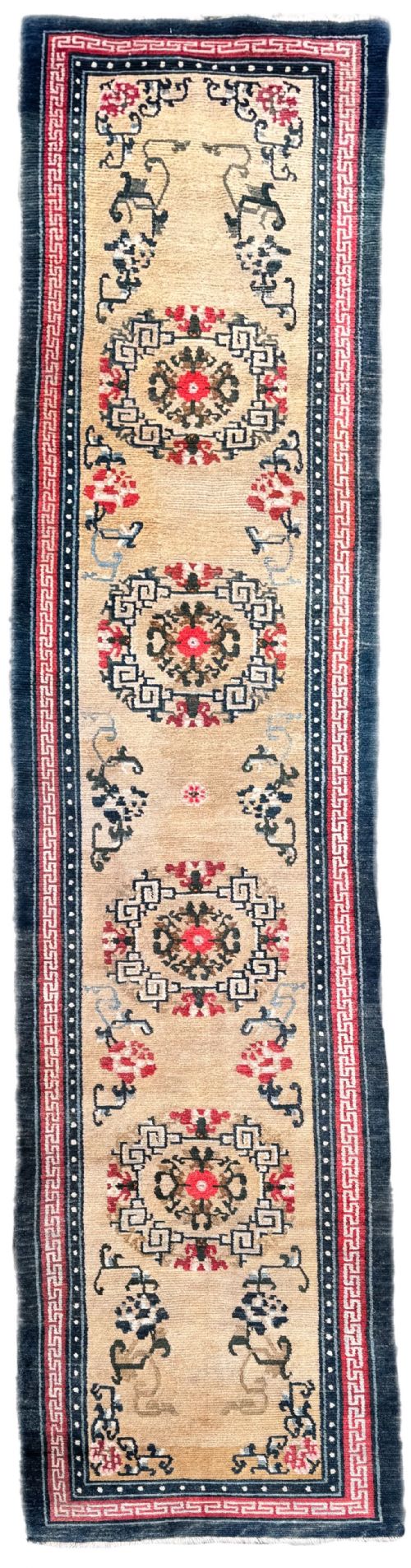

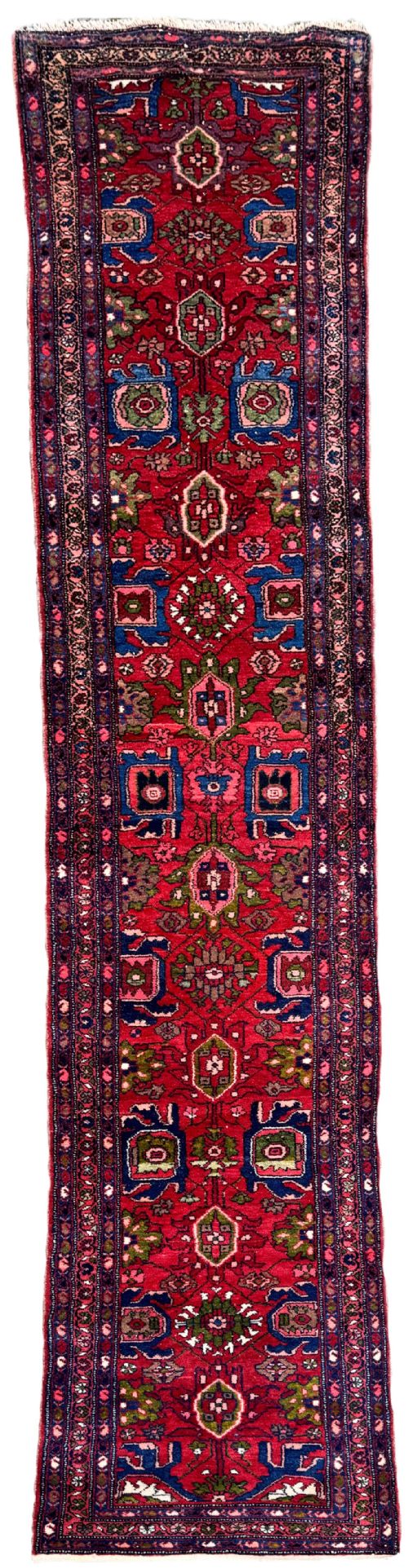
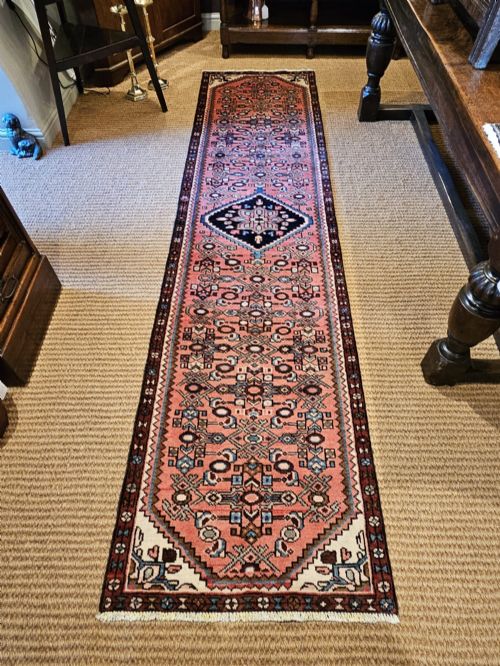
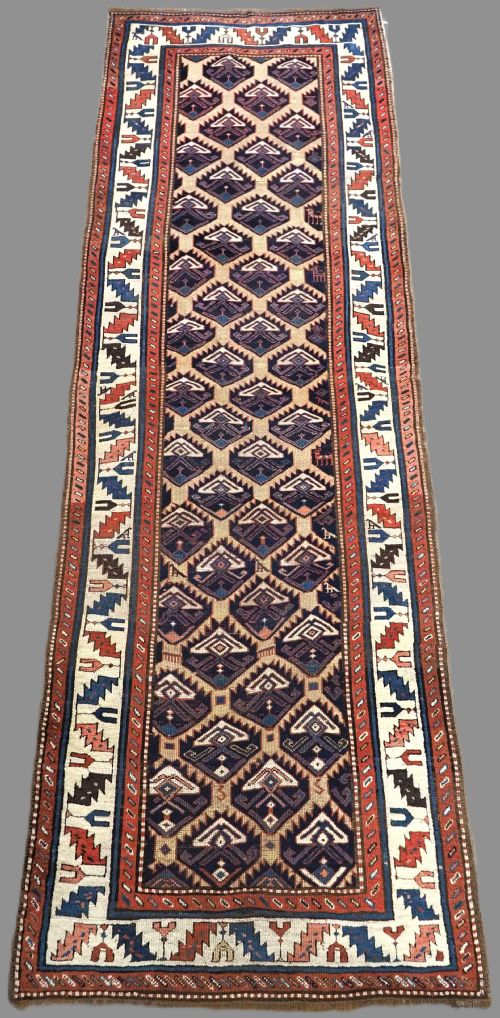
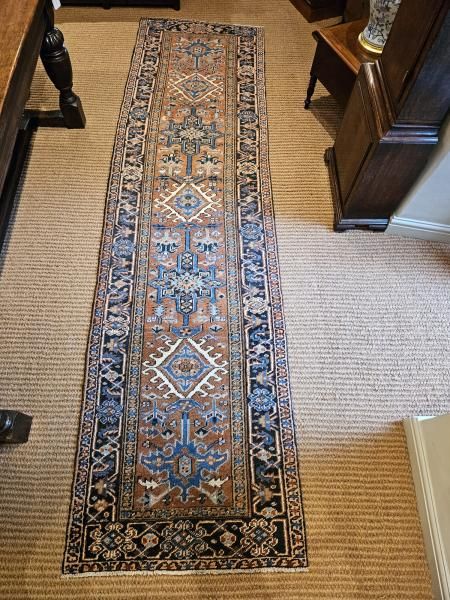
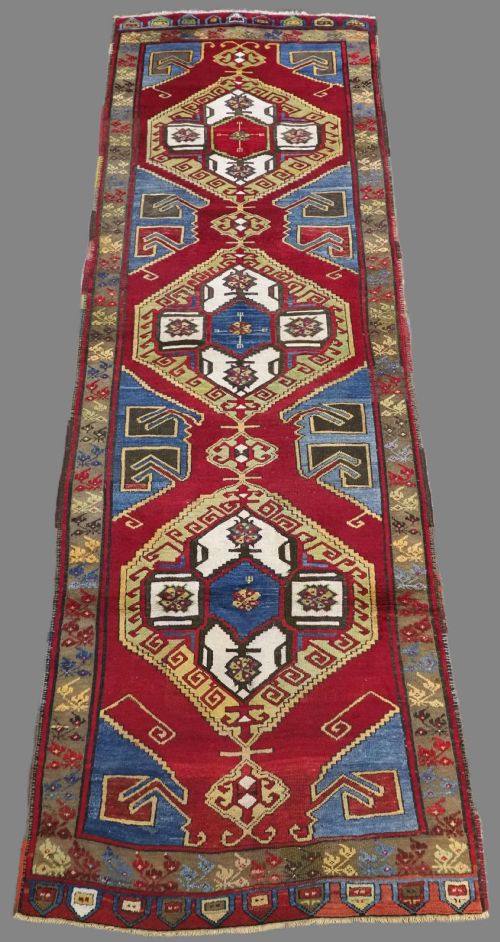
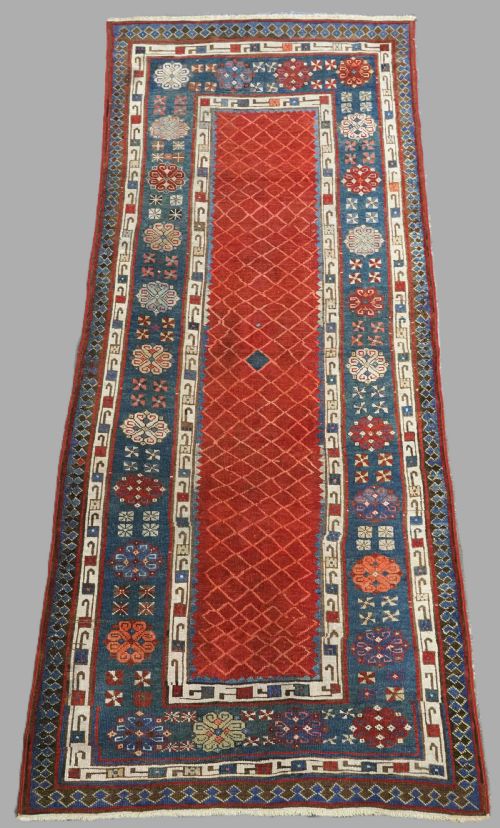

Hand Knotted Hallway Carpet
A hand knotted hallway carpet brings linear structure and dense geometric pattern to a narrow space through time-tested weaving traditions.
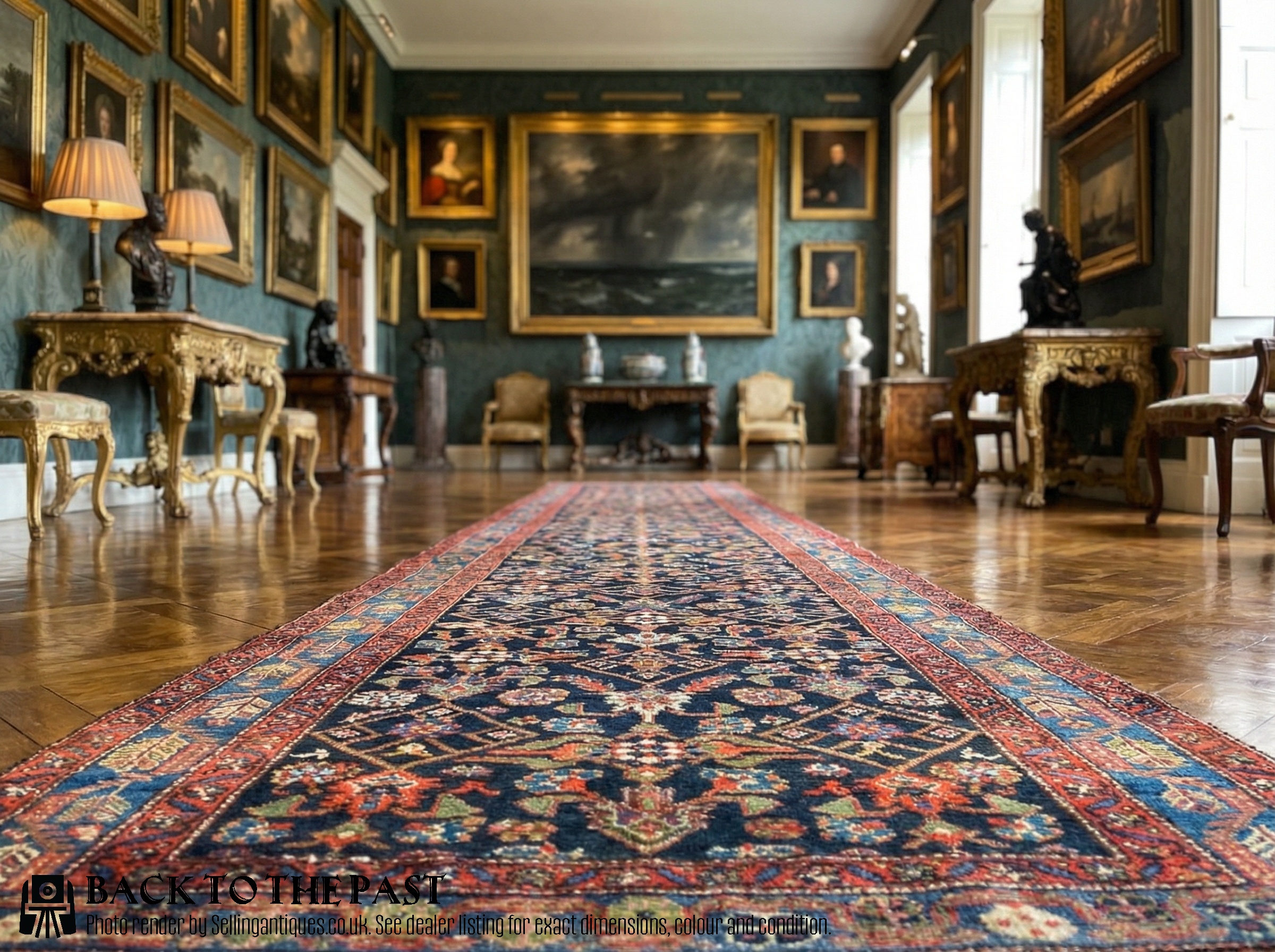
Hand Knotted Hallway Carpet
A hand knotted hallway carpet typically takes the form of an elongated runner designed to span narrow domestic corridors and landings. These pieces emerge from various regional weaving traditions, including Persian, Caucasian, Turkish, and Kurdish workshops.
The inventory on this page spans the late nineteenth century through the early twentieth century, presenting diverse tribal and traditional village designs. Lengths vary significantly, accommodating both modest halls and exceptionally long galleries.
Materials and Construction
Makers construct these textiles using wool for the pile and foundation yarns, frequently paired with cotton for structural support in specific regional types. Hand-knotting techniques secure the pile firmly to the warp and weft threads, ensuring durability under regular foot traffic.
Natural dye sources yield deep saturated hues of indigo, madder, and earth tones that mellow gradually across decades of use and exposure to light.
Hand Knotted Hallway Carpet Retail Price Guide 2026
Typical asking prices for hand knotted hallway carpet among the pieces listed under this phrase on Sellingantiques today, from the lower quarter to the upper quarter. They describe what is for sale here now, not the wider market.
Dated pieces span the nineteenth century up to nineteen-sixty.
Evaluating Execution and Materials
Knot density and structural integrity distinguish finer examples from simpler utilitarian weaves, dictating the crispness of geometric motifs and floral elements. The precision of the drawing and the complexity of the lattice or medallion layout reflect the skill of the individual weaver.
Condition plays a role in assessment, where even wear across the wool pile indicates balanced use, while historical repairs demonstrate the ongoing maintenance these domestic textiles receive over generations.
The Hand Knotted Hallway Carpet Glossary
- Runner
- A long, narrow carpet format specifically proportioned for corridors, hallways, and staircases.
- Warp
- The stationary vertical threads stretched upon a loom that form the foundational skeleton of the carpet.
- Weft
- The horizontal threads passed alternately over and under warp threads to bind the knots in place.
- Pile
- The upright cut or looped wool surface of the carpet that forms the visible and tactile layer.
- Lattice
- A repeating gridwork pattern composed of intersecting diagonal lines that encloses floral or geometric motifs.
Hand Knotted Hallway Carpet: Frequently Asked Questions
How do I choose the correct length?
Measure the clear floor space of the hallway, leaving an equal margin of exposed wood or stone around the perimeter of the textile.
Ensure doors swing freely above the pile height without catching on the edges of the carpet.
How should I care for an old wool runner?
Vacuum the surface gently using suction only, avoiding revolving brush heads that pull at the wool pile.
Rotate the runner periodically to distribute wear evenly along high-traffic pathways.
What underlay should I use?
Place a breathable, non-slip mesh underlay beneath the carpet to prevent shifting on hard hallway floors.
An appropriate underlay also cushions the textile against impact and reduces friction between the foundation and the floorboards.
How do I distinguish regional styles?
Examine the specific geometry of the borders and the arrangement of central medallions, which often follow distinct tribal or village conventions.
Palette choices and structural quirks in the weave provide further clues to geographic origin.