
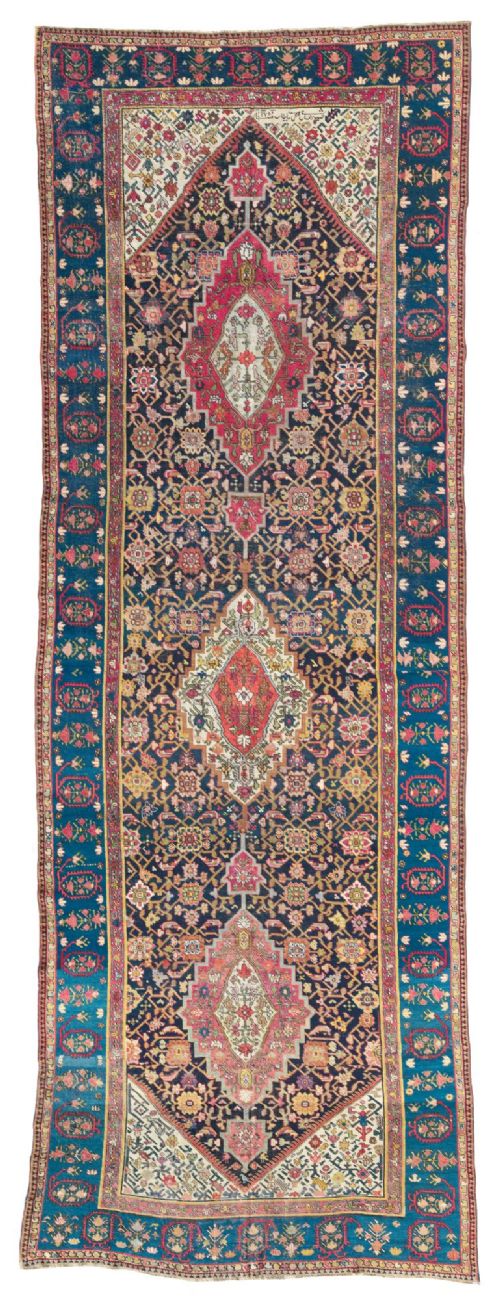
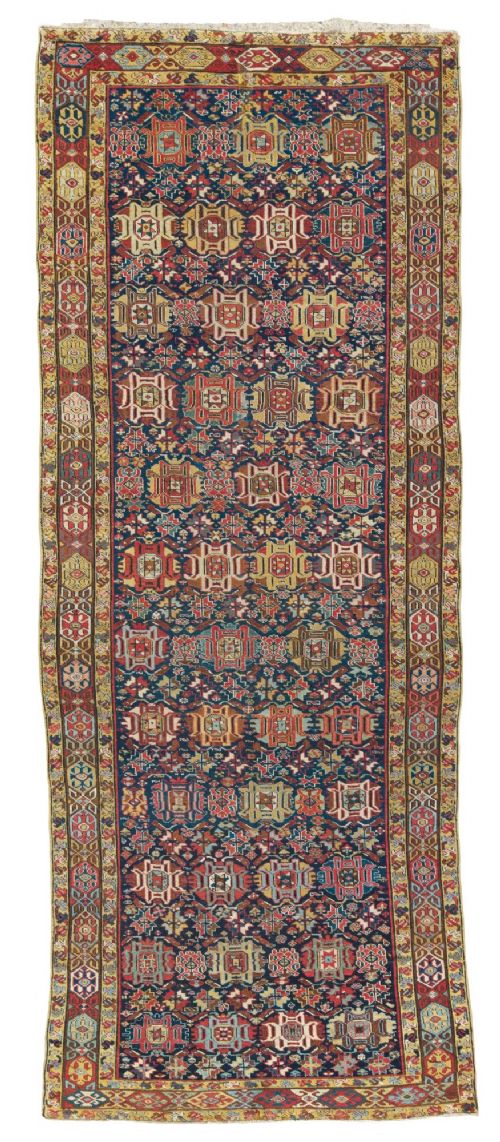


Hand Knotted Wool Kelleh
A hand knotted wool kelleh is a substantial antique carpet format offering a narrow, elongated proportion woven for traditional domestic spaces.
Hand Knotted Wool Kelleh
A hand knotted wool kelleh is a large floor covering or runner format originating primarily from Persian, Kurdish, and Caucasian weaving traditions. These pieces bridge the dimensions between standard room-size carpets and long runners, suited for hallways or specific room proportions.
The selection on this page centres on antique examples dating from the mid-nineteenth century through the early twentieth century. Common stylistic attributions in the inventory include Bidjar, Kurdish, Malayer, Karabagh, and Luri tribal origins.
How they were made
Weavers constructed these carpets using wool pile knotted onto cotton or wool foundations. Hand-spun wool appears frequently across the regional pieces, yielding varied surface textures and natural variations in pile density.
Natural dyeing methods provided the palette for traditional motifs such as tree of life designs, boteh patterns, and harshang crab borders. The knotting technique determined the durability and structural firmness of each textile.
Some nineteenth-century weavers inserted tiny protective amulets or stray differently-coloured knots into the wool pile to ward off the evil eye.
What varies in quality
Quality in a hand knotted wool kelleh depends upon the tightness of the knotting and the precision of the tribal design execution. Finer knots permit more intricate border details and sharper geometric definitions.
The choice of wool and the depth of the pile influence how the surface wears over generations. Consistency in dye saturation and the integrity of the foundational warp and weft threads determine the structural longevity of the carpet.
The Hand Knotted Wool Kelleh Glossary
- Kelleh
- A large, elongated rug format traditionally longer than it is wide, designed for specific room proportions. This format sits between a standard carpet and a long narrow runner.
- Boteh
- A traditional almond or pear-shaped motif symbolising life and eternity. It appears repeatedly across Persian and Kurdish textile designs.
- Harshang border
- A repeating crab-like geometric pattern found along the framing edges of certain Persian carpets. It provides a structured contrast to the central field designs.
- Warp
- The stationary vertical threads stretched across the loom that form the structural skeleton of the carpet. The pile knots are tied directly around these foundation threads.
- Weft
- The horizontal threads passed through the warp threads after each row of knots to secure the structure. Wool and cotton are common materials for this function.
Hand Knotted Wool Kelleh: Frequently Asked Questions
Where were kelleh carpets used?
These long formats were traditionally woven for specific architectural spaces in Persian and Caucasian homes, often placed along the perimeter of larger rooms or in extended reception halls.
Their narrow proportions allowed them to furnish corridors and public areas where standard square or broad rectangular carpets would not fit.
How do I care for an antique kelleh?
Protect the wool pile by placing a breathable, non-slip underlay beneath the carpet to prevent sliding and reduce friction against hard floors.
Vacuum gently using suction only without rotating brush bars, and rotate the carpet periodically to ensure even exposure to light and foot traffic.
What is a tribal kelleh?
A tribal kelleh is woven by nomadic or village groups such as the Kurds, Luri, or Khamseh confederations rather than in urban workshop centres. These pieces display expressive, less rigid geometric patterns and spontaneous colour choices.
The materials often include hand-spun wool with local dye variations that reflect the specific regional traditions of the makers.
How can I tell regional styles apart?
Regional attributions rely on specific border motifs, knotting density, and palette combinations. For example, Bidjar pieces are known for dense, heavy foundations, while Karabagh or Caucasian examples often feature bolder geometric medallions.
Examining the structural materials used in the foundation helps confirm whether a piece originates from northwest Persia or the Caucasus.