

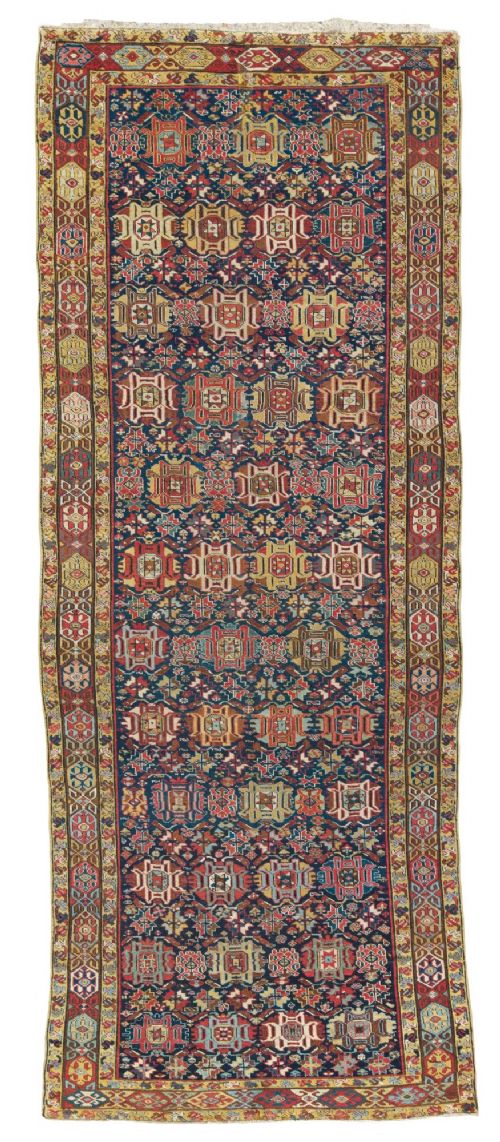


Antique Oriental Kelleh Carpet
An antique oriental kelleh carpet is a substantial room-sized floor covering that brings rich tribal geometry and deep historic character into a home.
Antique Oriental Kelleh Carpet
When you search for an antique oriental kelleh carpet, you encounter large-format tribal and village floor coverings originating primarily from nineteenth- and early twentieth-century Persia and the Caucasus. These grand formats bridge the gap between standard area rugs and room-filling carpets, functioning historically as central seating or perimeter floor coverings in traditional households.
The pieces on this page span diverse regional traditions, including Kurdish, Bidjar, Karabagh, and Malayer workshops. You will frequently meet elongated proportions designed specifically for narrow reception halls or expansive chamber floors.
Makers utilised traditional regional styles such as Persian Tribal, Caucasian, and Tribal & Nomadic designs. These pieces carry motifs ranging from boteh and cloud bands to geometric crab patterns and stylized dragons.
How they were made
Weavers constructed these carpets using natural materials, predominantly hand-spun wool and standard wool pile set upon sturdy cotton foundations. This pairing provided the structural tension necessary to keep large format carpets flat and stable under heavy domestic use.
Dyers employed natural dyestuffs to achieve deep, saturated tones that mellow gracefully over decades. Hand-knotting techniques varied by region, resulting in dense, resilient piles capable of withstanding generations of foot traffic.
Several carpets feature the crab pattern border, bringing crustaceans underfoot in inland mountain rooms.
What varies in quality
Quality in these carpets rests upon the density of the knotting and the precision of the wool preparation. Finer hand-spun wool yields a more tactile handle and allows intricate geometric motifs to retain crisp definition.
The stability of the cotton foundation and the uniformity of the weave dictate how well a large format piece maintains its structural integrity over time. Regional variations also influence desirability, with certain tribal workshops commanding attention for particularly imaginative border designs and colour saturation.
The Antique Oriental Kelleh Carpet Glossary
- Kelleh
- A large format rectangular carpet, typically longer than a standard room rug but narrower than a full palace carpet. It serves as a traditional room-length floor covering.
- Boteh
- A stylized almond or paisley motif representing a floral shoot or cypress tree. This ancient symbol appears frequently across Persian and Caucasian textile traditions.
- Cloud Band
- A curved ribbon-like motif originating in Chinese art and adopted into oriental carpet design. It drifts across fields and borders to represent movement in the sky.
- Bidjar
- A town and regional centre in western Persia known for heavy, dense carpets built on robust foundations. These pieces earn renown for exceptional durability.
- Karabagh
- A mountainous region in the Caucasus producing distinctive rugs with rich coloration and bold geometric or pictorial layouts. Weavers here combined local tribal motifs with Persian influences.
Antique Oriental Kelleh Carpet: Frequently Asked Questions
Where did they place kelleh carpets?
These large format carpets were traditionally laid along the perimeter or down the centre of long reception rooms in traditional homes. Their elongated proportions suited grand chamber layouts.
Today, they function effectively in hallways, living rooms, and dining spaces where narrow, room-balancing dimensions are required.
How do I identify a Kurdish kelleh?
Kurdish pieces often display robust wool, sturdy construction, and vernacular tribal motifs such as repeated boteh or geometric field patterns. They reflect village and nomadic weaving practices from western regions.
Examining the weave density and foundation materials helps distinguish these village carpets from urban workshop productions.
What materials make up these carpets?
Most examples combine a wool pile with cotton warps and wefts, though certain older tribal pieces incorporate hand-spun wool throughout. Natural fibres give these textiles their characteristic resilience.
Over decades, these materials develop a soft patina that signals age and genuine historical use.
How do I care for an antique kelleh?
Protect the carpet by placing it in areas with moderate foot traffic and utilising a breathable underlay to prevent slipping. Regular gentle vacuuming without a rotating brush roll keeps dust from settling into the wool pile.
Professional specialist cleaning is recommended when the textile requires deeper maintenance.