
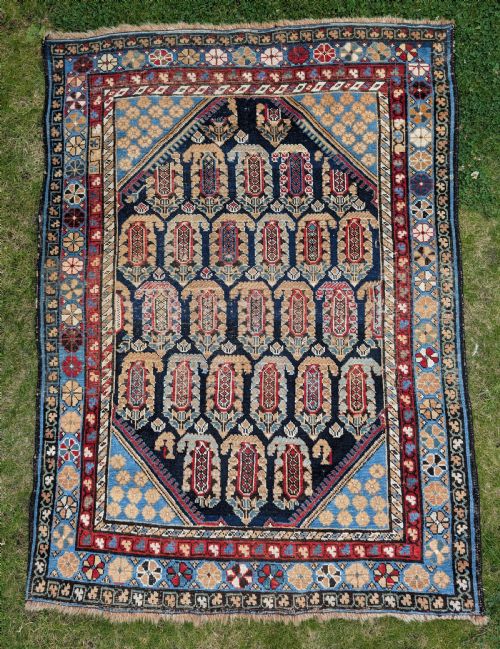
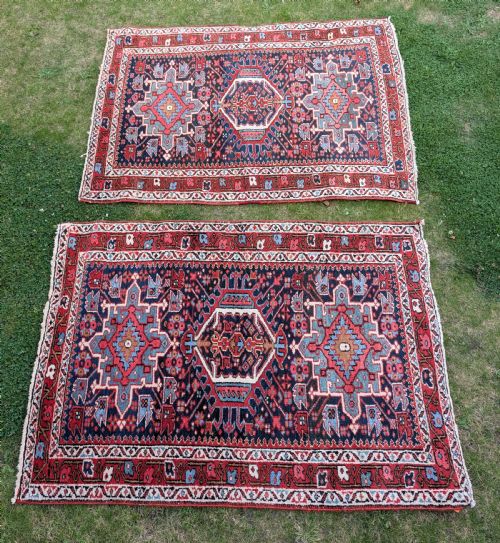
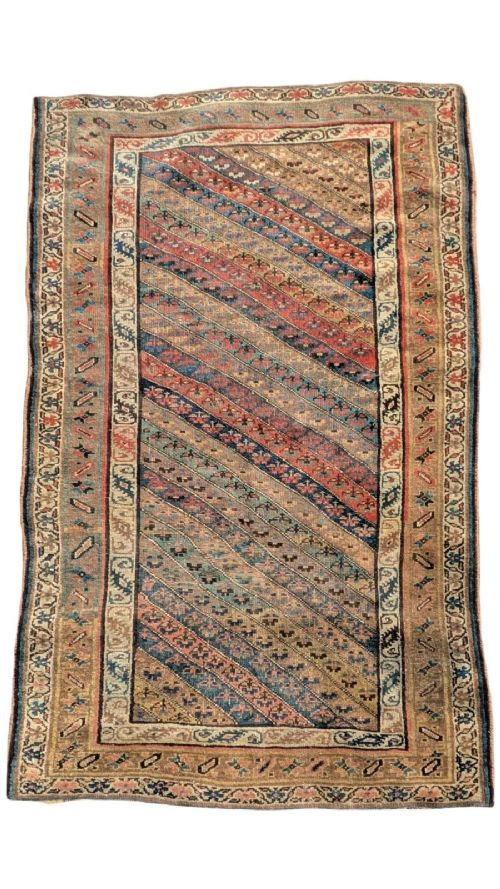
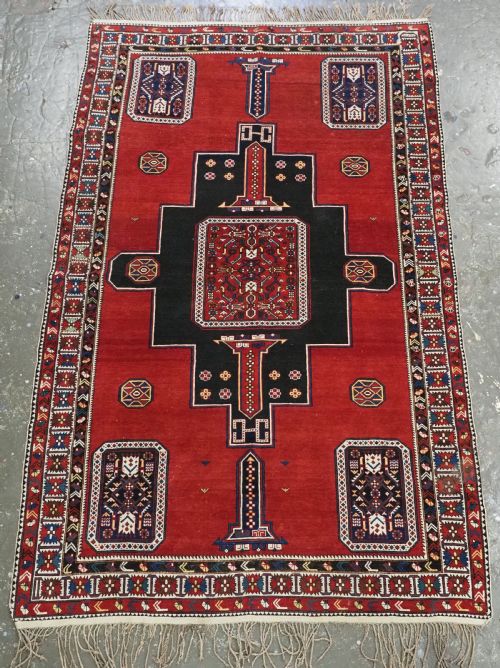
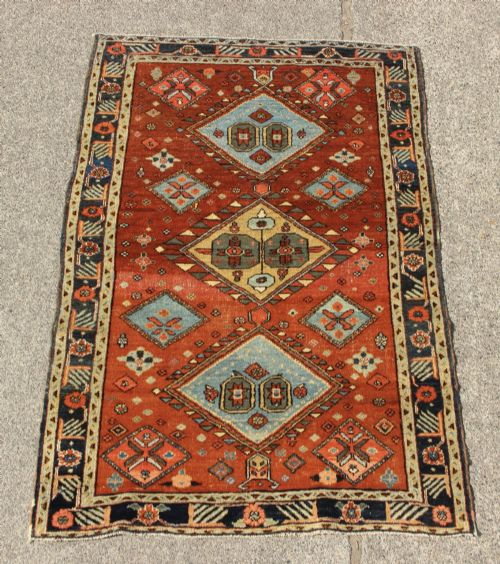
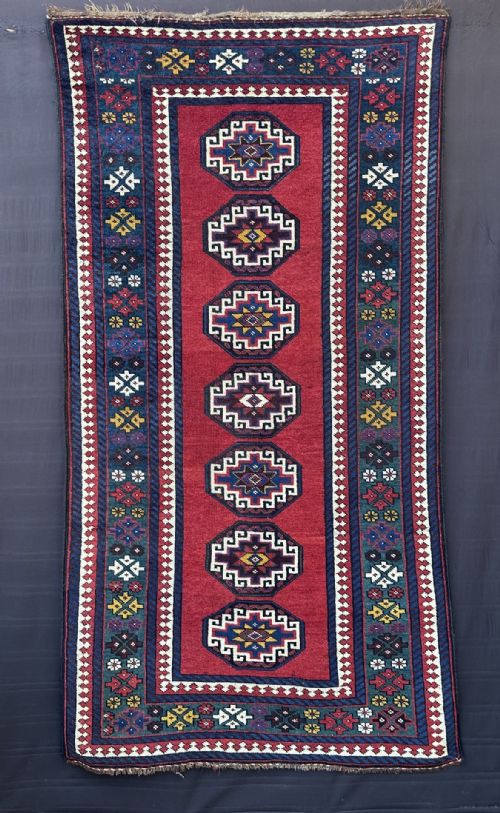
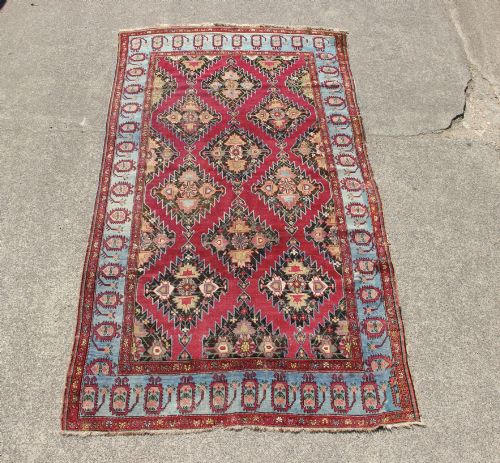
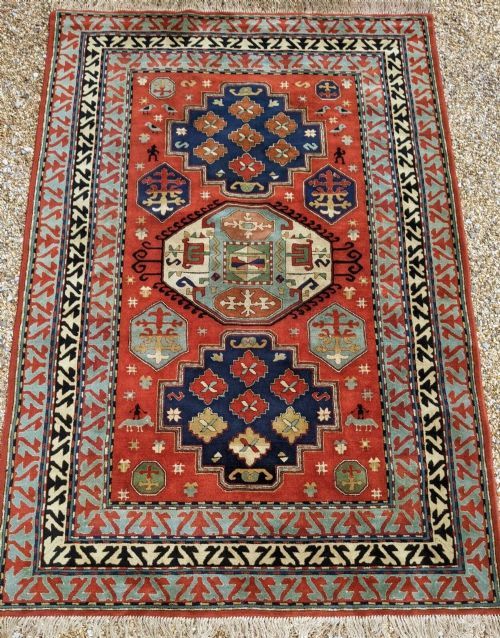
Geometric Caucasian Area Carpet
These geometric caucasian area carpets bring together tribal woolwork and distinct regional motifs that anchor a room with pattern and history.
Geometric Caucasian Area Carpet
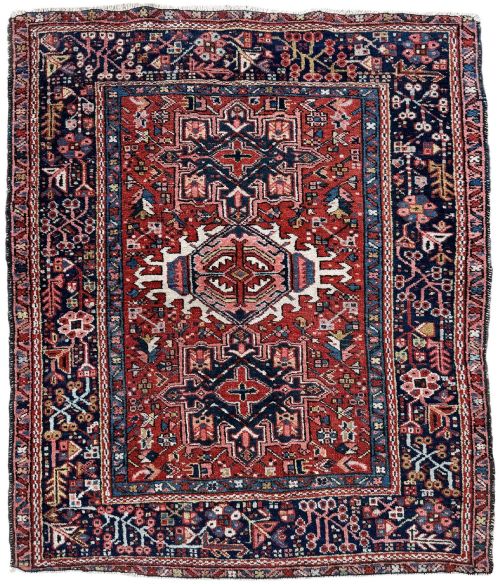
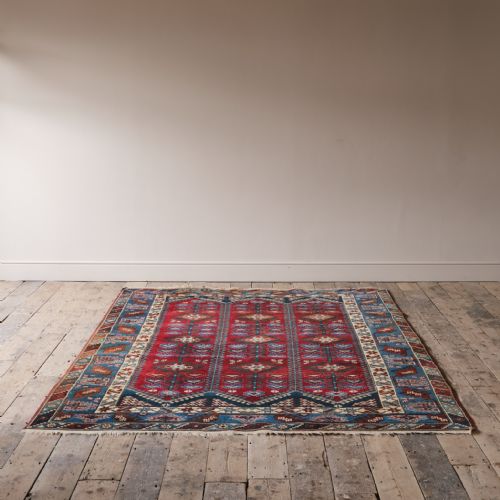
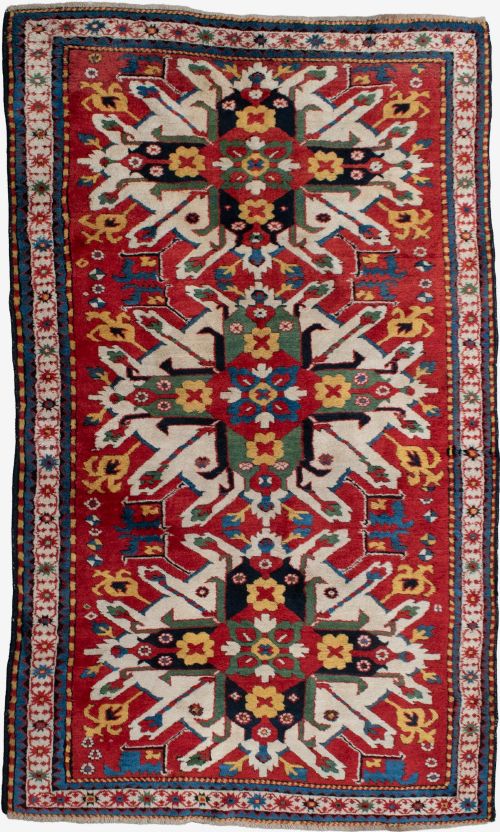
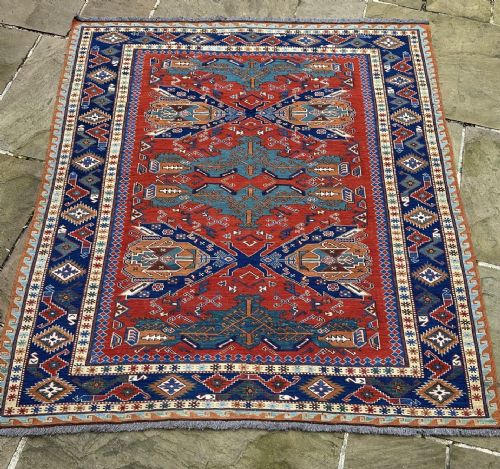
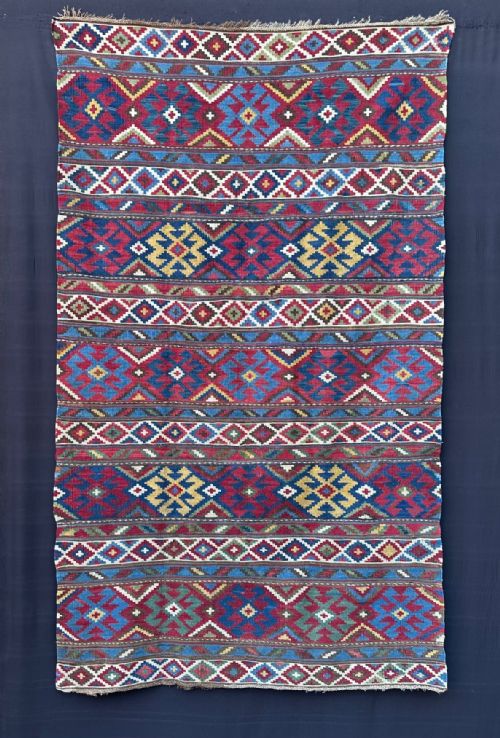
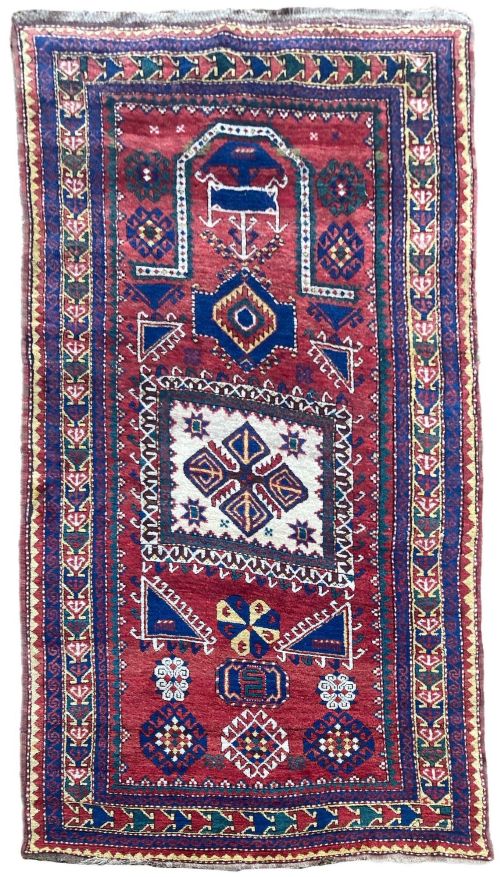
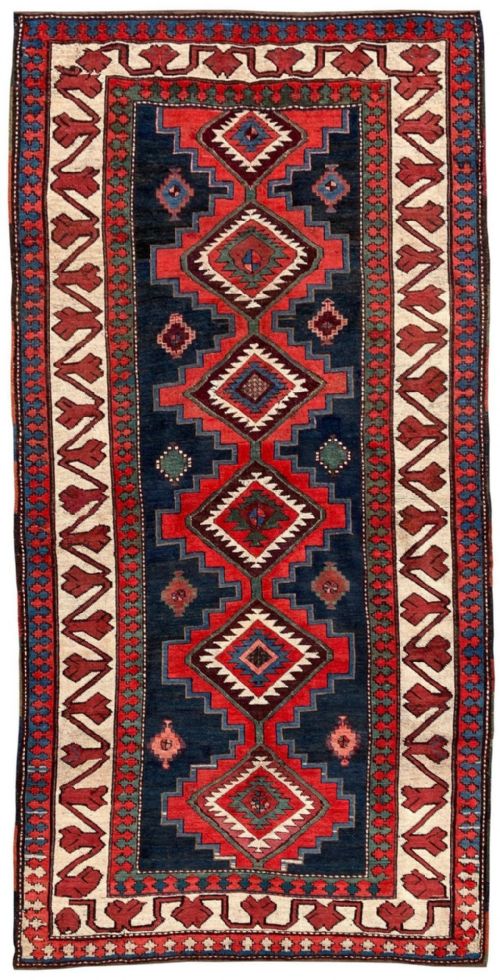
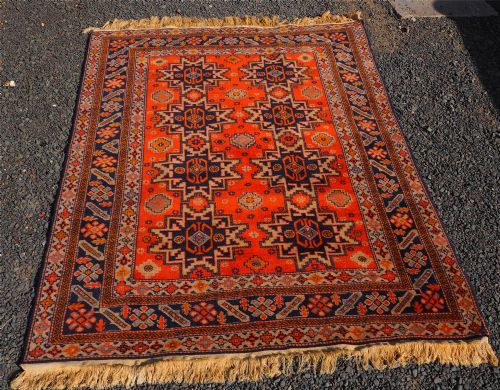
A geometric caucasian area carpet comprises antique woven floor coverings originating from the Caucasus region, frequently defined by stark rectilinear patterns, hooked polygons and bold medallions. Buyers searching for a geometric caucasian area carpet will encounter pieces bearing regional designations such as Kazak, Shirvan, Karabagh, Daghestan and Kuba, spanning the late nineteenth and early twentieth centuries.
The selection here includes various formats from small prayer rugs and runner rugs up to larger area carpets and kelteh sizes. These textiles display distinct tribal identities, including Kurdish and Persian traditional influences woven into the regional vocabulary.
Materials and construction
Makers constructed these floor coverings using wool and hand-spun wool for the pile and foundation, often paired with cotton elements in later pieces. Artisans employed natural dyes to achieve the saturated hues characteristic of these textiles.
The technique relies on hand-knotting foundations with dense wool yarns, producing a durable textile capable of withstanding generations of use. The interaction of hand-spun wool with natural dyes results in subtle tonal shifts across the surface of each carpet.
Some weavers tucked accidental asymmetrical stars into rigid geometric grids, leaving a permanent signature of the human hand at the loom.
Assessing quality
Quality rests upon the crispness of the geometric drawing and the saturation of the natural dyes. Carpets with well-defined medallions, balanced borders and harmonious colour palettes stand apart from simpler or heavier-drawn variants.
The choice of wool and the integrity of the knotting dictate the handle and resilience of the rug. Fineness of execution in regional designs, such as Kazak star motifs or Shirvan field patterns, separates standard utility weaving from exceptional examples.
The Geometric Caucasian Area Carpet Glossary
- Kazak
- A designation for rugs woven in the western Caucasus, known for bold geometric layouts, primary colours and large medallions. These pieces often incorporate hooked polygons and animal or human figures rendered in stylized forms.
- Shirvan
- A classification originating from the eastern Caucasus, typically displaying finer geometric detail, muted palettes and intricate multiple borders. These rugs frequently employ repeating star or cruciform motifs.
- Prayer rug
- A small format textile featuring a mihrab or niche design at one end, traditionally laid on the floor for personal devotion. The composition directs the eye toward a central focal point.
- Natural dye
- Colouring matter derived from plants, insects and minerals, utilised before the advent of synthetic aniline dyes. These colourants produce rich tones that age with a characteristic patina.
- Kelleh
- A long, narrow format carpet traditionally proportioned for the length of a reception room. These pieces provide extended fields of repeating geometric patterns.
Geometric Caucasian Area Carpet: Frequently Asked Questions
How do I clean a antique carpet?
Gentle surface brushing and professional dusting remove embedded grit without damaging the wool pile. Avoid soaking or using standard domestic detergents that might disturb natural dye compounds.
For routine maintenance, regular vacuuming on a low suction setting without a rotating brush bar keeps fibres clear of debris. Specialist textile conservators should handle deep washing.
Can I place these rugs in heavy traffic areas?
Hand-spun wool and sturdy knotting provide the durability required for everyday use in hallways and sitting rooms. Placing a quality underlay beneath the carpet prevents slipping and reduces fibre friction against hard floors.
Over time, even robust tribal weaving shows natural wear, which adds to the character of antique examples. Rotating the rug periodically ensures even exposure to foot traffic and sunlight.
How do I identify a Kazak rug?
Kazak pieces typically feature heavy wool, broad geometric medallions and a vibrant palette dominated by primary reds, blues and yellows. The drawing tends to be bold and uncrowded compared to urban workshop carpets.
Examining the reverse reveals the knot structure and hand-spun wool characteristics typical of western Caucasian weaving. Regional border patterns further confirm the attribution.
What is the difference between a rug and a carpet?
Size and intended placement primarily separate these terms, though historical usage often treats them interchangeably. Carpets generally describe larger formats designed to anchor an entire room.
Rugs cover smaller floor spaces, such as hearth areas, doorways or specific seating zones. Both share identical materials and hand-knotted construction methods.