
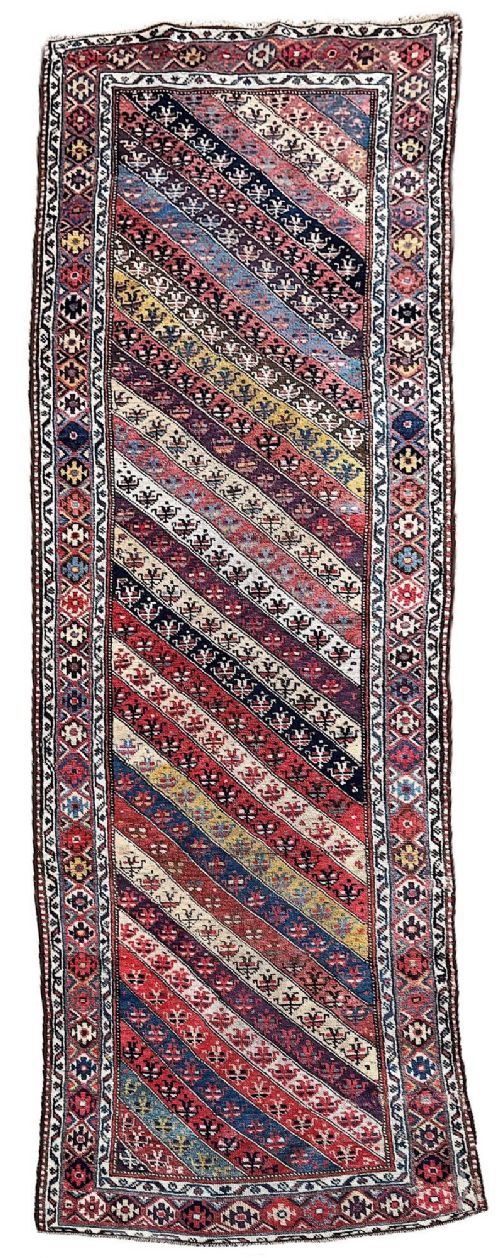


Multicoloured Area Rug
A multicoloured antique area rug brings warmth and historic pattern to a room through genuine regional weaving traditions.
Multicoloured Area Rug
A multicoloured antique area rug usually takes the form of a tribal or nomadic weaving originating from regions such as the Caucasus, Persia, and Anatolia. These floor coverings span the late nineteenth century and the early decades of the twentieth century, displaying traditional regional motifs woven by hand. Buyers searching for a multicoloured antique area rug encounter formats ranging from long corridor runners to compact scatter rugs and flat-woven kilims.
The selection here encompasses specific regional styles including Caucasian, Persian tribal, and Anatolian tribal pieces, alongside named types like Gabbeh, Kazak, and Baktiari. Many examples utilise traditional structures such as the flat-woven Kilim or embroidered Suzani textiles from Central Asia. These floor coverings served practical domestic purposes in nomadic and village households before entering the decorative market.
How they were made
Weavers constructed these textiles primarily using wool for the pile and foundation yarns, frequently paired with cotton for structural support in specific regional types. Hand-knotting and flat-weaving techniques defined the production process, resulting in durable floor coverings built for generational daily use. Artisans utilised local dyeing traditions to achieve the rich hues seen across Caucasian, Persian, and Turkish workshops.
Nomadic and village workshops produced these pieces on traditional horizontal or vertical looms using local materials gathered from flocks and agriculture. The combination of wool yarns and tight knotting or weaving structures ensured the survival of these textiles across more than a century of domestic foot traffic.
Bread sofres were literally folded around daily sustenance by nomadic families, meaning your rug spent its youth carrying flatbread across southern Persia.
What varies in quality
Quality in these textiles rests upon the density of the weave, the handling of the wool, and the integrity of the original tribal design structure. Examples displaying crisp drawing and balanced chromatic palettes represent the higher tier of regional production, where master weavers executed traditional motifs with precision.
The choice of wool fibre and the preparation of dye materials dictate the lasting resilience and visual depth of the textile over time. Variations in knot count and structural tension across the foundation separate standard domestic pieces from finer regional weaving achievements.
The Multicoloured Area Rug Glossary
- Kilim
- A flat-woven carpet or rug produced without a pile, common throughout Anatolia and the Caucasus. These textiles feature slit-weave techniques that create sharp geometric patterns.
- Kazak
- A designated style of antique rug originating from the Caucasus region, known for bold geometric medallions and saturated primary colours. These pieces were traditionally woven by village and nomadic communities.
- Sofreh
- A specialised tribal textile used for handling bread or sharing meals within nomadic households. These functional cloths often display distinctive regional iconography.
- Kelleh
- A large rectangular format of antique carpet, typically longer than standard room rugs and suited for corridors or spacious halls. This format accommodates extended repeating field designs.
- Gabbeh
- A coarse, thick-piled rug traditionally woven by nomadic tribes in Persia for personal domestic use. These pieces often feature minimalist field designs with broad expanses of saturated colour.
Multicoloured Area Rug: Frequently Asked Questions
How do I clean an antique rug?
Gentle surface brushing and professional specialist washing preserve the delicate wool fibres and historic dyes of these older textiles. Regular rotation ensures even wear across rooms with moderate foot traffic.
Avoid harsh chemical treatments and excessive water immersion, which compromise the integrity of the natural materials used in nineteenth and early twentieth-century weaving.
Where were these rugs made?
These textiles originate from traditional weaving centres across the Caucasus, Persia, and Anatolia, reflecting the distinct cultural heritage of nomadic and village makers. Specific districts like Shirvan, Karabagh, and Kerman produced recognizable regional variations.
Each geographic area developed particular structural techniques and motif vocabularies that help identify the provenance of individual pieces today.
Can I place these rugs in high traffic areas?
Sturdy wool construction allows many of these historic floor coverings to withstand normal domestic use when paired with a quality underlay. Placing them in moderate traffic zones prevents excessive fibre abrasion while still permitting daily enjoyment.
Finer flat-weaves or delicate structural formats benefit from placement in quieter rooms or display as wall hangings to protect the historic textiles.
How do I date an antique rug?
Examining the wool quality, dye composition, and structural conventions provides reliable indicators for placing a textile within the late nineteenth or early twentieth century. Regional design shifts and stylistic evolution offer further clues to the specific decade of production.
Comparing known examples from documented village and nomadic traditions helps establish an accurate timeframe for pieces lacking explicit documentation.