



19th Century Lead Crystal
These pieces of 19th century lead crystal bring heavyweight brilliance and deep cut facets to the table, offering a tangible connection to historical dining traditions.
19th Century Lead Crystal
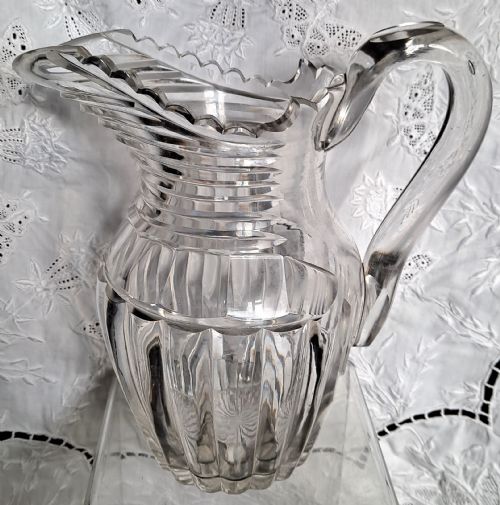
When buyers search for 19th century lead crystal, they look at heavy tableware and serving vessels formed during the Georgian, Regency and Victorian eras. The selection on this page centres heavily upon robust drinking vessels like rummers and tumblers, alongside decanters, jugs, scent bottles, bowls and salts.
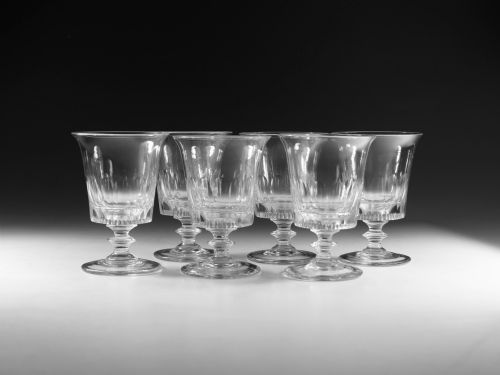
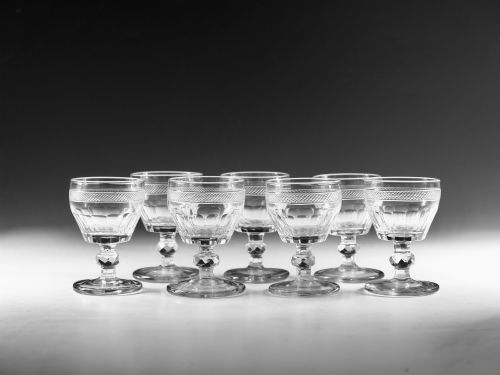
English and Irish origins dominate the selection, spanning periods from around 1800 through the Victorian decades up to 1880. Pieces range from large serving rummers and heavy water jugs to sets of port glasses and wine decanters designed for formal dining.
Materials and methods
Makers utilised heavy lead glass, flint glass and crystal, shaping the molten material through free blowing or moulding before applying surface decoration. These heavy compositions gave the vessels their characteristic light refraction and substantial weight.
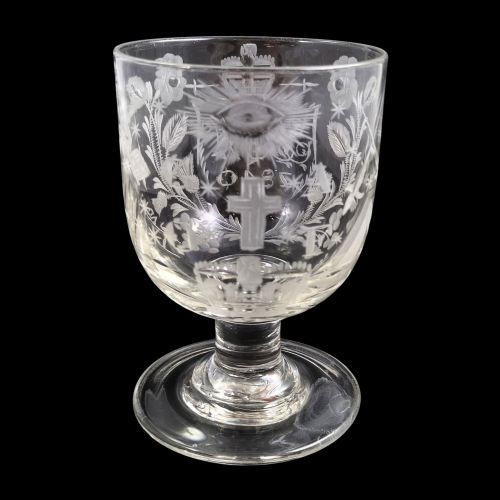
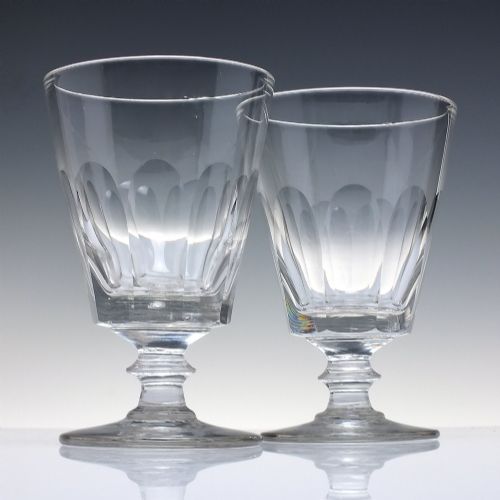
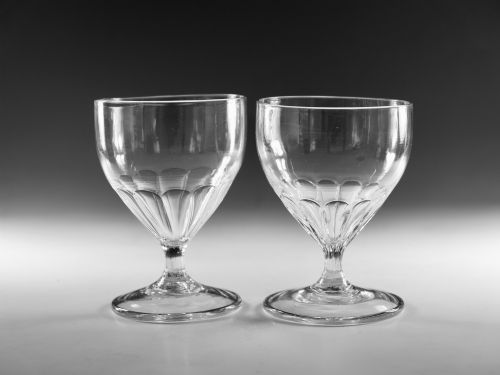
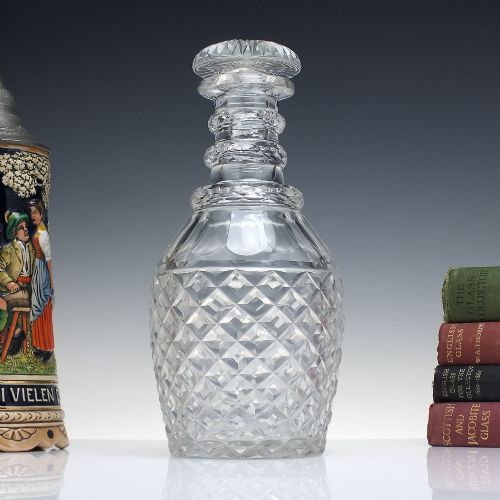
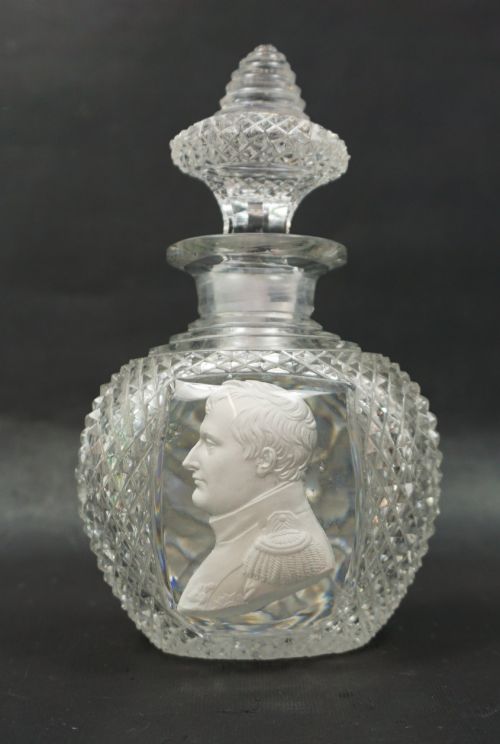
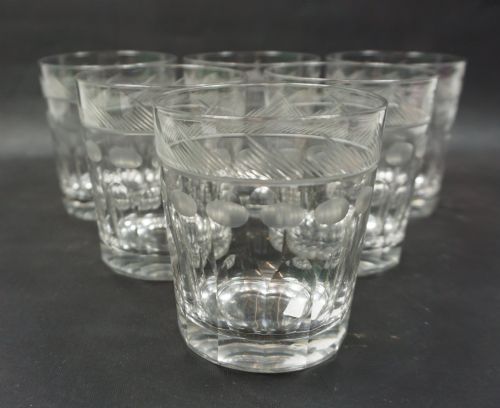
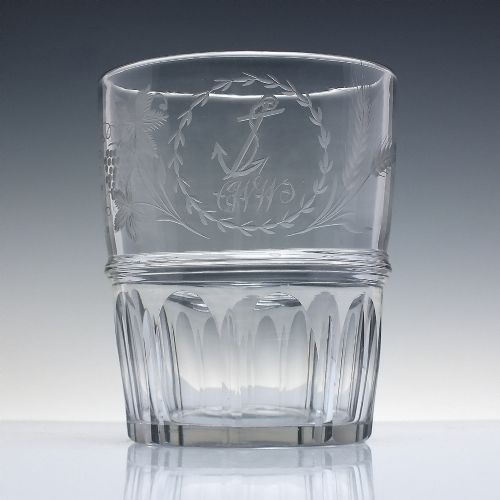
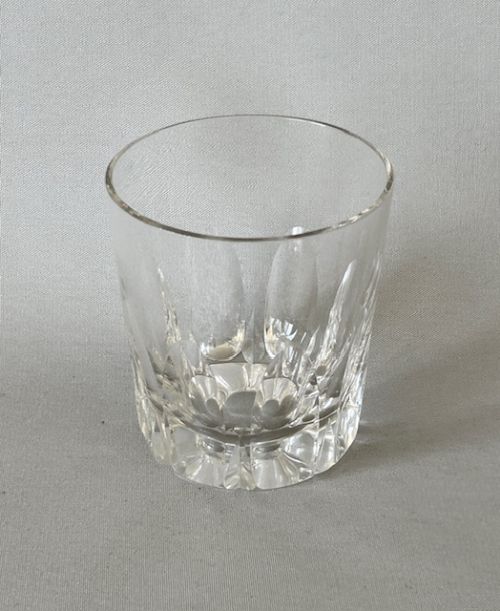
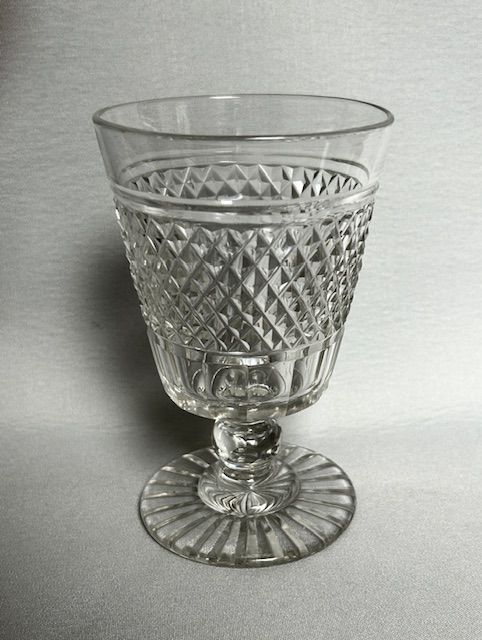
Workshops employed deep cutting techniques such as hobnail patterns and pillar cuts, alongside intaglio engraving, etching and sulphide insertions. Surface motifs often included hops and barley, armorial crests, and historical scenes.
Listings feature multiple periods including Georgian, Regency, French Restoration and Victorian, spanning from 1800 to 1880.
Judging quality in 19th century lead crystal
Quality rests in the crispness of the wheel cutting and the clarity of the metal itself. Deep, sharp facets catch the light cleanly, whereas softer edges indicate worn moulds or lesser skilled hand-finishing.
Proportion and weight also dictate standard. A well-balanced rummer with a heavy lemon squeezer base or a thick pillar cut decanter displays superior craftsmanship compared to lighter, simpler glassware.
The 19th Century Lead Crystal Glossary
- Rummer
- A large, heavy drinking glass popular in the eighteenth and nineteenth centuries, typically used for ale, wine or punch. These vessels feature thick stems and generous bowls often decorated with engraved hops and barley.
- Flint glass
- An early British term for high-clarity glass containing lead oxide, which increased both weight and refractive index. It forms the foundation of heavy nineteenth century table glass.
- Lemon squeezer base
- A square, pressed glass base with moulded corners resembling a kitchen lemon squeezer, frequently found on early nineteenth century rummers and decanters to provide stability.
- Sulphide
- A small cameo made of white ceramic material embedded within clear glass during manufacturing. Portraits like Napoleon frequently appear in this technique on scent bottles.
- Hobnail
- A raised, diamond-shaped pattern cut into the surface of glass to create texture and sparkle. This heavy geometric cutting style characterises much of the Regency period work.
19th Century Lead Crystal: Frequently Asked Questions
What is a rummer used for?
Rummers served as substantial drinking vessels for ale, beer, porter or wine during large gatherings and communal dining. Their heavy walls kept drinks cool while the sturdy stems provided a secure grip.
Today, collectors utilise them as water goblets, small flower vases or simply display them to showcase period cut glass.
How do I date 19th century crystal?
Dating relies on combining the object form, the cutting style and the composition of the glass itself. Heavy hobnail cutting and lemon squeezer bases typically point towards the Georgian and Regency periods.
Later Victorian pieces often feature softer pillar cuts, etched floral motifs or more slender forms combined with lead crystal compositions.
Are these pieces safe for daily use?
While these items were originally made for functional dining and drinking, modern users often treat them with extra care due to their age and delicate engraved surfaces. Hand washing in lukewarm water protects the historical glass from thermal shock.
Harsh detergents and automatic dishwashers can ruin the polished surface and historical lead content over time.
What distinguishes Irish from English glass?
Irish glass from the early nineteenth century often displays a darker, slightly bluish tone within the metal combined with exceptionally deep and sharp cutting. Factories in cities like Waterford produced remarkably heavy decanters and rummers.
English regional centres produced similar forms, though specific regional engravings like North-East English designs help identify local workshops.