
Clear Cut Crystal Glasses
Clear cut crystal glasses and associated tableware capture light through deep facets, offering both utility and historic craftsmanship.
Clear Cut Crystal Glasses
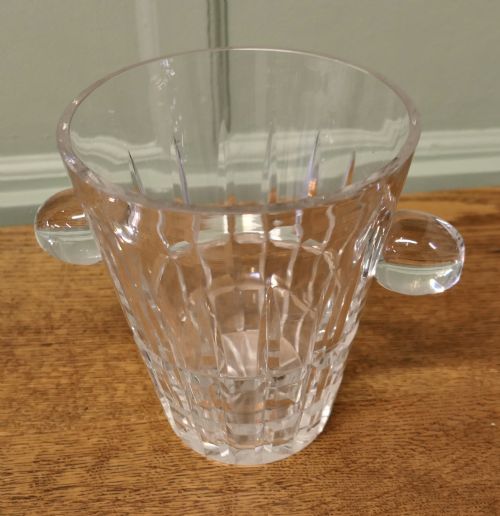
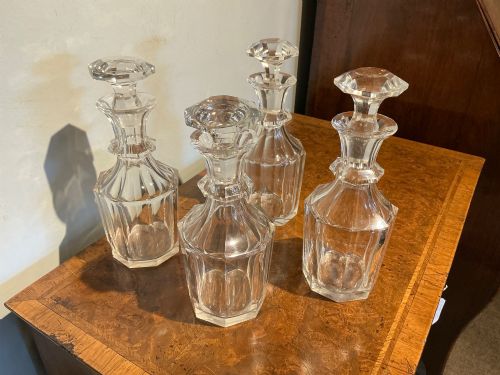
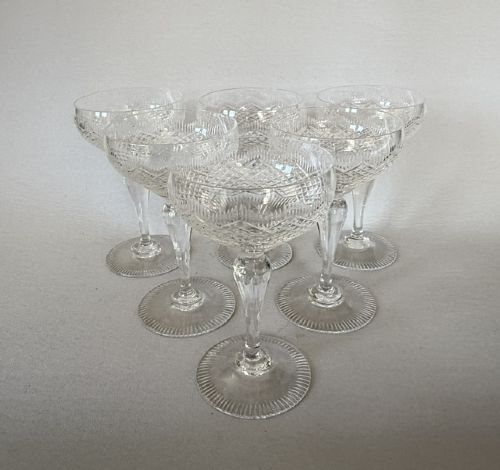
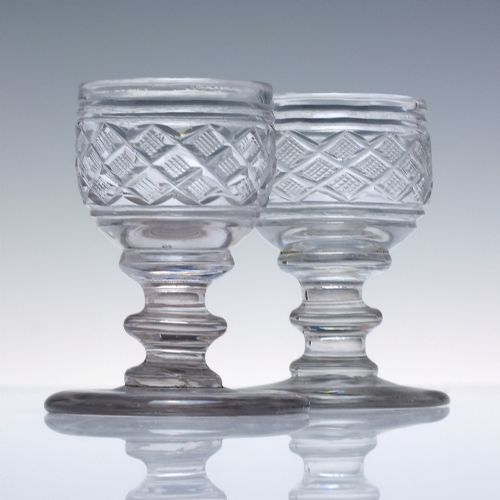
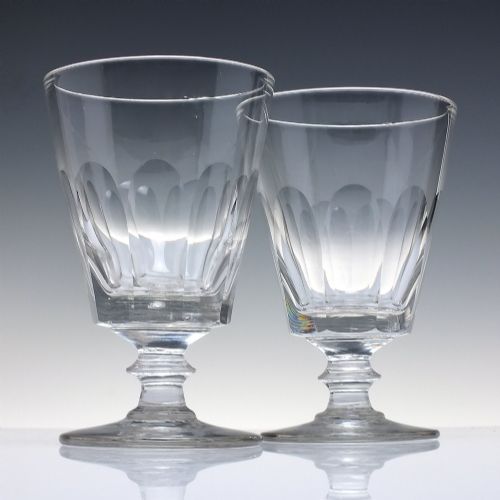
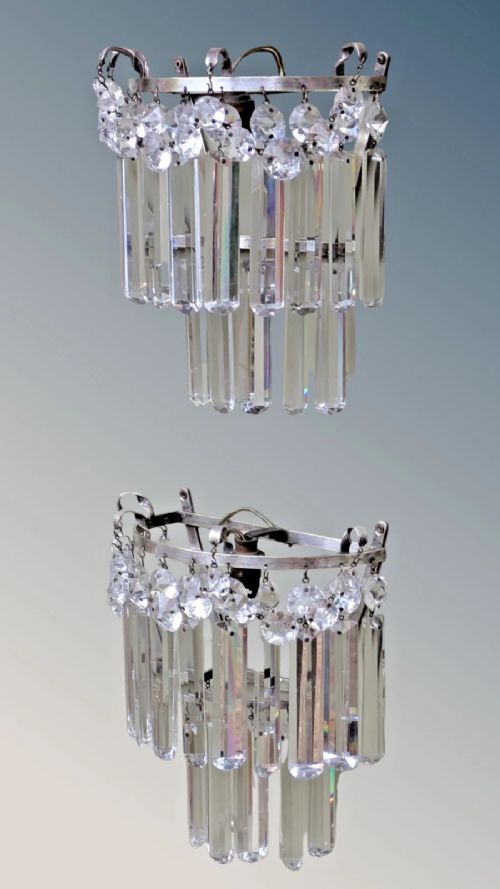
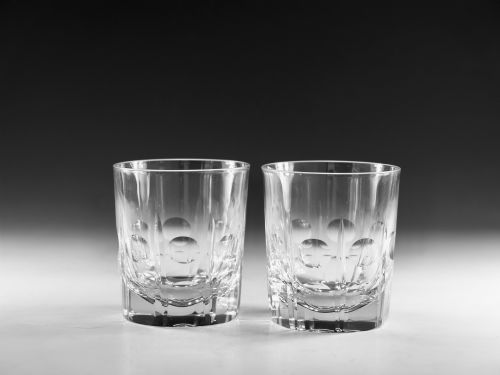
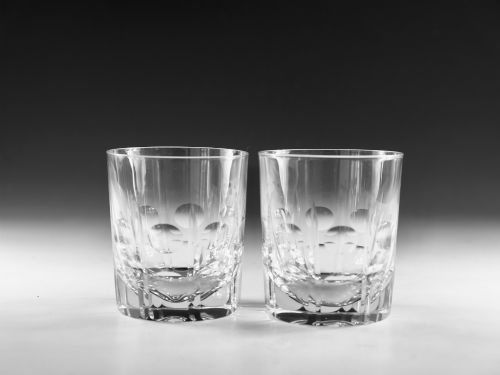
When buyers search for clear cut crystal glasses, they encounter an array of drinking vessels, decanters, and serving pieces spanning multiple historic periods. The selection on this page ranges from Georgian dram glasses and Victorian rummers to Edwardian champagne bowls and early twentieth-century tumblers. Drinkware forms the core of these listings, accompanied by related tablewares like carafes, ice buckets, and finger bowls.
Most items you will meet date from the nineteenth and early twentieth centuries, reflecting the high periods of British and continental glass production. Victorian and Edwardian examples appear frequently, alongside Georgian vessels and Art Deco designs from the 1920s and 1930s. The forms vary from intimate whiskey drams to substantial wine jugs and champagne flutes.
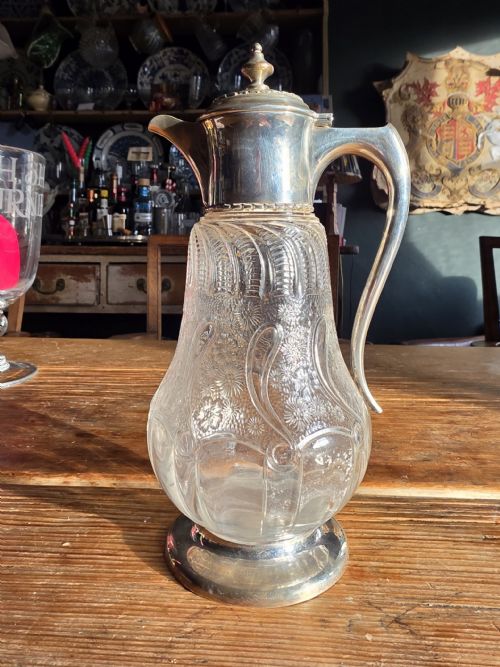
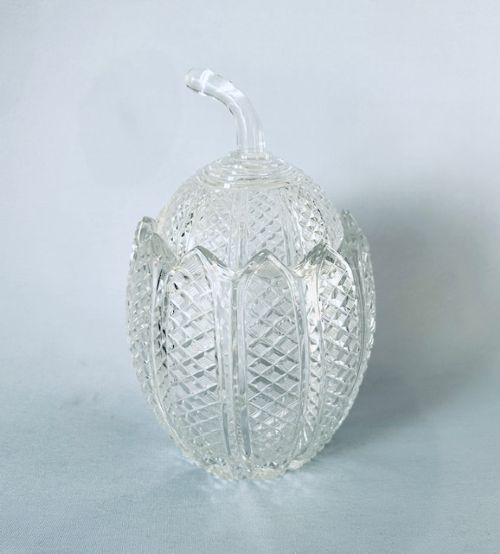
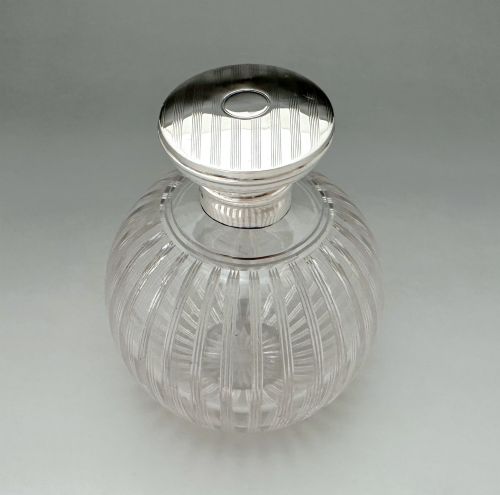
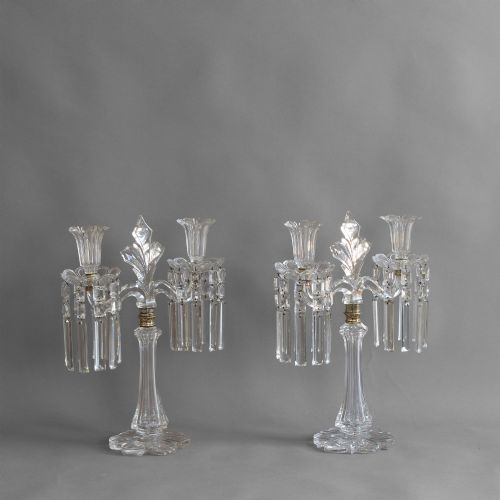
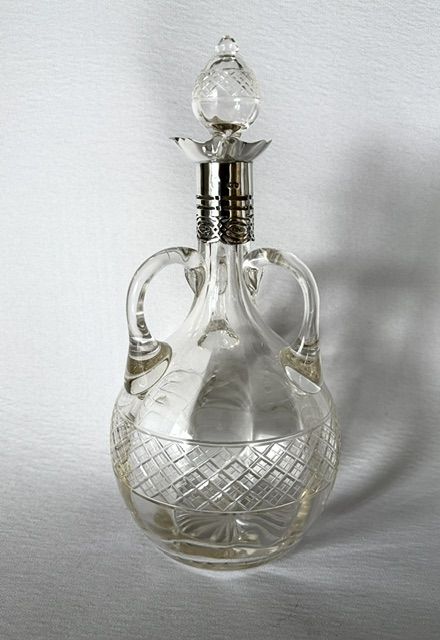
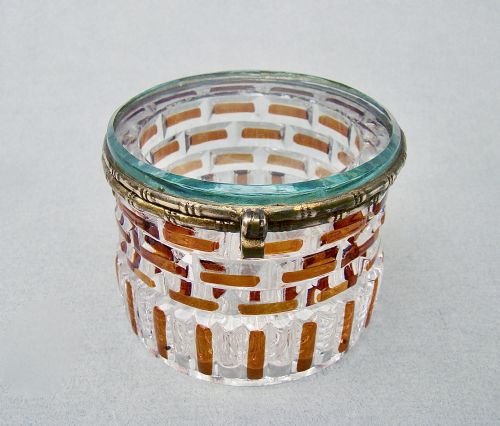
Alongside dedicated drinking vessels, the category encompasses broader table accessories sharing the same material and cutting techniques. Biscuit barrels, perfume bottles, and claret jugs demonstrate how master cutters applied facet and pillar cuts to diverse functional objects. This variety allows collectors to assemble matched drinking sets or acquire singular decorative pieces rooted in period traditions.
Materials and cutting techniques
The objects listed rely on lead crystal, cut glass, and standard glass, often combined with sterling silver, brass, or gilt mounts. Lead crystal provides the heavy weight and high refractive index necessary for sharp, brilliant facets. Makers manipulated these materials using wheels to carve geometric patterns, flutes, and prisms directly into the surface.
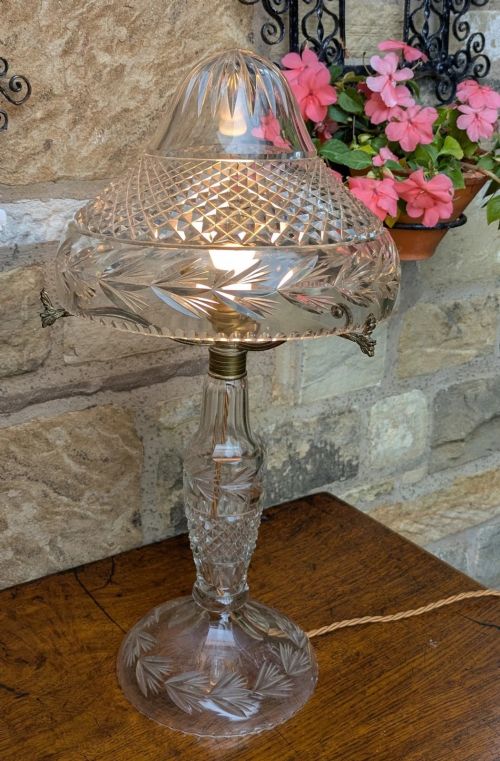
Specific cutting styles define the era of manufacture, from Georgian pillar and prism cuts to intricate Edwardian hobnail patterns and Art Deco geometric designs. Specialised techniques such as intaglio cutting, engraving, and over-crystal layering appear on select continental and English vessels. Metal mounts in silver or brass frequently secure rims, necks, and stoppers on bottles and decanters.
The listings incorporate items spanning the Georgian, Victorian, Edwardian, and Art Deco periods, executed in lead crystal, cut glass, and brass.
Assessing quality in cut crystal
Quality rests upon the clarity of the material and the crispness of the facet work. Superior pieces exhibit sharp, clean edges along every cut without softening or rounding in the troughs. The weight of the vessel signals a higher lead content, which enhances both brilliance and resonance.
Design harmony and finishing details further distinguish finer examples. Well-executed pieces show balanced proportions, symmetrical patterns aligned with the vessel's form, and carefully polished surfaces that eliminate minor manufacturing blemishes. The integration of silver or brass mounts, where present, indicates a higher tier of original production.
Stevens and Williams·Moser·Webb
The Clear Cut Crystal Glasses Glossary
- Lead crystal
- Glass containing a significant percentage of lead oxide, which increases weight, clarity, and light dispersion.
- Rummer
- A large, sturdy drinking glass popular in the eighteenth and nineteenth centuries, typically used for ale or wine.
- Pillar cut
- A linear cutting technique producing broad, flat-bottomed vertical flutes along the body of a vessel.
- Hobnail cut
- A decorative surface pattern featuring small, closely spaced pyramid shapes cut into the glass.
- Intaglio
- A technique where designs are carved beneath the surface of the glass rather than raised in relief.
Clear Cut Crystal Glasses: Frequently Asked Questions
Are these glasses safe to use?
Most historic glassware functions safely for modern dining and entertaining, provided you handle them with due care.
Inspect rims and bases for hidden fractures before filling them with liquid.
How do I date cut glass?
Examine the cutting style, base wear, and overall form in relation to known historical periods.
Georgian and Victorian pieces often show distinct pontil marks on the bottom where they were snapped from the blowpipe.
What is the difference between glass and crystal?
Crystal contains minerals such as lead oxide that increase its density, weight, and light-refracting properties.
Standard glass lacks these additives, resulting in a lighter feel and less brilliance when cut.