



Vintage Whisky Tumblers
These vintage whisky tumblers bring genuine weight and character to your cabinet, offering a solid drinking vessel rooted in past centuries.
Vintage Whisky Tumblers
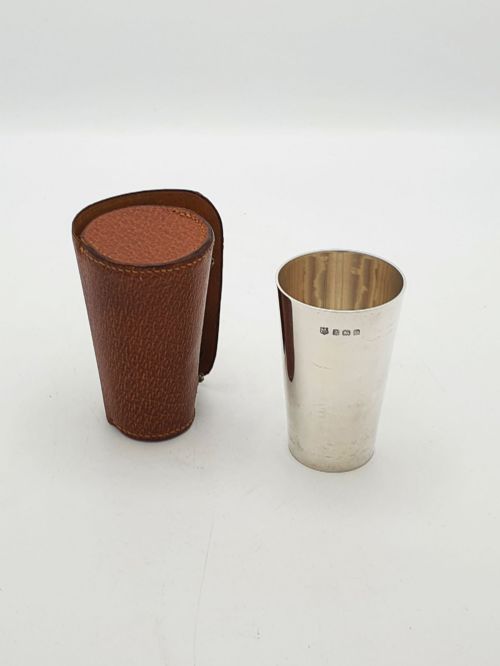
Vintage whisky tumblers span multiple eras from the Regency period through the Victorian age and into the early twentieth century. These drinking glasses and spirit beakers show the heavier bases and robust proportions typical of serious drinking vessels from those times.
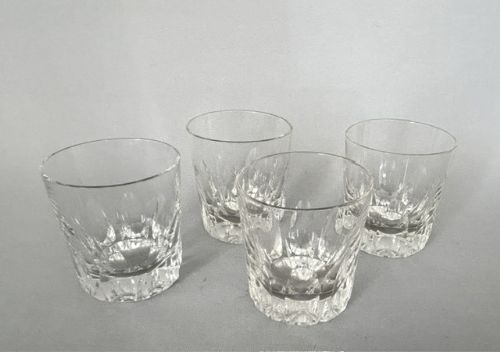
You are most likely to encounter English sets and pairs dating from the mid-nineteenth century up to the nineteen-thirties. The forms range from small Victorian tumblers to large cut glass pieces and complete decanter sets.
The selection reflects traditional British and Bohemian manufacturing, focusing heavily on sturdy lead crystal and clear glass construction. Each grouping demonstrates the functional design required for serving spirits in period homes.
Materials and Manufacture
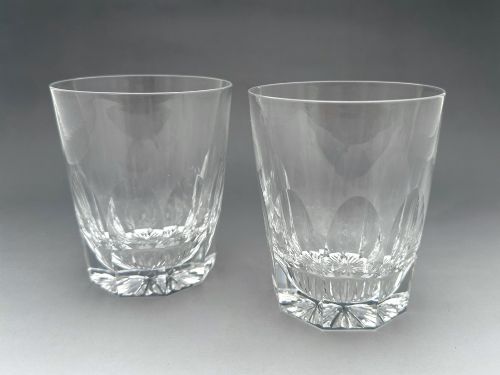
Makers shaped these vessels primarily from lead crystal and heavy cut glass, using high lead content to achieve extra brilliance and weight. The glass was then worked by hand to create deep facets and panels.
Certain pieces feature hand enamel decoration applied over the lead crystal surface to add colour and geometric pattern. Silver and lead glass also appear among the material choices recorded in the evidence.
Cut glass techniques required skilled hand work on a wheel to produce the characteristic blaze cuts and heavy panelling seen across Georgian and Victorian examples.
Vintage Whisky Tumblers Retail Price Guide 2026
Typical asking prices for vintage whisky tumblers among the pieces listed under this phrase on Sellingantiques today, from the lower quarter to the upper quarter. They describe what is for sale here now, not the wider market.
Victorian hosts relied on small, heavy tumblers so guests could not easily knock their evening spirits over during lively parlour conversations.
Evaluating Quality
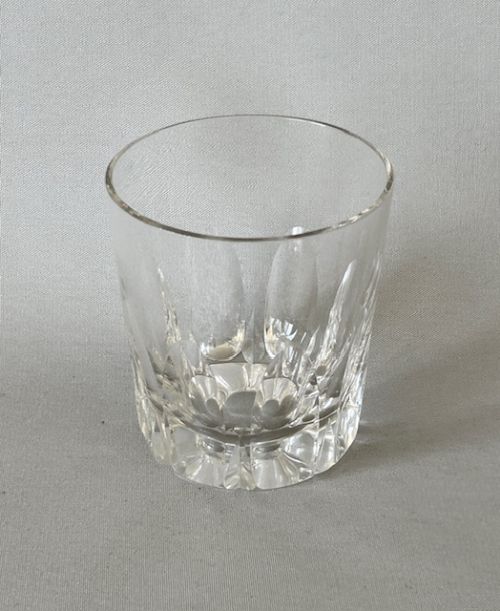
Quality rests primarily on the depth and crispness of the cutting, where sharp facets catch the light differently than soft, rounded grinding. Heavy crystal provides a substantial feel in the hand that distinguishes superior examples.
The clarity of the metal itself marks the difference between ordinary glass and fine lead crystal, free from cloudiness or heavy bubbles. Consistency across a matched set or pair indicates careful original selection by the maker.
Intricate hand enamel work on decorated pieces demands precise brushwork and stable firing to achieve lasting distinction. The overall proportion and balance of the tumbler dictate how well it sits on the table.
Karl Palda
The Vintage Whisky Tumblers Glossary
- Lead Crystal
- Glass containing a high proportion of lead oxide, which increases the weight, refractive index and brilliance of the material. This heavier composition allows for deeper and sharper facet cutting.
- Blaze Cut
- A style of linear or fluted facet cutting that creates broad, flat planes reflecting light sharply. It appears frequently on Georgian and Regency drinking vessels.
- Spirit Beaker
- A cylindrical or slightly tapered drinking vessel designed specifically for holding neat spirits without a handle. These pieces often feature heavy bases to prevent tipping.
- Decanter Set
- A matched grouping consisting of a serving vessel alongside a matching set of tumblers or glasses. Such sets were standard furnishings for nineteenth-century dining rooms and sideboards.
- Cut Glass
- Glassware decorated by holding the surface against a rotating abrasive wheel to grind away material. This technique produces geometric patterns, flutes and panels.
Vintage Whisky Tumblers: Frequently Asked Questions
How do I date an old whisky tumbler?
Dating relies on observing the weight, the style of cutting, and the clarity of the glass material. Earlier pieces from the Regency and early Victorian periods often display hand-polished pontil marks and thicker, heavier walls.
Later Edwardian and nineteen-thirties examples exhibit more standardised machine-smoothed finishes or distinct Art Deco geometric enamelling. Comparing the silhouette and facet pattern against known dated examples helps narrow the decade of production.
Are vintage tumblers safe for daily use?
These sturdy lead crystal and heavy glass vessels were built for daily hospitality and remain robust enough for modern entertaining. Hand washing in warm water preserves the bright finish and protects the older glass structure.
Harsh automatic dishwashers should be avoided because they can etch the surface and dull the crisp facet cutting over time. Treating them with care ensures the heavy bases and decorated sides survive intact.
What is the difference between crystal and glass?
True crystal contains a significant percentage of lead oxide, which gives the material a denser weight and a resonant ring when struck gently. This heavier composition allows artisans to cut deeper, sharper facets that catch the light more intensely than standard glass.
Standard glass lacks this lead content, resulting in a lighter feel and less refractive brilliance. Most antique and vintage whisky tumblers favour lead crystal for its superior heft and sparkle.
Why do old whisky tumblers have heavy bases?
A thick, heavy base lowers the centre of gravity, preventing the glass from tipping over easily on a dining table or sideboard. This extra weight also gave period drinking vessels a substantial, reassuring feel in the hand.
Makers deliberately pooled more material at the bottom during the blowing and forming process to achieve this stability. It remains a hallmark of better quality nineteenth-century and early twentieth-century barware.