



Victorian Glass Tumblers
These Victorian glass tumblers are sturdy everyday vessels that bring nineteenth-century weight and clarity directly to a modern table.
Victorian Glass Tumblers
When you search for Victorian glass tumblers, you encounter a robust selection of drinking vessels created during the nineteenth century. These pieces include small whisky tumblers, water sets, and larger ceremonial beakers intended for daily use or formal gatherings. The surviving items range from simple clear drinking glasses to highly decorative table services.
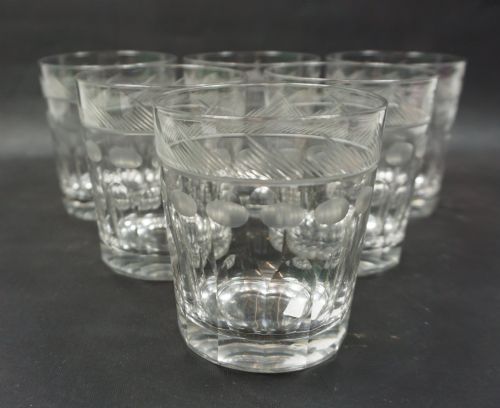
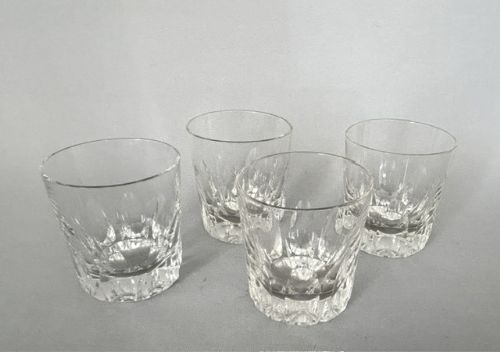
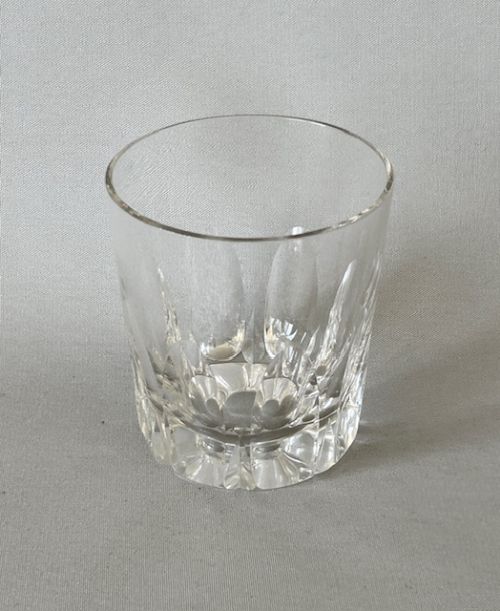
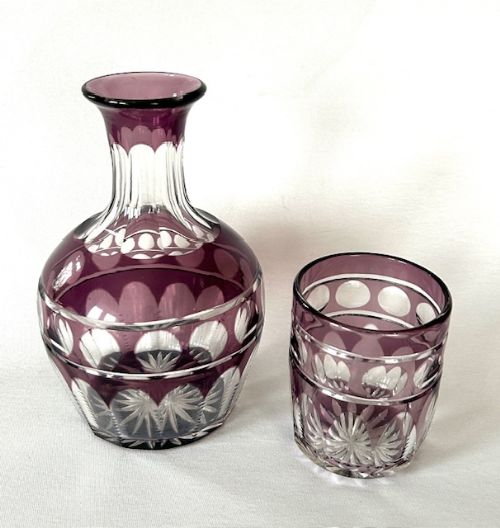
The most common form on this page is the whisky tumbler, often found in pairs or complete sets of six. Makers shaped these vessels with flat bottoms and thick walls to withstand regular service on the sideboard. Alongside standard drinking glasses, you discover novelty forms and matching sets complete with carafes or jugs.
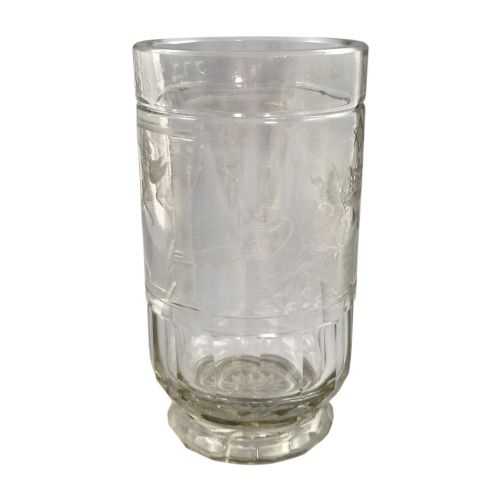
Geographic origins span English workshops alongside Bohemian and Austrian centres of production. These continental pieces introduce distinct colours and deep wheel-engraved motifs that contrast with plainer domestic tableware. Each piece reflects the drinking habits and social rituals of the period.
Materials and methods
Glassmakers utilised lead crystal and clear glass to achieve a heavy, ringing body capable of holding sharp facet cuts. The addition of lead oxide increased both the density and the brilliance of the material, allowing craftsmen to grind deep geometric patterns across the exterior surface. These heavy walls protected the drinker's hand and kept the contents cool.
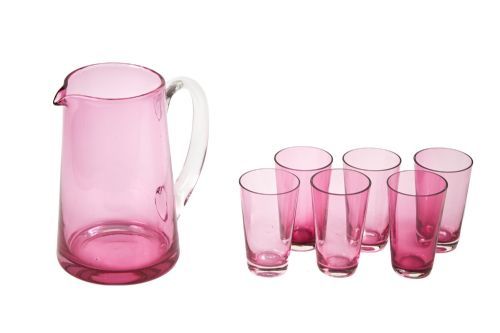
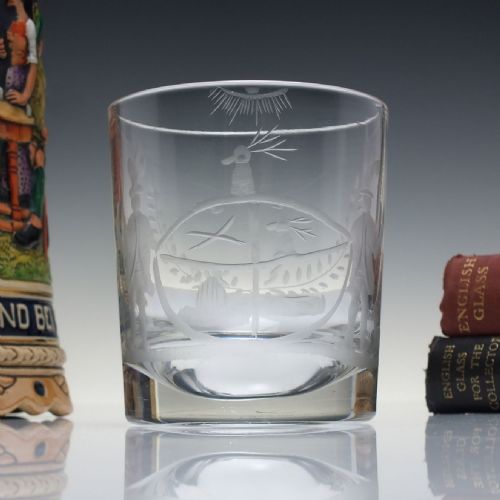
Coloured glass was produced by introducing specific metallic oxides into the molten batch, creating rich tones of cranberry, ruby red, amethyst, and turquoise green. Workshops also applied thin surface flashes to clear glass before cutting through the coloured layer to expose the bright metal underneath. Engravers finished many vessels using copper wheels to incise intricate floral, armorial, or Masonic designs.
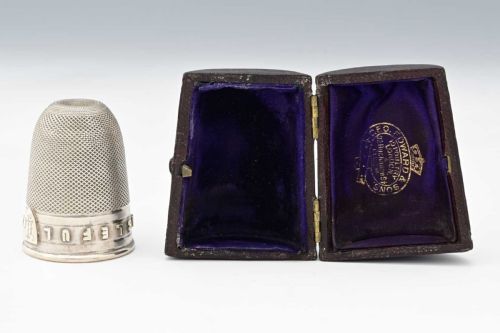
Silver components occasionally complemented the glass, as seen in novelty vessels shaped like giant sewing thimbles with sterling silver rims. Workers joined these mixed materials using traditional adhesives and internal mounts designed to withstand handling. The resulting objects combined utilitarian strength with ornamental variety.
Listings feature items from the Victorian period alongside dated pieces from 1840 to 1900, spanning English, Austrian, and Bohemian origins.
Judgements of quality
The standard of a tumbler rests upon the crispness of its cutting and the purity of the metal. Superior pieces display sharp, clean facets with polished surfaces that catch the light without distortion or surface waviness. Heavier vessels with thick, well-balanced bases demonstrate greater confidence in the blower and cutter.
Engraving depth and detail separate standard production items from important ceremonial pieces. Finer glasses exhibit precise wheel-work with subtle shading across heraldic or botanical motifs, whereas lesser examples show shallow, hasty scratching. The uniformity of a matched set also dictates its standing among collectors.
The Victorian Glass Tumblers Glossary
- Cranberry glass
- A transparent pinkish-red glass coloured with gold chloride. It appears frequently in Victorian tableware and matching water sets.
- Lead crystal
- Glass containing lead oxide, which adds weight, brilliance, and softness for cutting. This material forms the body of heavier whisky tumblers.
- Flash glass
- A thin layer of coloured glass applied over a clear glass base. Cutters ground through this outer skin to reveal the contrasting colour underneath.
- Wheel engraving
- A method of decorating glass by holding the vessel against a rotating small stone or copper wheel. It produces deep, matte-finished lines and polished hollows.
Victorian Glass Tumblers: Frequently Asked Questions
How were Victorian glass tumblers used?
These vessels served primarily for drinking whisky, water, or cordials during formal dinners and evening gatherings. Many were kept in sets on sideboards or fitted into fitted travel cases for immediate access.
Larger decorated beakers fulfilled ceremonial functions within fraternal organisations and lodges, marking special events rather than routine meals.
Can I use these antique tumblers daily?
Most of these sturdy nineteenth-century glasses tolerate careful hand washing and regular use at the table. Their thick lead crystal walls were designed for practical hospitality.
Delicate engraved or flash-coloured pieces benefit from gentler handling to preserve the surface finish and avoid thermal shock from hot liquids.
How do I spot a matched set?
Examine the height, wall thickness, and base diameter across all the pieces in the group. Genuine period sets share minor variations in weight and bubble formation that reveal hand-production.
Inspect the engraving or cutting for consistent handwork rather than the identical uniformity associated with later machine-pressed glass.
What is ruby flash glass?
This material consists of a colourless glass body dipped into a molten bath of red glass before blowing. The resulting dual-layer structure allowed craftsmen to carve away the red exterior in specific areas.
Exposing the clear glass underneath created bold geometric and floral patterns with strong visual contrast.