


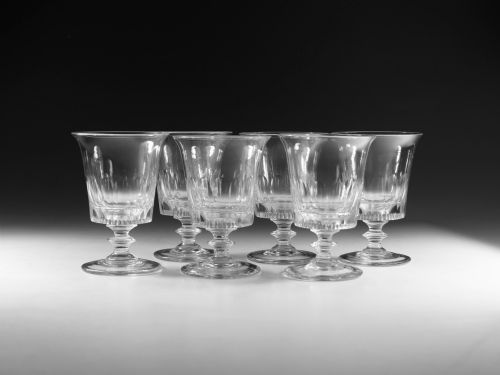


English Cut Glass Goblets
English cut glass goblets are heavy drinking vessels from the eighteenth and nineteenth centuries, offering a tangible connection to historical dining traditions.
English Cut Glass Goblets
English cut glass goblets span multiple periods from the eighteenth century through the Victorian era and into the early twentieth century. Collectors encounter various forms on this page, including heavy rummers, commemorative pieces, and stemmed wine glasses.
The objects originate from specific stylistic eras such as Georgian, Victorian, and Edwardian periods. Pieces range from straightforward drinking vessels to elaborate commemorative glassware created for royal coronations and fraternal organisations.
How they were made
These vessels utilise lead glass, flint glass, and clear crystal, sometimes incorporating coloured materials like cranberry glass. The dense composition of lead crystal provides the weight characteristic of these historical drinking vessels.
Makers applied decorative techniques including intaglio engraving, acid cut cameo work, and facet cutting on stems. Facet stems and engraved bowls require precise hand-polishing and wheel-cutting skills.
English Cut Glass Goblets Retail Price Guide 2026
Typical asking prices for english cut glass goblets among the pieces listed under this phrase on Sellingantiques today, from the lower quarter to the upper quarter. They describe what is for sale here now, not the wider market.
The selection includes specialised forms such as Masonic cranberry glass and commemorative coronation pieces.
What varies in quality
The clarity and brilliance of the lead crystal or flint glass set certain pieces apart from heavier, duller alternatives. High quality work demonstrates crispness in the facet cutting and precision in the engraved details.
Proportion and weight influence the character of each goblet, particularly in larger rummers and baluster stem formations. Superior examples maintain balanced walls and substantial bases without excessive cloudiness in the material.
Stevens and Williams
The English Cut Glass Goblets Glossary
- Rummer
- A large, heavy drinking glass popular in the eighteenth and nineteenth centuries for ale or wine. These sturdy vessels often feature capacious bowls and short, thick stems.
- Facet stem
- A stem shaped with multiple flat polished planes that catch the light. This technique was widely utilised on eighteenth-century drinking glasses.
- Lead crystal
- A type of glass containing lead oxide, which increases weight, brilliance, and refractive index. It forms the foundation for many high-quality antique drinking vessels.
- Intaglio
- A technique where the design is incised below the surface of the glass rather than raised. This method requires steady wheel-cutting to achieve clean lines.
- Baluster stem
- A thick, swelling stem shape reminiscent of architectural balusters. These stems give eighteenth and early nineteenth-century glasses a heavy, grounded appearance.
English Cut Glass Goblets: Frequently Asked Questions
What is a rummer?
A rummer is a heavy, capacious drinking glass designed for ale, punch, or wine during the Georgian and Victorian periods. These vessels typically feature sturdy stems and substantial bowls suited to hearty toasts.
Collectors prize rummers for their solid weight and generous proportions, which reflect nineteenth-century dining customs.
How do I date an old goblet?
Dating relies on observing stylistic markers such as stem construction, cutting patterns, and engraving subjects. Eighteenth-century pieces frequently display facet stems or simple baluster forms, while Victorian examples often feature deeper, more complex cutting.
Examining the optical properties and wear patterns on the base also helps establish the approximate period of manufacture.
Are these glasses safe to use?
Many historical drinking vessels remain structurally sound for occasional use, provided they are handled with proper care. Hand washing in tepid water prevents thermal shock and protects the surface of the lead crystal.
Collectors often balance the desire to experience historical dining items against the preservation of delicate intaglio or engraved decoration.
What does facet cut mean?
Facet cutting involves grinding flat, geometric planes across the surface of the glass stem or bowl. This technique increases the refraction of light through the lead crystal, producing a sparkling appearance.
Master glassmakers arranged these polished facets in specific geometric sequences to enhance the visual depth of the vessel.