









Victorian Cut Crystal Goblets
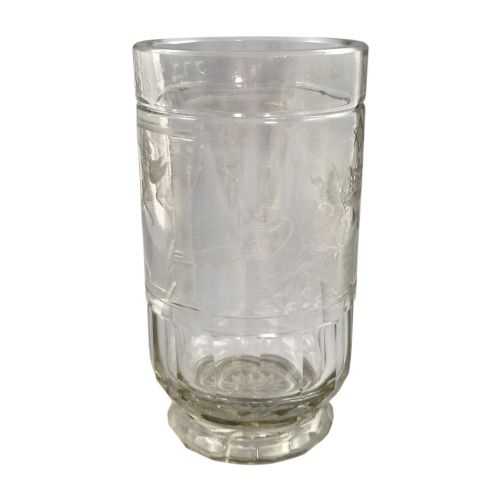
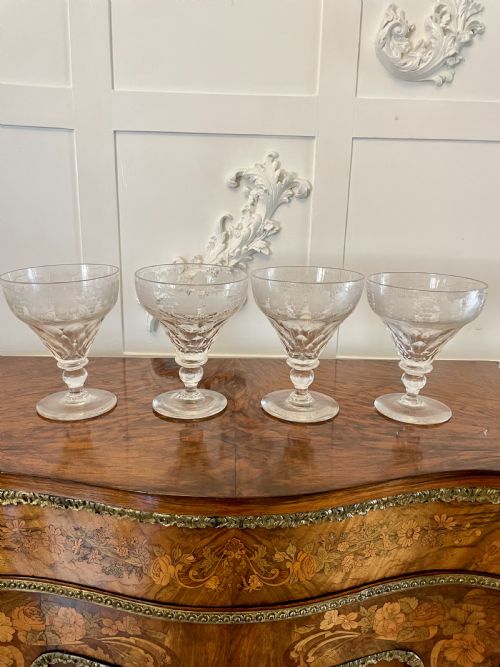
Victorian cut crystal goblets are heavy drinking vessels of lead glass carrying deep facets and wheel-engraving from the nineteenth century.
Victorian Cut Crystal Goblets
Victorian cut crystal goblets appear in forms ranging from large rummers and ceremonial beakers to wine glasses and dessert wine glasses. These pieces emerge predominantly from English and Bohemian workshops across the nineteenth century.
The heavy crystal glass rummers with baluster stems and large Masonic cranberry glass vessels represent the scale and function typical of the period. Collectors frequently encounter pairs and matched sets alongside individual display items.
Moser Bohemian engraved crystal Römer goblets and acid cut cameo glasses by makers such as Stevens and Williams show the wider European scope of these nineteenth-century drinking vessels. Clear glass and cranberry glass form the primary visual foundations across the available selection.
What varies in quality
Depth and crispness of the wheel-cutting separate standard vessels from exceptional examples. Sharp facets catch the light cleanly, whereas softer cutting indicates hurried production or excessive subsequent polishing.
Proportion and weight dictate the balance of a stemmed goblet. Thick, heavy lead glass combined with precise intaglio engraving or gilding distinguishes high-grade maker output from simpler domestic glassware.
Victorian Cut Crystal Goblets Retail Price Guide 2026
Typical asking prices for victorian cut crystal goblets among the pieces listed under this phrase on Sellingantiques today, from the lower quarter to the upper quarter. They describe what is for sale here now, not the wider market.
Several large Victorian beakers carry secret Masonic emblems intended to be glimpsed only when the toast was drained.
Moser Bohemian·Stevens and Williams
The Victorian Cut Crystal Goblets Glossary
- Lead crystal
- Glass containing a significant proportion of lead oxide, which increases weight, clarity, and refractive index.
- Rummer
- A large, heavy drinking glass popular in the eighteenth and nineteenth centuries, typically used for ale, wine, or punch.
- Intaglio engraving
- A technique where the design is sunk below the surface of the glass using small rotating wheels.
- Baluster stem
- A thick, swelling stem shape resembling an architectural baluster, frequently seen on mid-nineteenth-century English glassware.
- Cranberry glass
- Transparent red glass coloured by the addition of gold chloride to the molten batch.
Victorian Cut Crystal Goblets: Frequently Asked Questions
How were these goblets used?
They served functional roles at the dining table for wine, ale, and punch, as well as ceremonial duties within fraternal societies such as Freemasonry.
Larger rummers and beakers were built for substantial toasts, while smaller etched wine glasses accompanied formal multi-course Victorian meals.
How do I date a Victorian goblet?
Dating relies on combining the stylistic evidence of the cutting, the form of the stem, and the type of metal used.
Earlier nineteenth-century pieces often feature heavier lead glass and baluster stems, while later decades introduced acid-cut cameo techniques and lighter Bohemian coloured glass.
Can I use antique goblets today?
Many collectors prefer to display these pieces in cabinets, but sturdy lead glass rummers and wine glasses remain robust enough for careful occasional use.
Hand washing in lukewarm water is essential to protect the historic lead glass and any delicate gilding from thermal shock and abrasive detergents.