






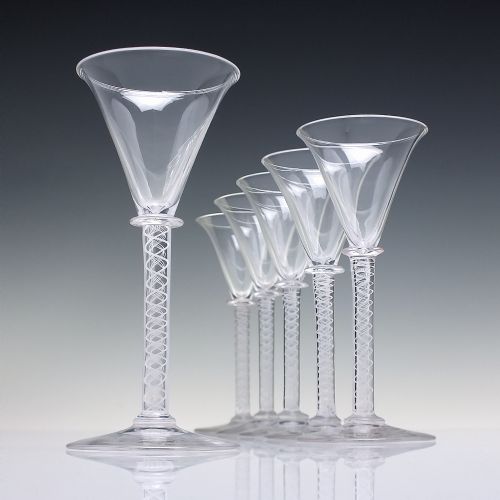


Victorian Crystal Wine Goblets
Victorian crystal wine goblets are substantial drinking vessels in glass and lead crystal that bring period character to the table.
Victorian Crystal Wine Goblets
Victorian crystal wine goblets encompass heavy glass rummers, engraved roemers, and etched or cut wine glasses spanning the nineteenth century. These drinking vessels originate primarily from English and Bohemian workshops, reflecting the diverse decorative tastes of the period.
A buyer examining this selection will frequently encounter sets of wine glasses alongside pairs of large rummers and amber or emerald green vessels. The forms range from wide-bowled drinking glasses to baluster stem rummers and cameo glass pieces.
How they were made
Maker utilise lead crystal, clear glass, and coloured glass, shaping the metal through blowing and heavy cutting. Artisans then apply techniques such as wheel engraving, acid cutting, and etching to ornament the surfaces.
Decoration often extends to intricate gilding on Bohemian pieces, while others feature frosted textures or opaque twist stems. These combined methods produce the varied optical effects seen across English and continental glassware.
Victorian Crystal Wine Goblets Retail Price Guide 2026
Typical asking prices for victorian crystal wine goblets among the pieces listed under this phrase on Sellingantiques today, from the lower quarter to the upper quarter. They describe what is for sale here now, not the wider market.
Listings feature lead crystal, clear glass, and coloured glass including emerald green and amber.
What varies in quality
Quality rests upon the depth and clarity of the cutting, the crispness of the wheel engraving, and the weight of the metal itself. Heavier lead glass handles with greater resonance, while finely executed etching displays precise control over line and tone.
The distinction between standard production and finer work lies in the handling of colour, such as rich amber or emerald hues, and the symmetry of matching sets. Individual pairs of large rummers rely on substantial proportions and clean optical surfaces for their presence.
Moser Bohemian·Stevens & Williams
The Victorian Crystal Wine Goblets Glossary
- Rummer
- A large, heavy drinking glass popular in the eighteenth and nineteenth centuries, often featuring a wide bowl and a short, sturdy stem. These pieces were primarily used for wine, ale, and cider.
- Roemer
- A traditional continental European wine goblet, frequently executed in green or amber glass with a large bowl resting on a studded or ribbed stem. Bohemian examples often showcase detailed wheel engraving.
- Lead Crystal
- Glass containing metallic oxide that increases weight, brilliance, and refractive index, allowing for deeper and sharper cutting. This material forms the foundation of many heavy nineteenth-century drinking vessels.
- Acid Cut Cameo
- A technique where layers of coloured glass are partially eaten away using hydrofluoric acid to create a raised design against a contrasting background. Makers like Stevens & Williams utilised this method for complex decorative effects.
- Baluster Stem
- A supporting column shaped like an architectural baluster, featuring swelling curves that add stability and heft to drinking glasses. This form appears on heavier English rummers from the mid-nineteenth century.
Victorian Crystal Wine Goblets: Frequently Asked Questions
Are these glasses safe for daily use?
Many buyers enjoy using their antique stemware for special occasions, as the heavy lead glass is robust enough for careful handling. The thick walls of rummers and goblets provide unexpected durability.
However, due to their age and irreplaceable nature, hand washing and cautious storage away from crowded cupboards remain essential precautions for daily living.
What is a rummer used for?
Rummers served historically as generous drinking vessels for punch, ale, wine, and cider during large gatherings. Their wide bowls and sturdy proportions made them practical for everyday domestic hospitality.
Today, collectors appreciate these large pieces both as display items and for serving robust red wines or water at the dinner table.
How can I date nineteenth-century glassware?
Dating relies on observing stylistic shifts, pontil marks on the base, the weight of the lead metal, and specific decorative techniques like acid cutting or opaque twisting. English and continental pieces often carry subtle manufacturing traits characteristic of their decade.
Comparing the depth of the cut glass and the shade of coloured glass against documented pieces helps narrow down the period of manufacture.