


19th Century Glass Inkwell
A 19th century glass inkwell sits heavy and bright on the timber, offering a tactile anchor for daily correspondence.
19th Century Glass Inkwell
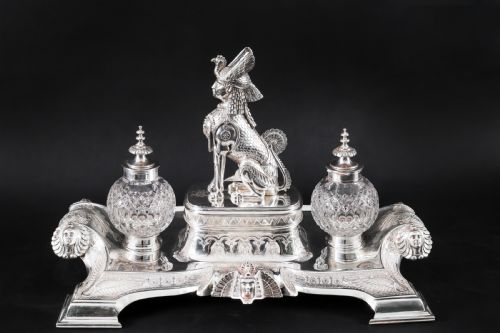
A 19th century glass inkwell serves as a practical desktop receptacle designed to hold writing fluid safely near the hand. These pieces appear frequently as heavy, square glass containers or as fitted glass inserts within larger stands.
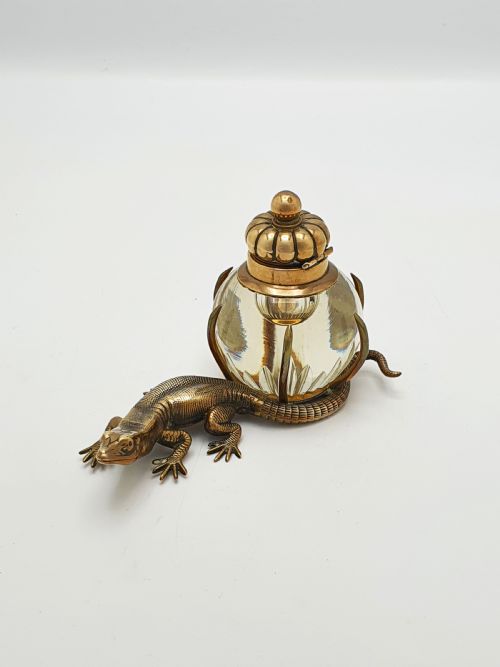
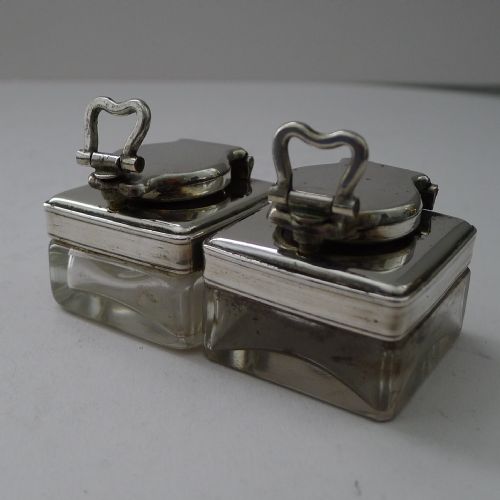
Many examples combine glass reservoirs with brass, silver plate, or sterling silver mounts, while others sit within wooden trays made of walnut, coromandel, or rosewood. The variety ranges from utilitarian pocket vessels to grand desk stands featuring multiple wells and pen trays.
Factors that distinguish quality
The clarity and weight of the glass establish the baseline of quality, with deep facet cutting and clean mould seams separating finer vessels from standard production pieces. Superior metalwork, including heavy gauge sterling silver or finely chased brass mounts, adds significant refinement.
Integrity of the complete set dictates value, particularly when original glass inserts match their brass or silver hinged lids. Desk stands that retain their original pen trays, secondary wells, and matching components demonstrate superior original workshop assembly.
The precision of secondary materials, such as tight brass inlay in rosewood or delicate hand-carved details in ebony and tortoiseshell, reveals the hand of a skilled maker rather than mass manufacture.
Certain Victorian desk stands feature spirited glass-eyed lizards and hand-carved bears keeping watch over the ink.
Wilkinson and Co·Rupert Favell
The 19th Century Glass Inkwell Glossary
- Inkstand
- A complete desk assembly featuring one or more inkwells, usually accompanied by space for pens and sealing wax.
- Standish
- An alternative term for a portable desk stand or inkstand, often fitted with compartments for writing implements.
- Ships inkwell
- A heavy vessel with a dome lid or recessed body designed to remain stable on a moving surface.
- Cut glass
- Glass decorated by grinding facets or patterns into the surface using a rotating wheel, creating sharp light refraction.
- Silver plate
- A base metal foundation coated with a thin layer of silver, common in Victorian desk accessories.
19th Century Glass Inkwell: Frequently Asked Questions
How do I date a glass inkwell?
Dating relies upon a combination of the glass manufacturing technique, the style of the metal mounts, and any accompanying hallmarks or dated inscriptions.
Earlier Regency and Georgian pieces display heavier pontil marks and simpler forms, while Victorian examples often embrace eclectic revival styles and complex mechanical lids.
Were these inkwells meant for travel?
Many smaller examples were specifically designed for travel, featuring secure screw-down glass stoppers and protective outer cases made of leather or fitted wood.
Larger desk stands remained stationary in libraries or offices, holding ample ink reserves and dipping pens for daily correspondence.
Why do some inkwells have metal collars?
Metal collars and hinged lids provided a secure seating for the glass reservoir and protected the ink from dust and rapid evaporation.
Craftsmen utilised brass, pewter, and sterling silver to reinforce the glass rim where wear from dipping pen nibs occurred most frequently.
How do I clean an old inkwell?
Gentle warm water and a soft bottle brush suffice for clearing dried ink residue from glass reservoirs without damaging fragile surfaces.
Harsh chemical cleaners and abrasive cloths should be avoided, particularly around sterling silver mounts, brass patination, and delicate wooden veneers.