
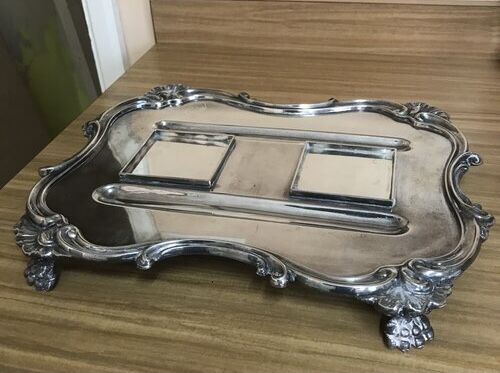


Victorian Ink Stand
A victorian ink stand commands the centre of a writing desk, combining utility with decorative ambition.
Victorian Ink Stand
A victorian ink stand functions as a desk accessory designed to hold inkwells, pens, and stationery. The pieces on this page span the Victorian and Edwardian periods, stretching from the mid-nineteenth century into the early twentieth century.
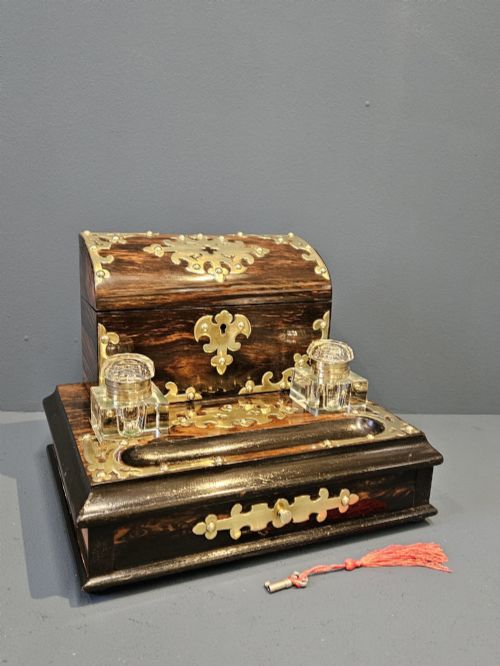
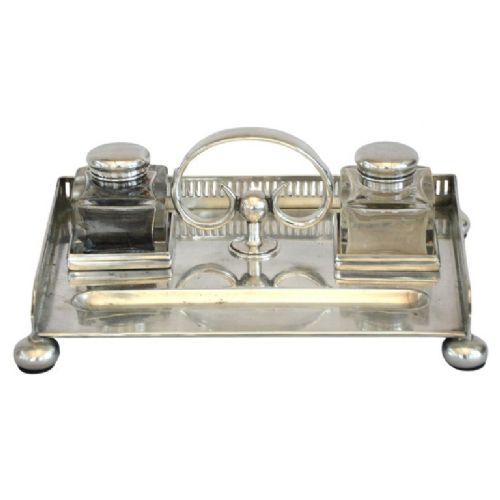
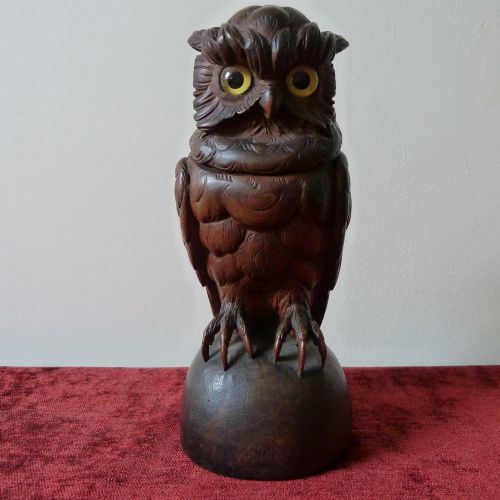
The form appears in simple oak or brass trays alongside elaborate silver-mounted coromandel boxes and carved wooden Black Forest figures. Many incorporate cut glass bottles with sterling silver or silver-plated lids, occasionally taking novelty shapes such as bells, animals, or horseshoes.
Materials and Construction
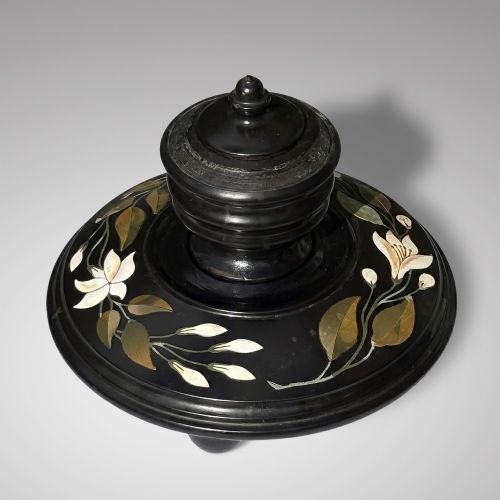
The construction relies on contrasting materials, pairing heavy hardwoods like oak and walnut with polished brass, bronze, and silver plate. Stoneware, porcelain, marble, and cut glass form the reservoirs, while inlay work utilises tortoiseshell, satinwood, and mother of pearl.
Makers combine metal casting, wood carving, and glass cutting to build these desk pieces. Champlevé enamel, hand-painted papier-mâché, and ceramic mounts add colour and texture to the metal and wooden frames.
Watch out for King Charles Spaniels and carved owls staring back from the paperwork.
Markers of Distinction
Quality rests on the weight of the metal, the clarity of the cut glass, and the precision of the joinery in the wooden trays. Pieces by known makers show sharper casting in the brass and finer detail in the engraved silver mounts.
The ambition of the design separates standard office items from showpieces. Elaborate novelty forms, such as carved owls or taxidermy mounts, require higher skill than simple rectangular bases.
Walker And Hall·James Cartland And Sons·Elkington And Co·George Fox·Henry Wilkinson And Co
The Victorian Ink Stand Glossary
- Inkstand
- A tray or stand holding one or more inkwells and space for pens. It serves as the primary desk tidy for writing equipment.
- Coromandel
- A dense, dark exotic timber with contrasting light streaks, frequently used for luxury Victorian boxes. This wood provides a durable and decorative foundation for high-end stationery stands.
- Ormolu
- Gilt bronze mounted onto decorative objects or furniture. The technique adds a bright golden finish to brass or bronze desk hardware.
- Capstan
- An inkwell shaped like a ship's capstan, tapering towards the top with a wide base. This classic form appears frequently in solid silver designs.
- Animalier
- Art depicting realistic animals in sculptural form, often seen in bronze or carved wood. These figures frequently form the decorative base of novelty desk accessories.
Victorian Ink Stand: Frequently Asked Questions
What is a victorian ink stand used for?
These stands held inkwells, pens, and sealing wax on nineteenth-century writing desks. They kept liquid ink accessible while protecting the desktop from spills and stains.
Many versions included built-in troughs for dip pens and compartments for stamps or stationery. Wealthy households placed them in libraries, studies, and drawing rooms for daily correspondence.
How do I identify a victorian ink stand?
Look for period materials like heavy brass, cut glass, sterling silver, oak, and coromandel. Victorian pieces often carry hallmarks, registration dates, or maker marks from firms active in the nineteenth century.
Stylistic cues such as Gothic Revival, Rococo scrolls, or Black Forest carvings point directly to nineteenth-century manufacture. Edwardian and later pieces tend to show lighter construction or simpler brass mounts.
Are inkstands made of solid silver?
Many fine examples feature solid sterling silver mounts, lids, and trays bearing British hallmarks. These pieces were assayed in cities like London and Sheffield during the Victorian era.
Other stands use silver plate over a brass or copper base, offering a similar appearance at a lower production cost. Glass and ceramic reservoirs often have silver collars fitted to the necks.
How should I clean brass on an inkstand?
Dust the surface gently with a soft dry cloth to remove loose particles. Avoid harsh chemical polishes that strip away the aged patina accumulated over the decades.
If the metal requires cleaning, use a mild, non-abrasive cleaner formulated specifically for antique brass. Take care to avoid staining adjacent materials like wood, tortoiseshell, or glass.