

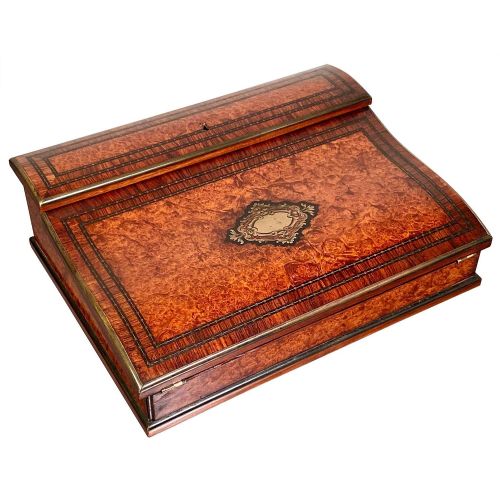


Victorian Writing Slope Accessory
These Victorian writing slope accessory pieces bring functional elegance to any desk, offering period craftsmanship designed to keep correspondence orderly and refined.
Victorian Writing Slope Accessory
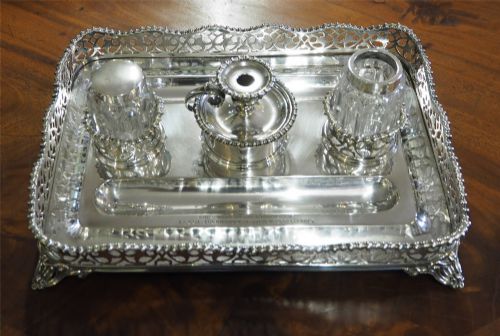
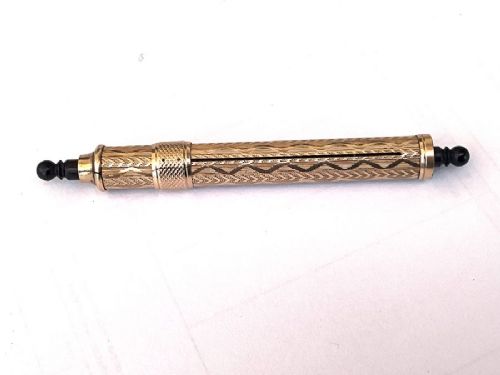
A Victorian writing slope accessory encompasses items designed to support correspondence, from inkstands and inkwells to sealing wax holders, pen wipes, and stationery boxes. These pieces emerge predominantly from the Victorian era alongside nineteenth-century French and Edwardian periods, reflecting the heavy reliance on handwritten letters during the period.
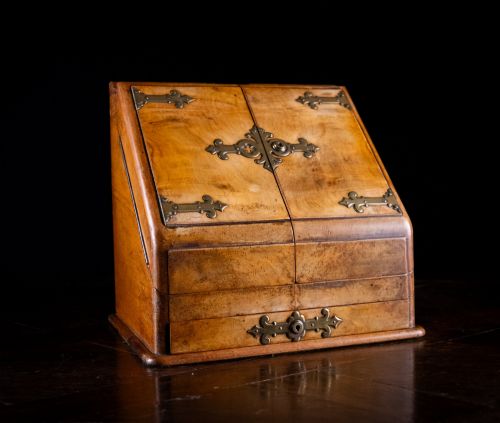
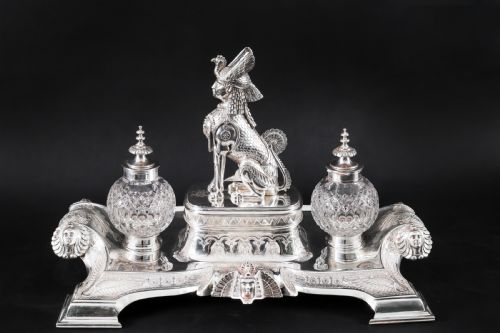
Buyers frequently encounter items ranging from utilitarian oak and solid mahogany desk sets to highly decorative French boullework and Egyptian revival pieces. Burr walnut and walnut writing slopes equipped with brass inlays appear alongside fitted stationary cabinets and travelling inkwells.
Many survivors demonstrate specific stylistic influences, including Aesthetic Movement designs, French Empire interpretations, and intricate Tunbridge ware. Whether selecting a simple ceramic inkwell on a brass stand or a grand three-piece desk set with hand-painted porcelain, each item served a distinct desktop purpose.
Assessing Quality
Superior pieces display exceptional execution in secondary materials, such as finely chased ormolu mounts, crisp Tunbridge ware tessellation, or intricate Boulle brass and tortoiseshell inlay. The inclusion of signed mechanisms, such as Bramah locks or marked silver components, elevates a piece significantly.
The choice of primary wood veneer dictates much of the visual merit, with richly figured burr walnut or coromandel marking out the better workshops. Completeness also separates standard items from exhibition-grade examples, particularly when original fitted glass inkwells and matching accessories remain intact.
Listings feature items from the Victorian, Edwardian, and nineteenth-century French periods, constructed from walnut, oak, brass, and cut glass.
Wilkinson and Co·Edward Todd and Co New York·Elkington·Houghton and Gunn
The Victorian Writing Slope Accessory Glossary
- Standish
- A portable tray or stand holding inkwells, sanders, and pen holders for a desk. It often stood centrally on a writing table.
- Tunbridge ware
- Woodwork decorated with mosaic patterns formed from tiny coloured wood blocks to create pictorial or geometric designs. This technique originated in Kent during the nineteenth century.
- Boulle
- Marquetry style using brass and tortoiseshell inlay developed in France. It frequently adorns nineteenth-century French desk sets and writing furniture.
- Ormolu
- Gilt bronze ornamentation applied to furniture and decorative objects. It provides bright metallic highlights on nineteenth-century French pieces.
- Sealing Wax Holder
- A decorative hand-held tool used for storing or melting wax for sealing letters. They frequently match other desk accessories in a set.
Victorian Writing Slope Accessory: Frequently Asked Questions
What is an antique writing slope accessory?
These items comprise the various desktop additions used alongside writing desks and slopes, including inkwells, sealing wax holders, and pen wipes. They served to organise correspondence tools and maintain a tidy writing surface.
Most surviving examples date from the nineteenth century, reflecting an era when letter writing required dedicated implements. They range from simple brass and ceramic pieces to elaborate multi-piece French desk sets.
How do I identify an Egyptian Revival inkstand?
Egyptian Revival pieces incorporate distinct motifs inspired by ancient Egyptian art, such as sphinxes, obelisks, and hieroglyphic patterns. These designs gained popularity during the nineteenth century following various archaeological discoveries.
On this page, such pieces often appear in metalwork or stone as part of elaborate desk stands and inkstands made by notable makers.
What woods were used for Victorian stationery boxes?
Cabinet makers predominantly used burr walnut, walnut, oak, mahogany, and coromandel for stationary cabinets and writing boxes. Burr walnut and coromandel provided highly figured, decorative surfaces suited for display.
These timbers were frequently accented with brass inlay, banding, or specialised techniques like Tunbridge ware to enhance their visual appeal.
How do I clean antique brass desk accessories?
Antique brass components require gentle dusting with a soft, dry cloth to prevent the accumulation of dirt. Avoid harsh chemical polishes that can strip away the historical patina built up over generations.
If cleaning is necessary, use a mild, non-abrasive cleaner specifically formulated for antique metals, taking care not to touch surrounding wood or glass elements.