



19th Century Chinese Artwork
These 19th century chinese artwork pieces bring vibrant narrative and historical detail to a room, offering authentic glimpses into Qing dynasty export trade and traditional craftsmanship.
19th Century Chinese Artwork
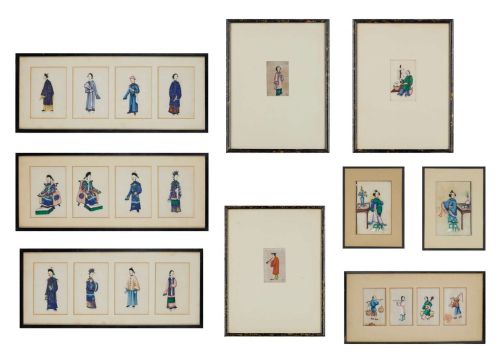
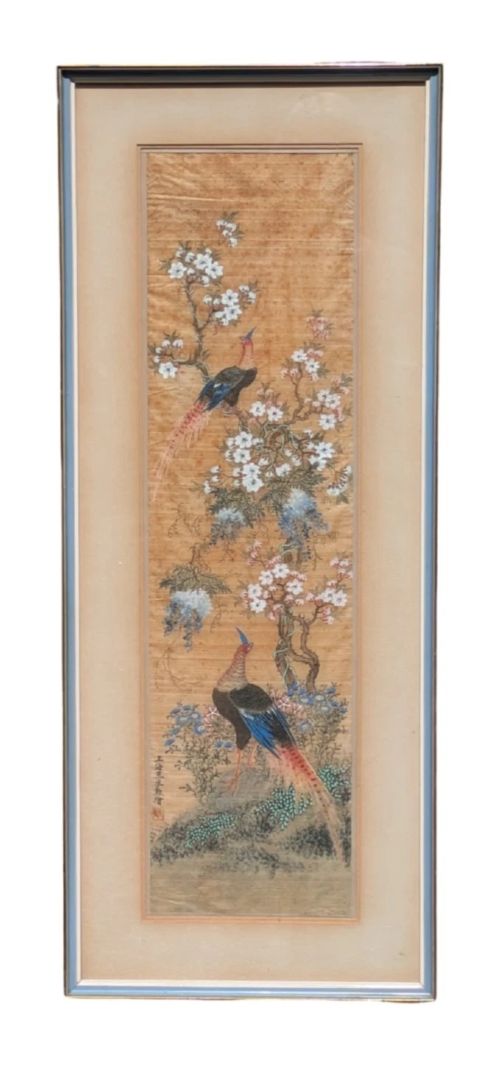
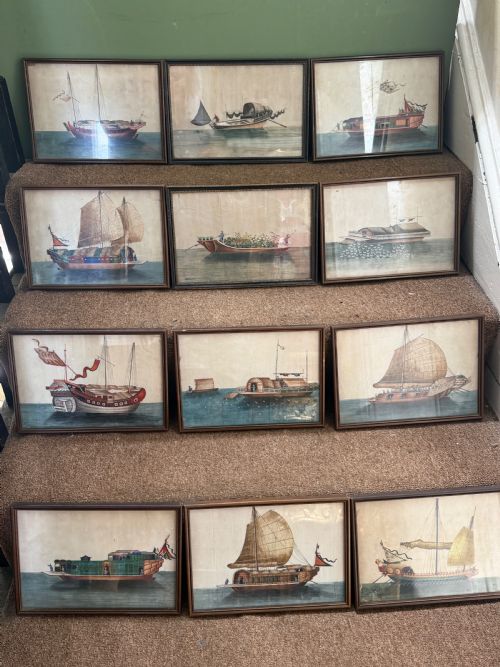
Buyers seeking 19th century chinese artwork encounter a diverse selection ranging from delicate pith paper paintings and framed ancestor portraits to reverse-painted mirror-glass and carved wood temple guardians. The most frequent discoveries on this page include pith paper paintings depicting figures or ships, alongside framed gouache watercolours created for export markets.
These items span various production centres and stylistic influences, encompassing Qing dynasty export art, Anglo-Chinese maritime paintings, and lacquer panels. The visual vocabulary shifts between traditional court subjects and trade pieces tailored for Western collectors during the nineteenth century.
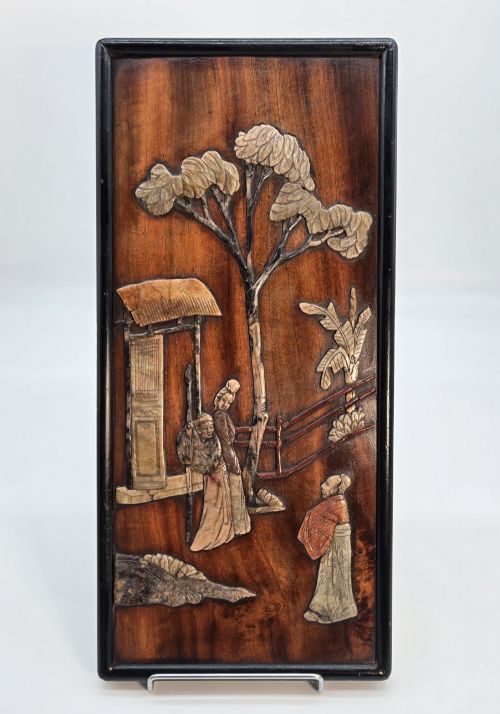
Wall art forms the core of the category, with framed paintings dominating the selection alongside decorative wall hangings and sculptural wood carvings. Pieces often preserve original framing or mounting, providing tangible links to their period of creation.
Materials and construction techniques
Makers utilised organic supports such as pith paper, silk, canvas, and wood, applying mineral and vegetable pigments, gouache, watercolor, and oil paints to build the surface imagery. Pith paper, derived from the pith of the Tetrapanax papyrifer plant, absorbed water-based pigments to produce a characteristic velvety depth.
Wood served both as a structural base for carved panels and as a medium for sculptural figures like temple guardians, which received gilt and polychrome surface treatments. Reverse painting on glass involved applying pigment directly to the rear of glass panels to create luminous mirror compositions intended for export.
Some nineteenth-century trade artists painted bustling harbour scenes specifically so homesick sailors could gaze upon their favourite steamships over breakfast.
Factors distinguishing quality
Quality rests upon the precision of the brushwork, the preservation of the pigment, and the integrity of the original ground material, whether delicate pith paper or stable silk. Superior examples exhibit confident line work and vibrant, stable colours that retain their original tonal contrast.
The sophistication of the composition and the complexity of the subject matter distinguish finer studio output from standard trade productions. Original frames and mounting add significantly to the integrity of the piece, anchoring the artwork in its proper historical context.
The 19th Century Chinese Artwork Glossary
- Pith paper
- A delicate material formed from the spongy cellular tissue of the Tetrapanax papyrifer plant. It receives watercolour and gouache pigments with exceptional brilliance.
- Qing Dynasty
- The final imperial dynasty of China, lasting from 1644 until 1912. Many export artworks date from the later decades of this imperial rule.
- Gouache
- An opaque water-based medium composed of ground pigments and a binding agent. It provides solid, flat areas of colour in trade paintings.
- Reverse painted glass
- A technique where artists paint directly onto the back of a glass panel. Viewed from the front, the glossy surface enhances the pigments.
- Ancestor painting
- A formal portrait commissioned to honour family lineage and venerate forebears. These works typically display strict frontal poses and detailed robes.
19th Century Chinese Artwork: Frequently Asked Questions
How should I clean pith paper paintings?
Pith paper is extremely fragile and reacts poorly to moisture or pressure. Dust gently with a soft dry brush only.
Keep these artworks away from direct sunlight and high humidity to prevent the paper from degrading and the pigments from fading.
What is Chinese export art?
Export art comprises items manufactured in China specifically for Western markets during the eighteenth and nineteenth centuries. These pieces often blend traditional Eastern techniques with Western tastes.
Subjects frequently include maritime scenes, local trades, and domestic activities designed to satisfy foreign curiosity.
Are these paintings original period pieces?
The listings consist of items produced during the nineteenth century, utilising period materials and traditional methods. Each piece carries the stylistic markers of its era.
Examination of the backing materials, pigments, and framing helps confirm the nineteenth-century origins of the artwork.
How do I hang heavy wood carvings?
Sculptural wood panels and temple guardians require secure wall fixings suited to their weight. Consult a professional installer to evaluate wall structure.
Ensure the mounting hardware distributes the load evenly to protect both the carving and the surrounding wall.