


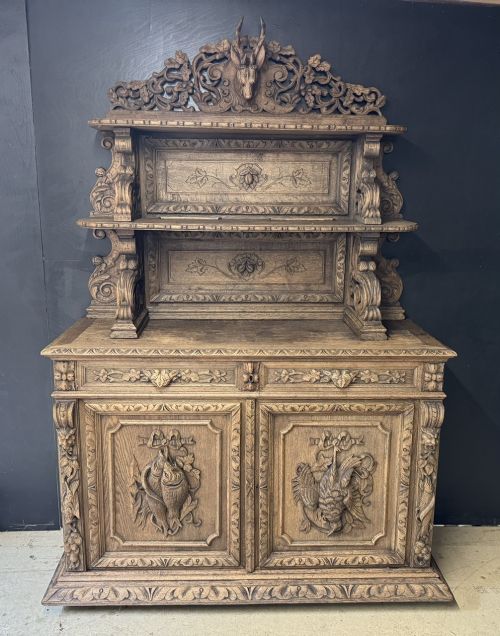
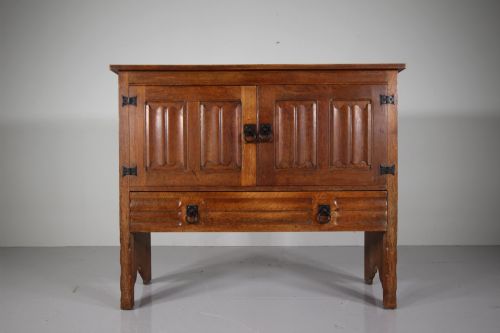
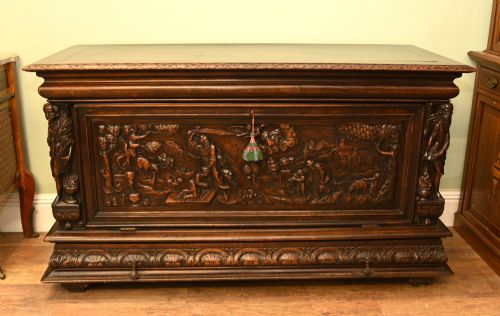
19th Century Carved Buffet
These heavy dining room pieces offer substantial storage through carved doors and drawers, bringing nineteenth century craftsmanship directly into modern living spaces.
19th Century Carved Buffet
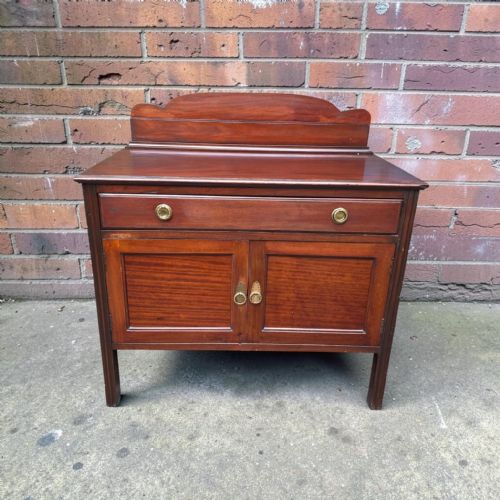
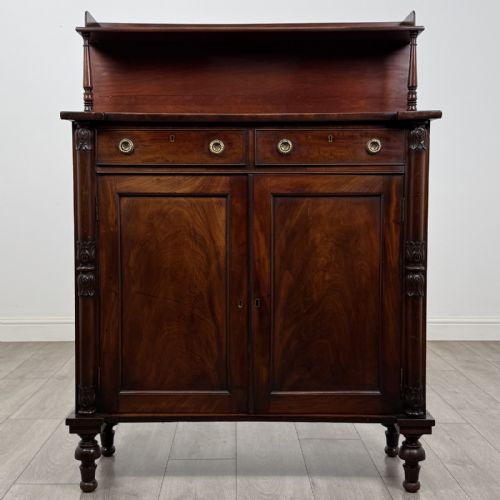
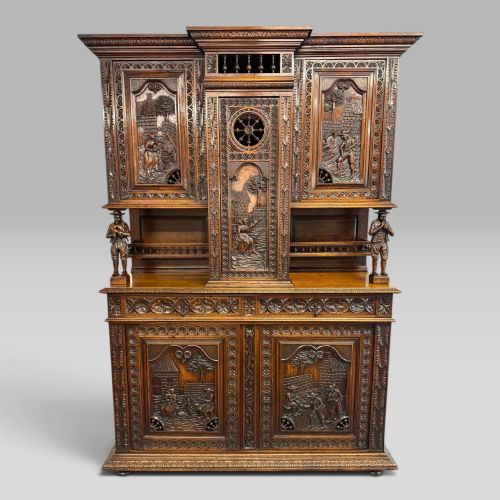
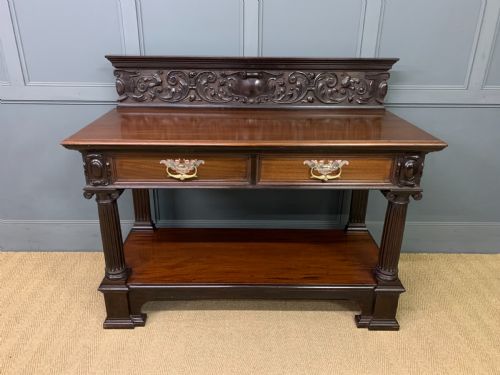
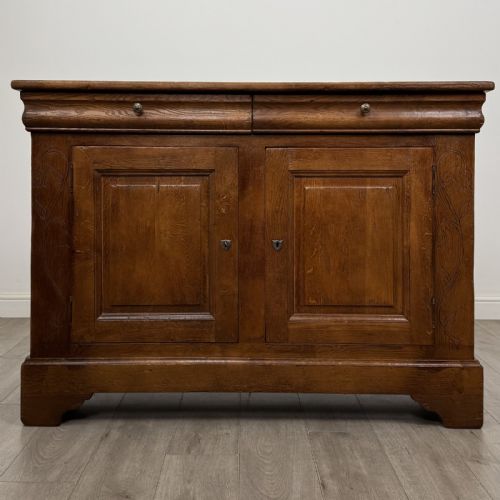
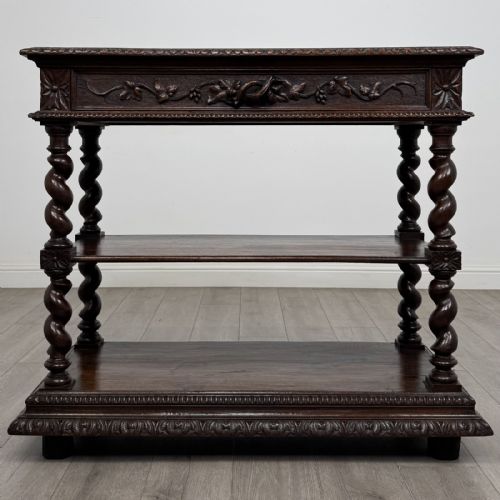
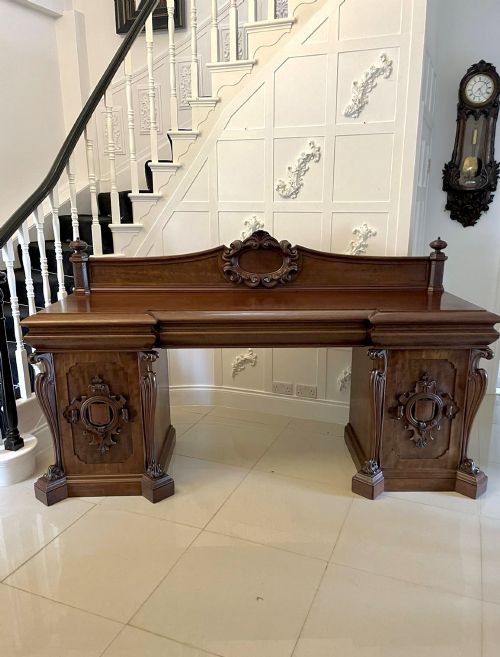
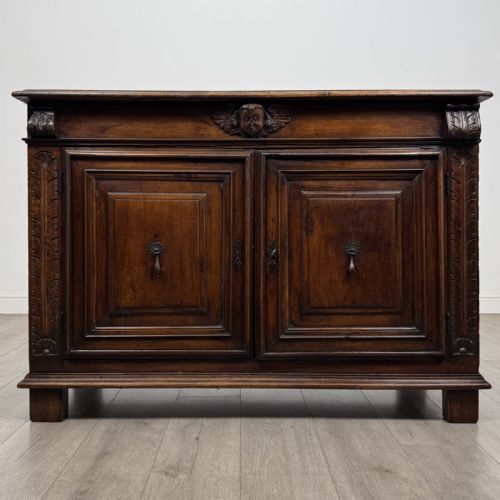
A 19th century carved buffet brings substantial timber storage to the dining room or hall, appearing primarily in oak, mahogany, and walnut forms across this selection. Buyers frequently encounter French oak cabinets alongside heavier Victorian carved oak sideboards and pedestal designs.
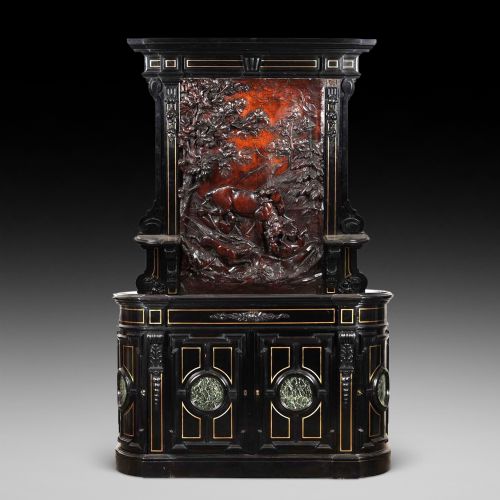
Makers utilised various regional interpretations, producing English pedestal sideboards, French provincial dressers, and Gothic revival cupboards. The selection spans standard sideboards, multi-tiered serving tables, and tall buffet de corps pieces intended for display and tableware storage.
Materials and Technique
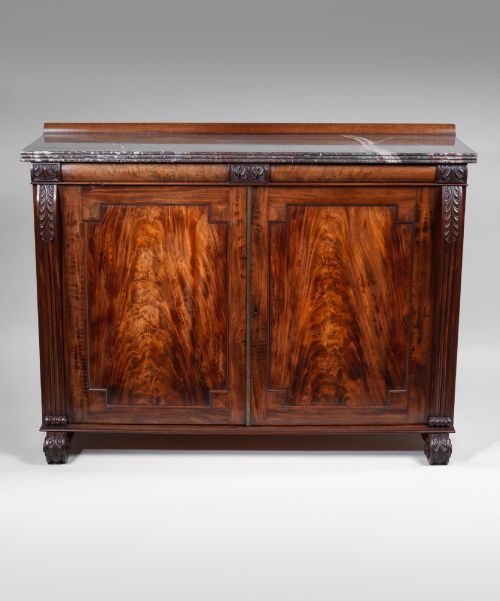
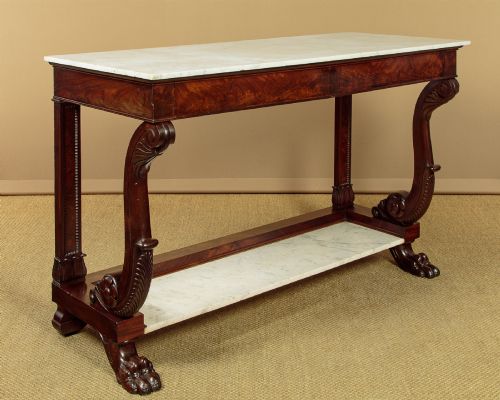
Cabinetmakers constructed these pieces using solid timbers such as oak, mahogany, and walnut, frequently applying flame mahogany and burr walnut veneers to prominent drawer fronts and door panels. Brass hardware and inset marble tops appear alongside extensive hand carved ornamentation.
Joinery methods involved traditional panel construction and mortise and tenon framing to support heavy timber shelves and mirrored upper sections. Surface detailing relies on deep relief carving, marquetry inlay, and turned wooden supports.
19th Century Carved Buffet Retail Price Guide 2026
Typical asking prices for 19th century carved buffet among the pieces listed under this phrase on Sellingantiques today, from the lower quarter to the upper quarter. They describe what is for sale here now, not the wider market.
Listings feature oak, mahogany, walnut, rosewood, and teak timbers across nineteenth century periods.
Judging Quality
The distinction between standard utility items and superior examples rests upon the depth and precision of the hand carving and the choice of timber figure. Oak pieces with crisp, high relief motifs and mahogany items featuring matched flame veneers demonstrate superior workshop standards.
Structural integrity depends on the stability of large timber panels and the quality of internal shelf supports within the cupboards and serving tables. Refined proportions, such as narrow profile dresser bases, separate utilitarian storage from decorative reception room furniture.
The 19th Century Carved Buffet Glossary
- Buffet
- A sideboard or cupboard utilised for serving food and storing dining accessories. These items typically feature lower cabinets paired with upper tiers or display surfaces.
- Chiffonier
- A small sideboard featuring enclosed cupboards below, often accompanied by a shelf or mirror structure on the upper section. This form developed during the nineteenth century for drawing room use.
- Credenza
- A low dining room cabinet or sideboard, frequently fitted with glass doors and marble tops in Victorian iterations. Originating in Italy, the form gained popularity across European revival styles.
- Marquetry
- Decorative veneer work arranged in geometric or pictorial patterns across wooden surfaces. Craftsmen employed contrasting timber species to create intricate designs on cabinet doors.
- Pedestal Sideboard
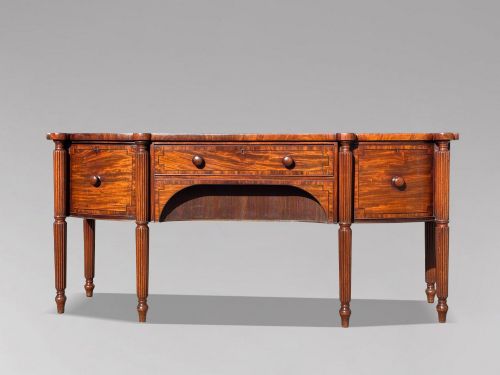
- A heavy dining room piece featuring central serving space flanked by structural pedestals or cupboards. Regency and Victorian cabinetmakers favoured this architectural layout.
19th Century Carved Buffet: Frequently Asked Questions
Where should I place a large buffet?
Dining rooms and wide hallways provide suitable space for these deep timber pieces, accommodating their substantial proportions and serving surfaces.
Ensure adequate wall clearance behind mirror backed variations to protect delicate framing and glass components.
How do I clean marble top surfaces?
Wipe the stone gently using a soft, damp cloth and mild neutral soap to preserve the polished finish without scratching the material.
Avoid acidic liquids and abrasive cleaners that can permanently etch nineteenth century marble surfaces.
Can I store heavy tableware inside?
Solid oak and mahogany shelves easily support heavy ceramics, glassware, and silver serving platters during daily domestic use.
Inspect internal shelf supports and wooden pegs periodically to ensure stable weight distribution across older cabinet interiors.
How do I identify Gothic revival features?
Look for pointed arch panels, linenfold carving, trefoil motifs, and heavy dark oak construction characteristic of nineteenth century ecclesiastical design influences.
These decorative elements often appear alongside structural pillars and stepped cornices on sideboard bases.