
19th Century Bronze Urns
These 19th century bronze urns bring classical weight and rich patination to a room, offering enduring presence for your interior.
What 19th century bronze urns are
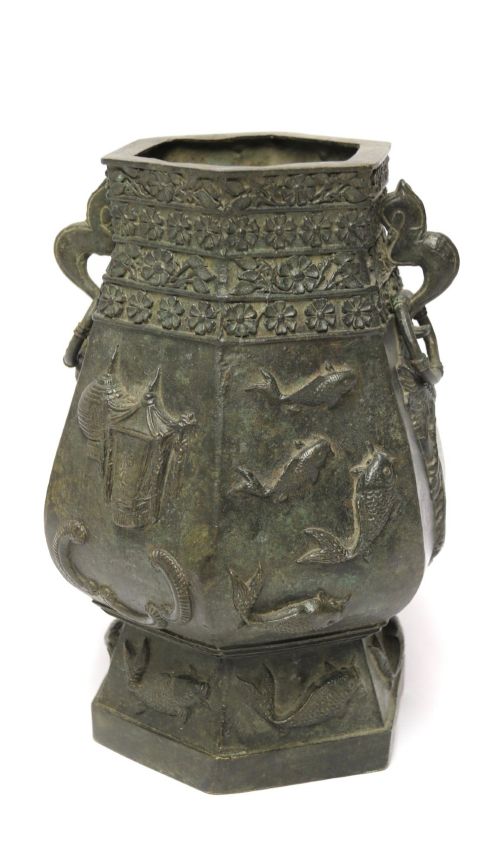
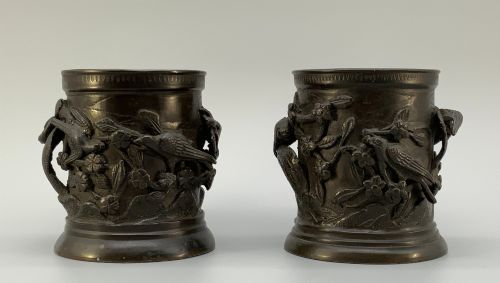
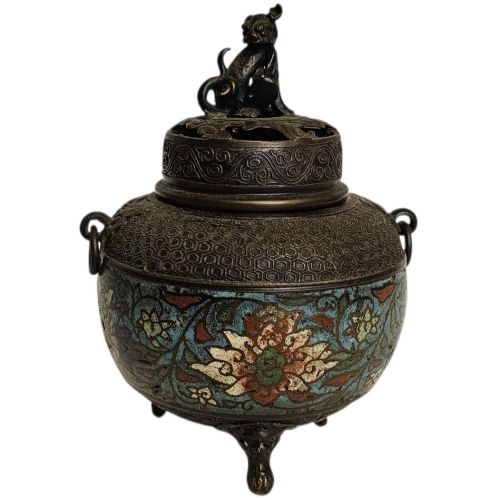
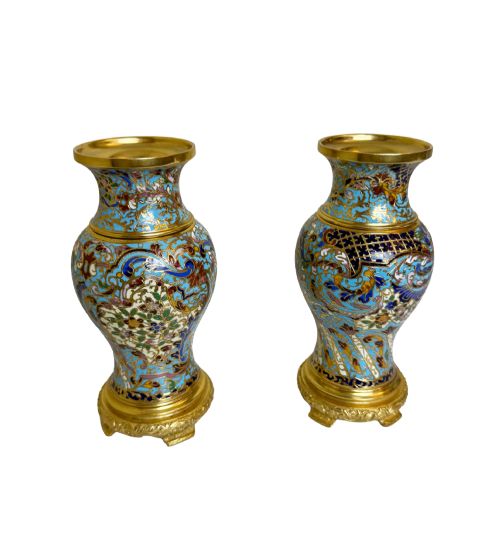
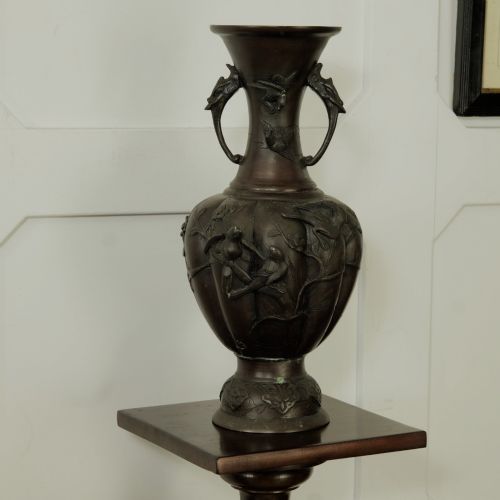
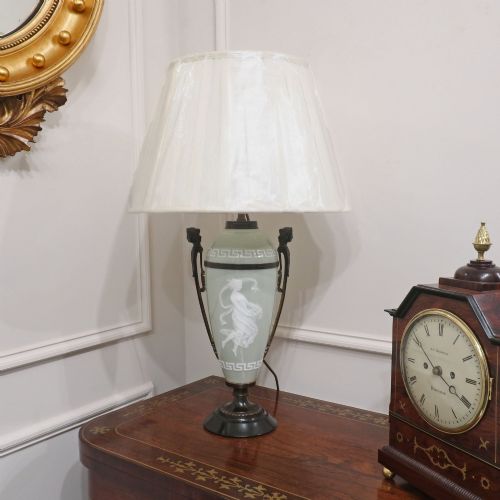
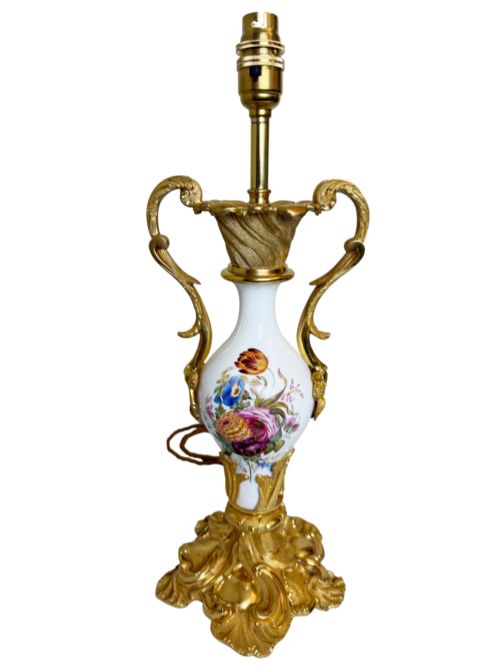
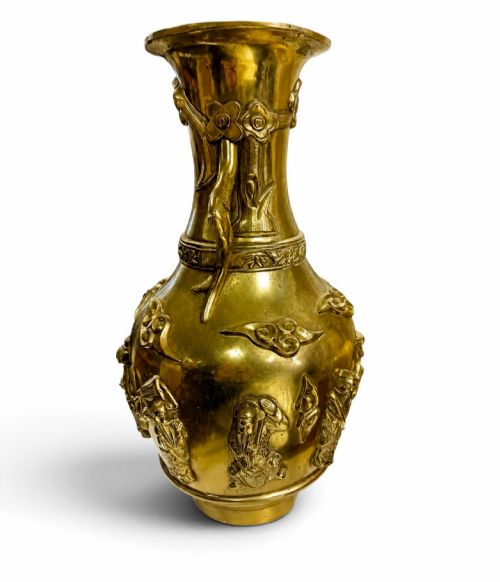
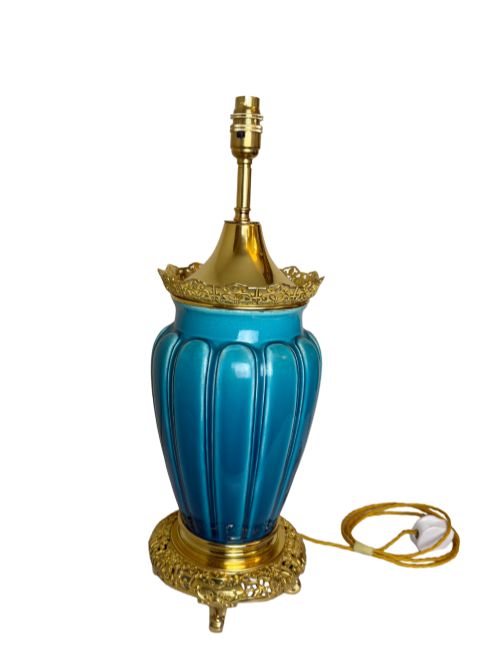
When you search for 19th century bronze urns, you encounter substantial ornamental pieces drawn from classical antiquity and the Grand Tour. These works take the form of decorative urns, tazzas, ornamental ewers, and vases shaped by Victorian and continental makers.
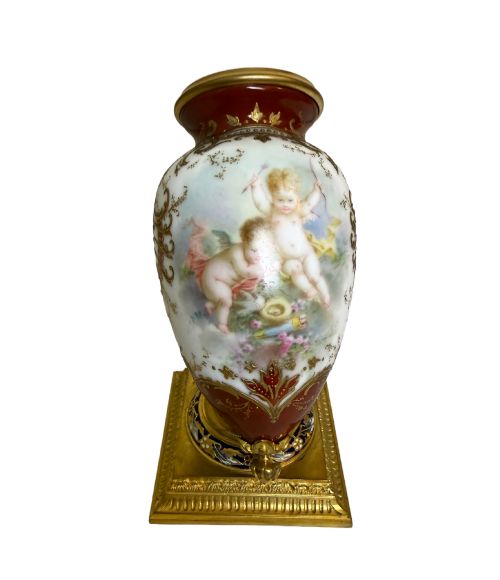
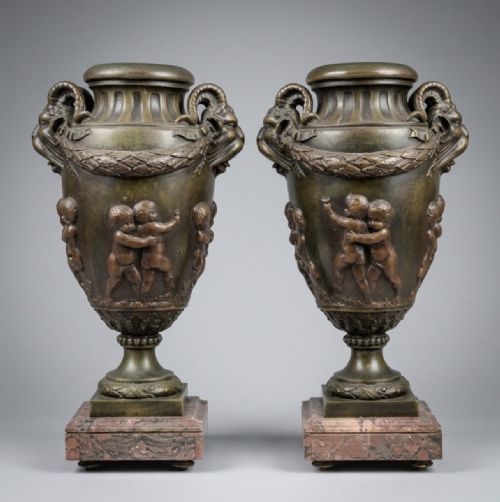
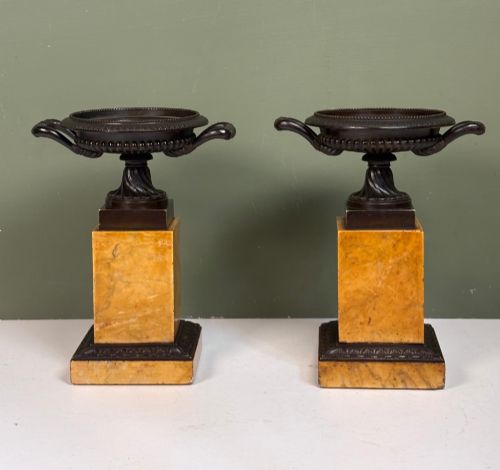
The selections most frequently met on this page include paired works, often combining cast bronze with marble pedestals in green, white, red, or Siena varieties. Neoclassical, French Empire, and Egyptian Revival influences dominate the forms, alongside Tibetan and Himalayan vases.
Pieces span the nineteenth century, including specific dates such as eighteen-fifty and eighteen-sixty, reflecting both European cabinet display traditions and broader global manufacture. Buyers find both patinated bronze bodies and ormolu mounts designed for prominent placement on mantelpieces or pedestals.
How they were made
Makers utilised traditional metalcasting techniques to produce the primary bronze bodies, often finishing the surfaces with dark patination or gilding. Cast bronze components were combined with turned marble bases and pedestals, utilising green, white, red, and Siena stone.
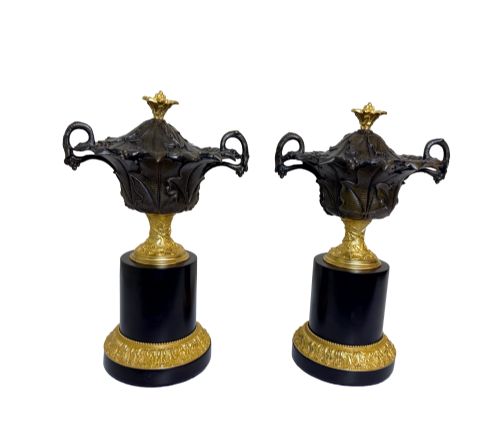
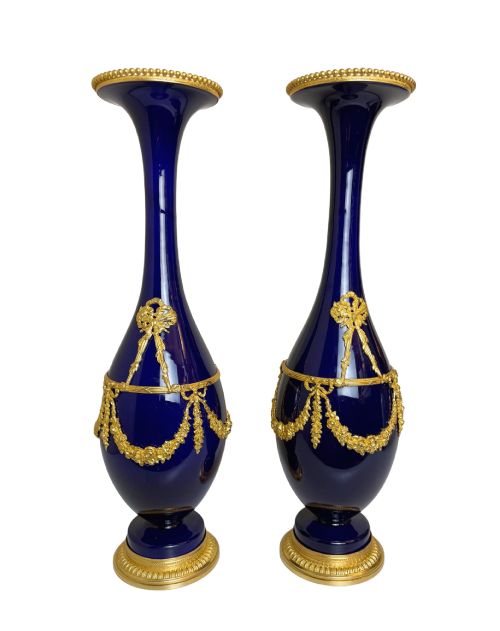
Detailing frequently incorporates applied ormolu or gilt bronze mounts, decorative handles, and classical relief work. These mixed media constructions unite heavy cast metal with polished stone to create balanced ornamental vessels.
Retail Price Guide 2026
Typical UK retail prices for 19th century bronze urns, calculated from the Sellingantiques database of over a million retail prices indexed since 2003. This retail price guide relies exclusively on Sellingantiques data; no external sources or auction records are used, so the figures do not describe the wider market.
Some nineteenth-century travellers carried home heavy bronze vases weighing several kilograms inside their luggage, proving that serious interior decoration involves some heavy lifting.
What varies in quality
The refinement of the casting and the crispness of the chased details separate standard examples from finer works. Sharpness in classical motifs and botanical reliefs indicates superior workshop standards.
The choice and grading of the associated marble pedestals also influence the piece, particularly where rarer stones like Siena or rich green marble are integrated with patinated bronze. The integration between metal mounts and stone bases demonstrates the maker's skill.
The 19th Century Bronze Urns Glossary
- Patinated bronze
- Bronze that has been chemically treated or aged to produce a specific surface colour, often dark brown or greenish brown. This finish protects the metal and defines the visual texture of the vessel.
- Ormolu
- Gilt bronze mounted or applied to decorative objects, created by applying a mercury-gold amalgam to cast bronze. The technique produces a rich golden surface that contrasts with dark patinated metal.
- Campana
- A bell-shaped classical urn form popular in antiquity and revived during the nineteenth century. These vessels feature flared rims and tapering bodies often set on square plinths.
- Grand Tour
- A cultural journey undertaken by wealthy young Europeans through France and Italy to study classical antiquities. Souvenirs purchased on these travels included small bronzes and marble urns.
- Cassolette
- An ornamental vase featuring a reversible lid that functions either as an urn or a burner for perfumes. They frequently combine bronze mounts with marble or porcelain bodies.
- Medici urn
- A large bell-shaped krater form decorated with classical relief figures, modelled after a famous marble antiquity found in Italy. Nineteenth-century examples translate this monumental ancient shape into cast bronze.
Frequently Asked Questions
How were bronze urns used originally?
In the nineteenth century, these vessels served primarily as decorative ornaments on mantelpieces, consoles, and pedestals. They reflected an owner's classical education and taste for antiquities.
Some specialised forms, such as cassolettes, doubled as containers for scented perfumes. Their presence signified wealth and cultural engagement rather than utilitarian storage.
How do I clean patinated bronze?
Dusting with a soft, dry cloth is sufficient for routine maintenance of patinated surfaces. Avoid using harsh chemical cleaners or abrasive polishes that might strip the historic finish.
If the metal requires deeper attention, consult a professional conservator who specialises in nineteenth-century bronzes. Protecting the original surface preserves both the appearance and the character of the piece.
Where should I display an urn?
These substantial objects require stable surfaces such as heavy sideboards, dedicated pedestals, or wide mantelpieces where their weight can be safely supported. Placing them away from direct heat sources protects any integrated marble or wax finishes.
Pairing matching urns symmetrically creates a formal arrangement typical of nineteenth-century interiors. Single pieces function well as focal points on smaller tables.
How can I tell the period?
Examine the casting quality, the method of assembly, and the wear patterns on the underside of the base. Nineteenth-century pieces often display hand-chased surface details and specific alloy compositions distinct from modern reproductions.
Stylistic cues such as Neoclassical motifs, Grand Tour origins, or Egyptian Revival details help narrow down the decade of manufacture. Comparing the patination and the type of marble used also aids in dating.