
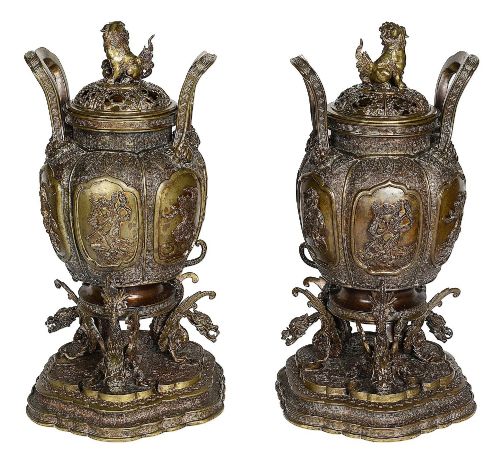
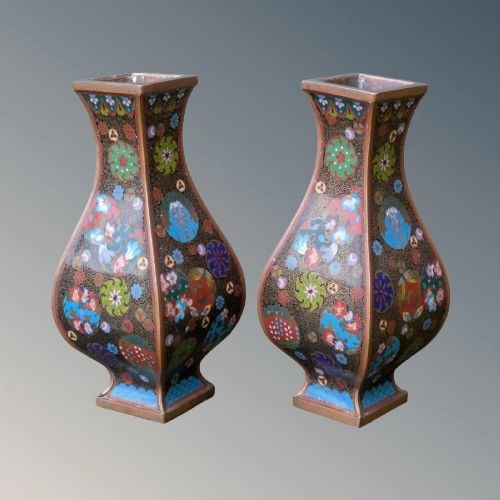
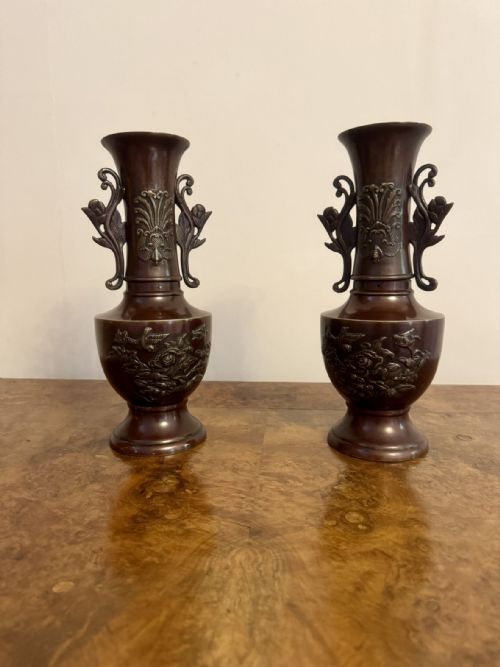


Asian Bronze Urn Pair
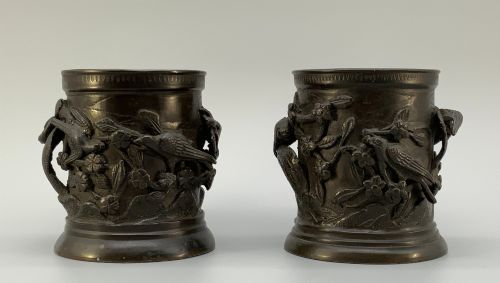
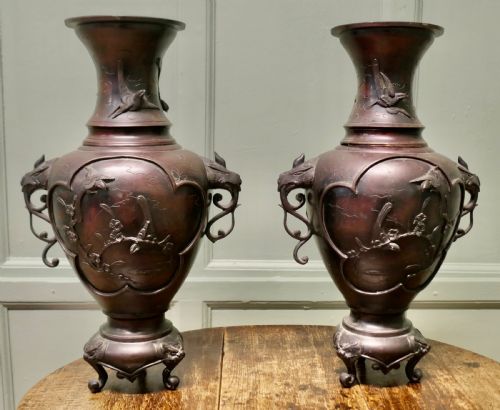
These asian bronze urn pair examples are substantial metal vessels shaped for display or light, mostly originating from Japanese Meiji workshops and Chinese periods.
Asian Bronze Urn Pair
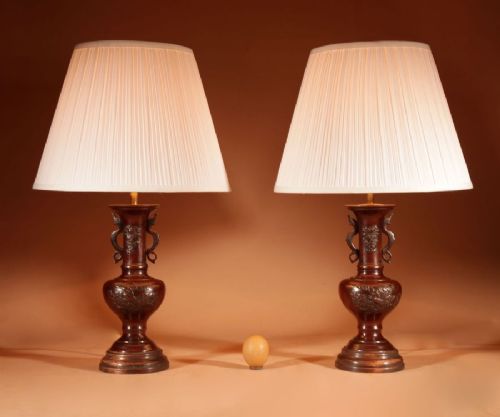
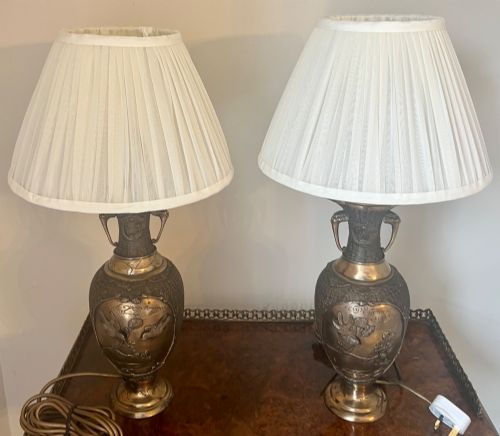
When you examine an asian bronze urn pair on this page, you encounter matching metal vessels designed for decorative placement, often adapted as table lamps or fashioned as lidded urns, flower vases, and twin-handled planters. The selection draws heavily on Japanese Meiji period production alongside Chinese Qing dynasty and Tibetan or Nepalese metalwork, spanning the nineteenth century through the early twentieth century.
The forms range from diminutive stem vases and ginger jars to very large altar vases and jardinieres carrying motifs of birds, blossom, and elephants. Buyers encounter both traditional patinated bronze constructions and converted lighting fixtures that retain their original Oriental metal bodies.
How they were made
The makers of an asian bronze urn pair relied primarily on cast bronze, brass, and patinated or gilt bronze, often incorporating enamel and porcelain elements in specific cloisonne and ginger jar designs. Surface decoration was achieved through meticulous casting, chasing, and patination processes that brought out botanical and animal motifs.
Fabric shades appear on pieces converted into table lamps during subsequent decades, while others maintain their solid metal lids and handles formed as integral parts of the original casting.
Listings feature materials including bronze, brass, patinated bronze, copper, gilt bronze, porcelain, enamel, and fabric.
What varies in quality
The distinction between ordinary and exceptional examples of an asian bronze urn pair lies in the crispness of the casting detail and the depth of the patination. Heavy, substantial metal weights and finely chased bird, blossom, or elephant motifs indicate superior workshop output from the Meiji period or Chinese dynasties.
Secondary factors include the integrity of original patinas versus later alterations, as well as the balance and proportion maintained across both matching vessels in the pair.
The Asian Bronze Urn Pair Glossary
- Meiji Period
- A Japanese historical era lasting from 1868 to 1912. Metalwork from this time is celebrated for refined bronze casting and intricate surface ornamentation.
- Patinated Bronze
- Metal treated with chemicals, heat, or substances to produce a stable surface colour. This finish protects the bronze while enhancing its visual depth.
- Cloisonne
- An ancient technique for decorating metal object surfaces using enamel held in place by raised thin metal strips. It frequently appears on Chinese ginger jars and vases.
- Jardiere
- A large ornamental pot or stand designed to hold growing plants or flowers. These vessels often feature heavy bronze construction and twin handles.
- Altar Vase
- A ritual vessel placed upon a shrine or altar for ceremonial offerings. These pieces typically display formal proportions and substantial metal weight.
Asian Bronze Urn Pair: Frequently Asked Questions
How were these bronze urns originally used?
Many of these vessels served as decorative display pieces in domestic interiors or functioned as ritual vessels on altars. Others held floral arrangements or posies in formal rooms.
Over subsequent decades, a significant number were adapted with electrical fittings to serve as table lamps while retaining their original metal bodies.
Can these converted lamps be restored to urns?
Conversion usually involves running electrical wiring through the central core or adding lamp hardware to the top of the vessel. Reverting the piece depends on whether the original lid survives and how the wiring was secured.
Many collectors choose to live with the lamps as functional lighting while appreciating the antique bronze base.
How do I care for antique bronze surfaces?
Antique bronze requires minimal intervention to preserve its historic patina. Dusting with a soft, dry cloth is generally sufficient for regular maintenance.
Avoid using harsh metal polishes or abrasive cleaners, which can strip away the patinated finish accumulated over the centuries.