



Oriental Relief Dragon Vase
An oriental relief dragon vase brings powerful mythological symbolism and sculptural metalwork or ceramic form into a room.
Oriental Relief Dragon Vase
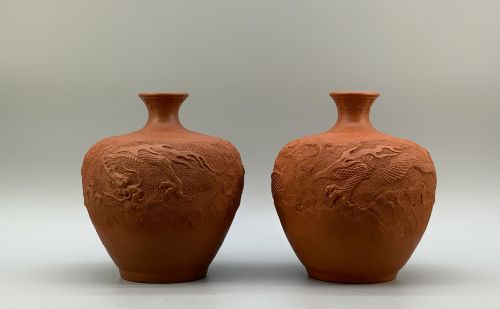
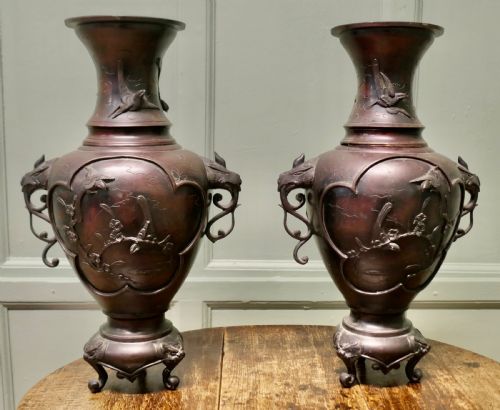
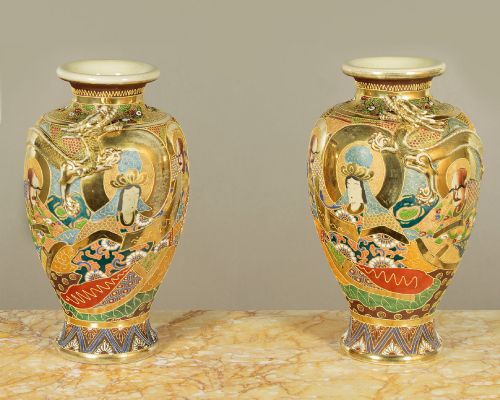
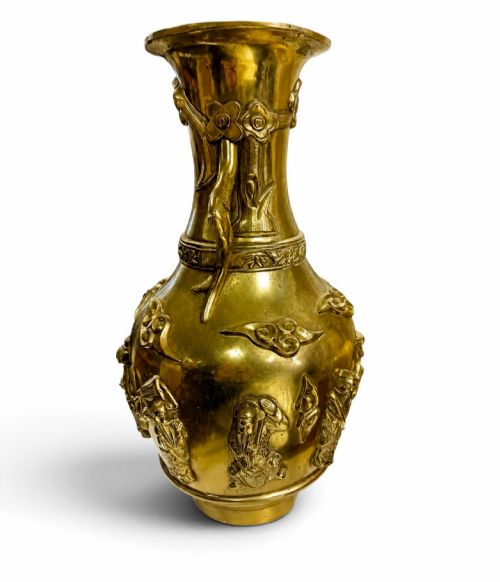
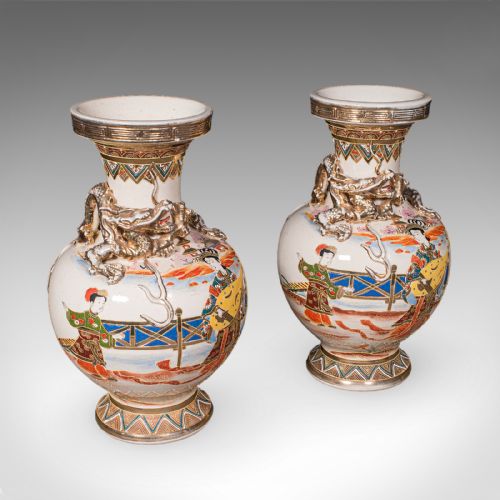
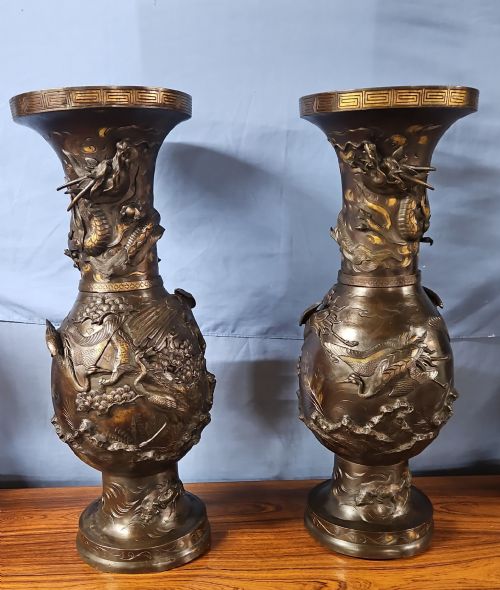
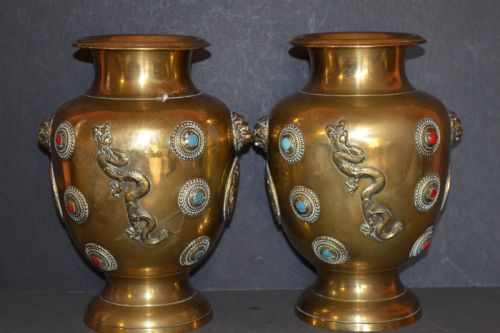
When searching for an oriental relief dragon vase, buyers encounter a distinct category of decorative vessels originating from Japan, China, and Tibet during the nineteenth and early twentieth centuries. These pieces span several notable eras, including the Meiji period, late Qing dynasty, and Edo period, reflecting diverse East Asian aesthetic traditions. The selection on this page consists predominantly of bronze and copper-alloy vessels alongside ceramic counterparts such as red clay Tokoname pieces and earthenware Satsuma wares.
The physical forms vary from monumental baluster vases and heavy pairs weighing several kilograms to smaller decorative table lamps and flower urns. Japanese bronze examples from the Meiji period frequently feature intricate cast motifs, while Chinese iterations from the nineteenth century display bold high-relief work and traditional marks. Buyers select these items for their striking sculptural presence, rich patination, and the detailed craftsmanship inherent in traditional East Asian metalworking and pottery.
Materials and construction
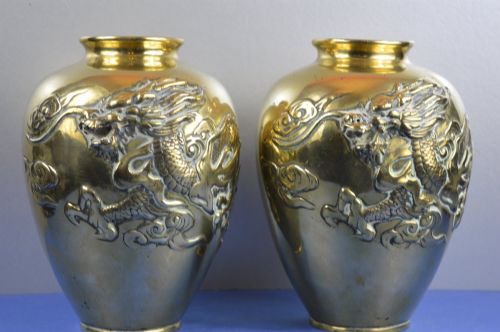
The metal vessels in this collection utilise bronze, brass, copper-alloy, and gilt bronze, often shaped through traditional casting methods that allow for intricate three-dimensional ornamentation. Artisans worked the metal surfaces to create high-relief dragons, incorporating elements like gold leaf, enamel, and applied patination to enhance visual depth. The resulting weight of these pieces, sometimes exceeding five kilograms, demonstrates the substantial substance of the metal used by Japanese and Chinese workshops.
Ceramic examples employ earthenware, red clay, and ceramic bodies, seen in Satsuma wares and Tokoname productions from the early twentieth century. These ceramic pieces feature moulded or ribbed structures, sometimes paired with applied decoration to achieve a tactile surface finish. The combination of durable metal alloys and fired clay ensures that both the cast bronzes and the ceramic vessels retain their structural integrity over the decades.
Several heavy bronze pairs tip the scales past five kilograms, ensuring these metallic dragons will not wander off your sideboard.
Evaluating quality and execution
The finish and surface treatment further distinguish finer pieces from standard production. Expert application of patination, gilt bronze highlights, and enamel work creates tonal variation that elevates the sculptural impact of the design. Conversely, uniform or poorly preserved surfaces lack the subtle interplay of light and shadow that characterises the more accomplished items in this field.
The Oriental Relief Dragon Vase Glossary
- Meiji period
- The era of Japanese history lasting from 1868 to 1912, noted for a surge in metalworking and decorative arts destined for export. Pieces from this time often show advanced bronze casting techniques.
- Baluster
- A vertical vase form characterised by a rounded body that tapers toward the base and flares slightly at the neck. This shape provides a stable foundation for wrap-around relief decoration.
- Qing dynasty
- The final imperial dynasty of China, spanning from 1644 to 1912, represented here by late-period bronze and copper-alloy vessels. Items from this era frequently incorporate traditional symbolisms and reign marks.
- Satsuma
- A type of Japanese earthenware traditionally decorated with elaborate enamel and gilt patterns. These ceramic pieces offer a contrasting aesthetic to the heavy cast bronze vessels in the collection.
- Patina
- The surface coloration and sheen developed naturally over time or applied chemically by artisans. A controlled patina enhances the textural contrast of metal dragon reliefs.
Oriental Relief Dragon Vase: Frequently Asked Questions
How were oriental relief dragon vases used?
These vessels served primarily as decorative objects within domestic and formal settings, often displayed in pairs on mantelpieces or tables. Some examples were later converted into table lamps while retaining their original sculptural bodies.
Their substantial weight and imposing height made them focal points in Victorian and Edwardian interiors. They functioned as standalone displays of exotic craftsmanship rather than utilitarian flower containers.
What materials are most common in these vases?
Bronze and copper-alloy dominate the metal category, frequently enhanced with gilt bronze or applied patination. These materials allowed artisans to cast intricate high-relief dragon motifs.
Ceramic alternatives include red clay and earthenware bodies such as Satsuma and Tokoname wares. Each material dictates the weight and tactile quality of the finished vessel.
How do I identify Meiji period bronzes?
Meiji period bronzes date between 1868 and 1912, aligning with an era of exceptional technical proficiency in Japanese metalwork. They are typically characterised by heavy casting and dynamic, naturalistic dragon depictions.
Many of these pieces were produced specifically for Western export markets during the late nineteenth century. Their construction often involves multiple cast components assembled with precision.
What is the difference between Chinese and Japanese bronzes?
Chinese bronze vases from the late nineteenth century often feature bold, archaic-inspired motifs and heavier overall proportions. They may include base marks such as the Xuande style to reference earlier imperial traditions.
Japanese bronzes from the Meiji era tend toward highly animated, sculptural relief work focusing on naturalism. The surface patination and integration of the dragon motif also vary according to regional workshop practices.