
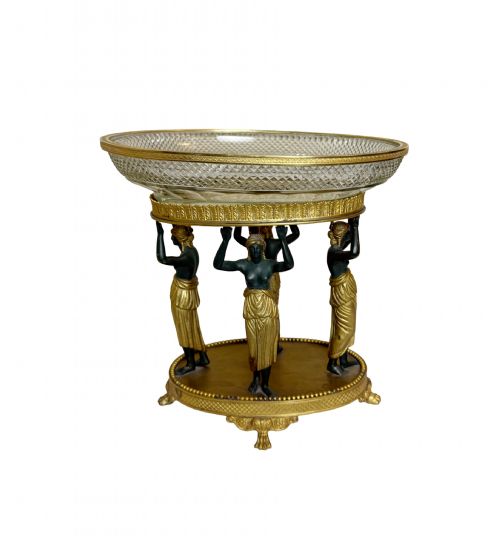


Antique French Compote Bowls
Antique French compote bowls are elevated pedestal vessels designed for display, bringing classical metalwork and porcelain to the centre of the table.
Antique French Compote Bowls
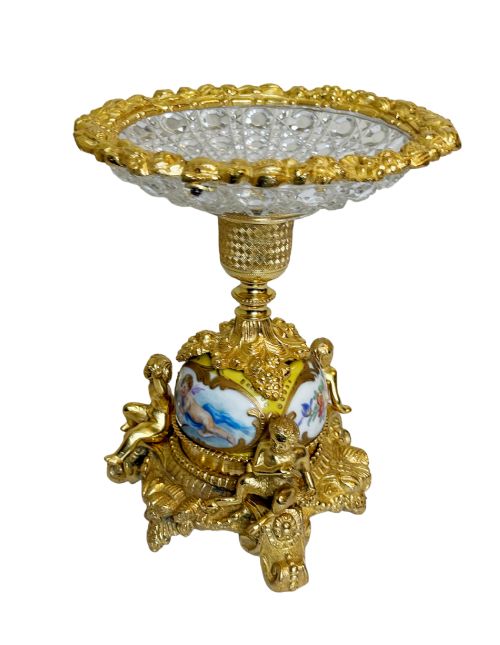
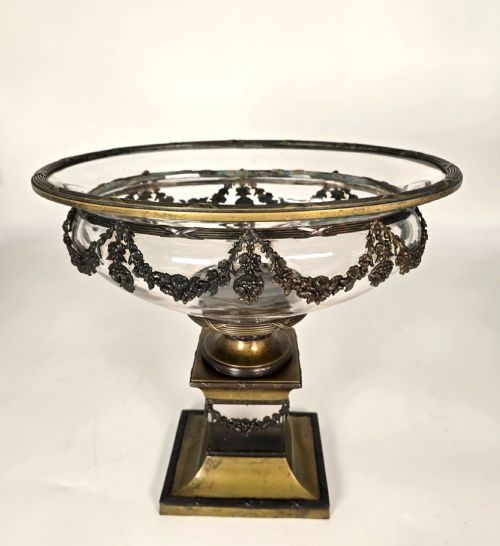
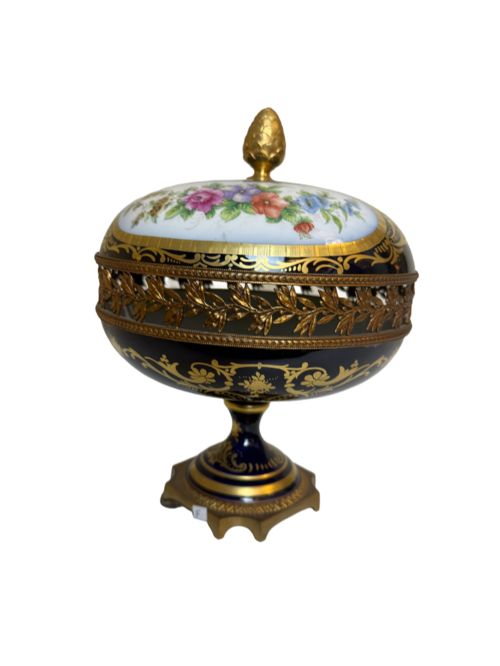
When you search for antique french compote bowls, you encounter pedestal vessels, tazzas, and centrepiece bowls created during the nineteenth century. These objects function primarily as decorative centrepieces or serving dishes, standing above standard tableware on short stems or feet.
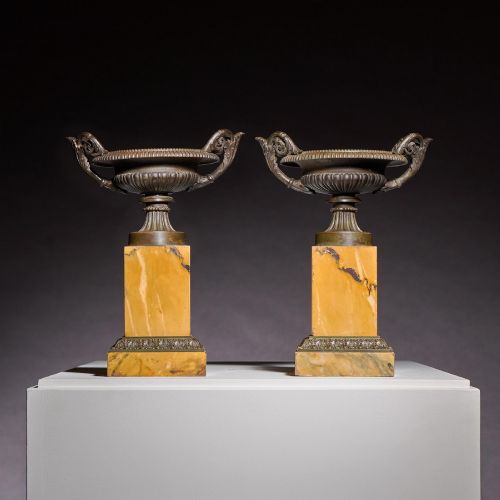
The versions met most frequently on this page combine cast metals with glass, porcelain, or marble inserts. They span styles from French Empire and Rococo Revival to the Grand Tour taste, reflecting nineteenth-century interior display habits.
How they were made
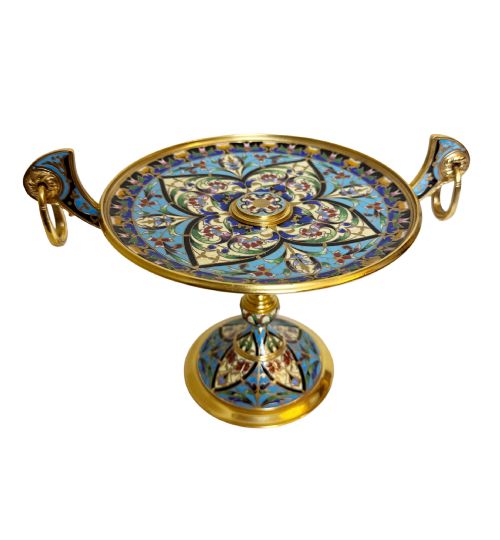
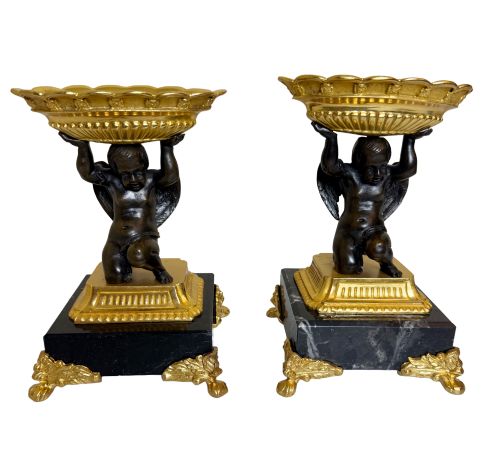
Maker workshops shaped these vessels using cast bronze, gilt bronze, and ormolu combined with hand-cut crystal, glass, and turned marble or onyx. Artisans assembled multi-part objects by fastening metal mounts, winged cherubs, and handles onto central bowls or dishes.
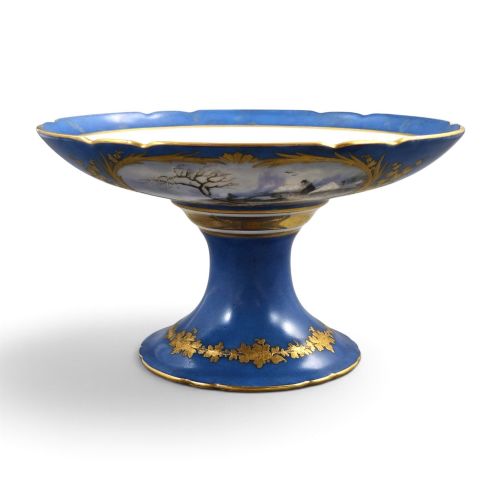
Surface decoration involved champlevé enamel work, hand-painting on porcelain grounds, and patinated bronze finishes. Metal components received mercury gilding or chemical patination to achieve contrasting golden and dark bronze tones.
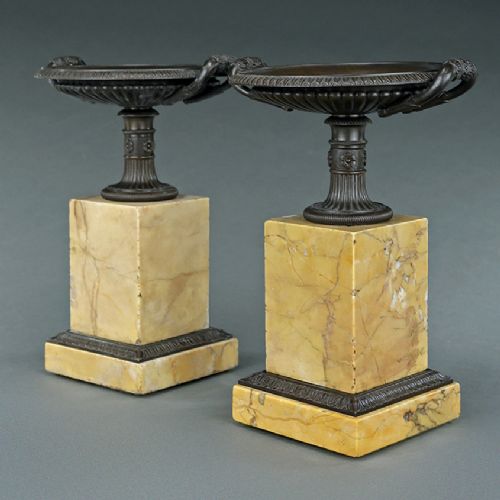
Materials span malachite, Blue John, green onyx, Siena marble, and mother-of-pearl.
What varies in quality
Sèvres·Christofle·Samson
The Antique French Compote Bowls Glossary
- Compote
- A raised vessel used for fruit or sweetmeats, often featuring a shallow bowl upon a central stem and foot. This form sits high above the table surface.
- Tazza
- A shallow saucer-like dish mounted on a stem and foot, originating from classical vessel forms. It serves a similar decorative and display function to the compote.
- Ormolu
- Gilded bronze produced by applying a mercury and gold amalgam to a bronze base and heating it. This technique yields a durable, rich golden surface sheen.
- Champlevé
- An enamelling technique where troughs are gouged into a metal surface, filled with enamel powder, and fired. The resulting coloured glass designs sit flush with the metal partitions.
- Garniture
- A set of matching decorative objects, typically comprising three or more pieces designed to stand together on a mantelpiece or sideboard.
Antique French Compote Bowls: Frequently Asked Questions
Were these bowls used for actual dining?
While some porcelain and glass dishes held fruit or sweetmeats during formal nineteenth-century meals, many heavier bronze and marble pieces functioned purely as decorative centrepieces.
Their elaborate mounts and delicate materials made them table ornaments rather than everyday tableware.
How do I identify a Grand Tour piece?
Grand Tour pieces typically incorporate Siena marble, patinated bronze, and classical architectural motifs inspired by travels through Italy.
These items were brought back by nineteenth-century travellers as mementos of classical antiquity.
How should I clean gilt bronze mounts?
Gilt bronze and ormolu require gentle dusting with a soft dry cloth to protect the thin gold surface layer.
Moisture and chemical polishes strip the historic gilding and must be avoided entirely.