


Bronze and Marble Pedestals
Bronze and marble pedestals combine classical stone columns and cast metal mounts to elevate sculpture and decorative objects.
Bronze and Marble Pedestals
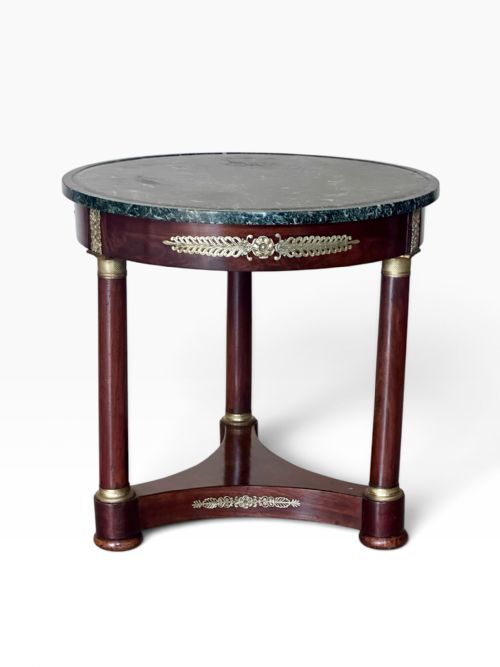
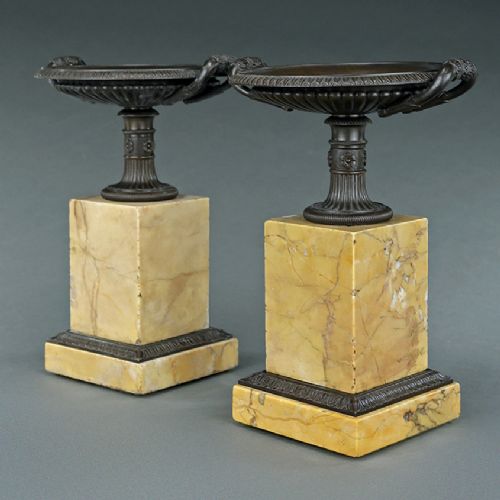
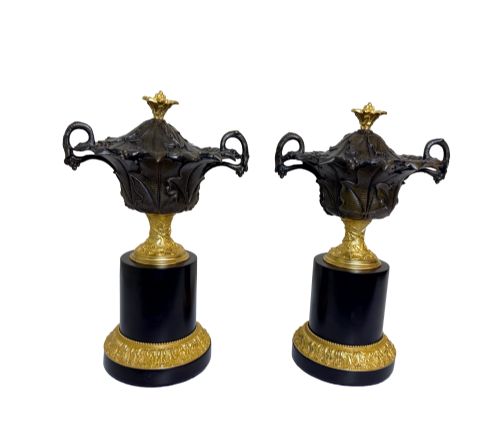
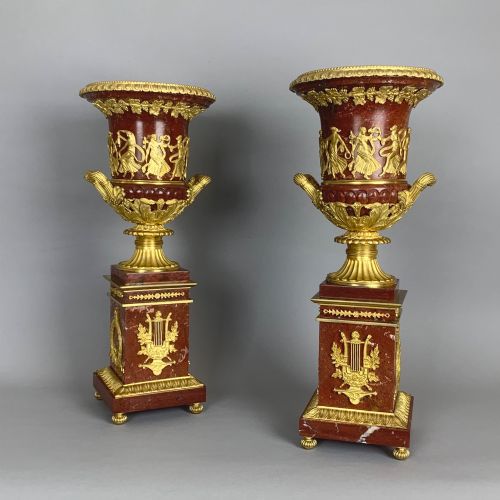
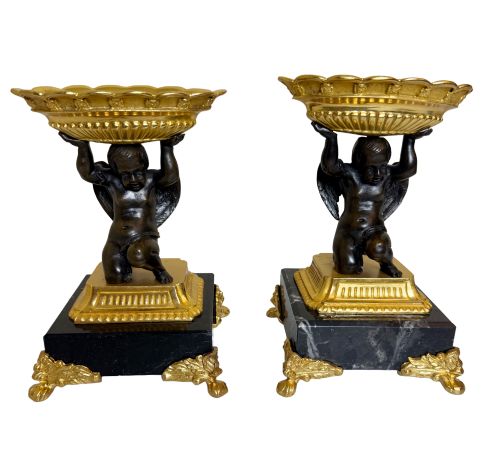
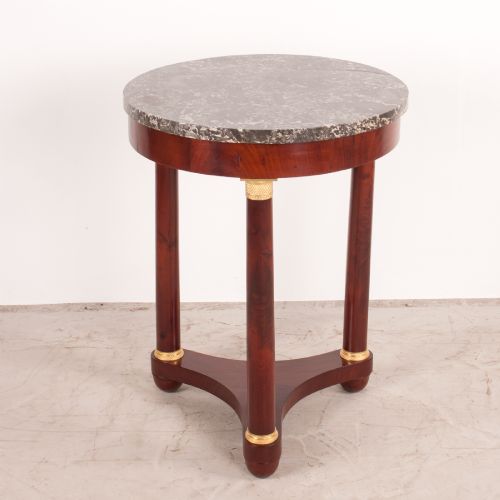
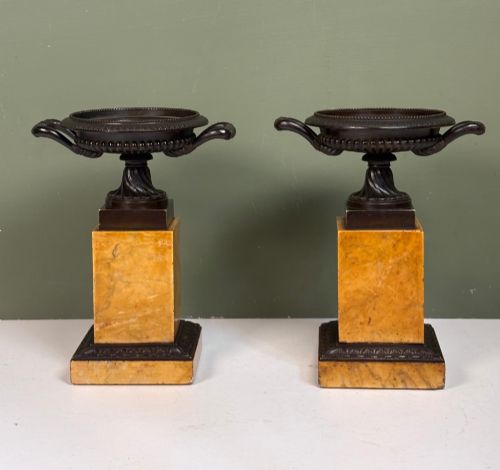
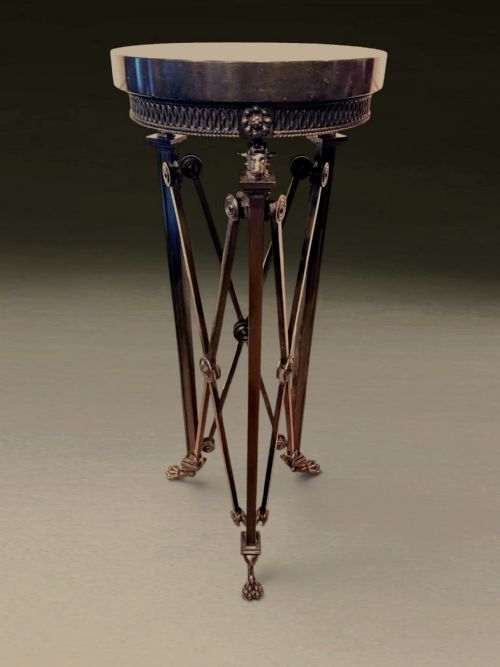
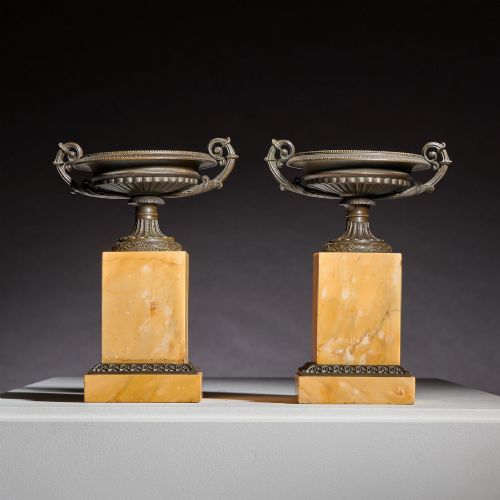
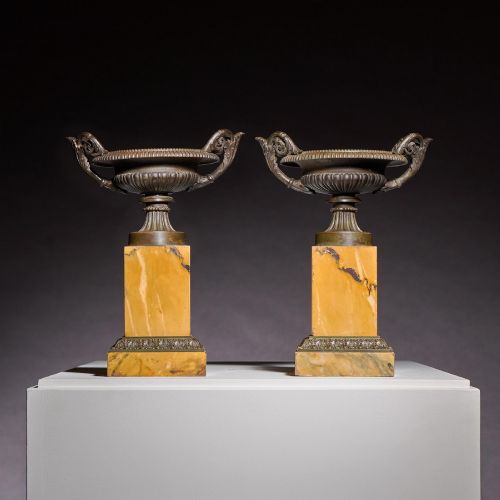
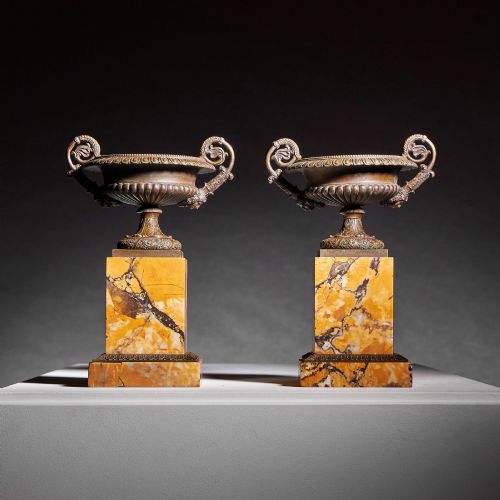
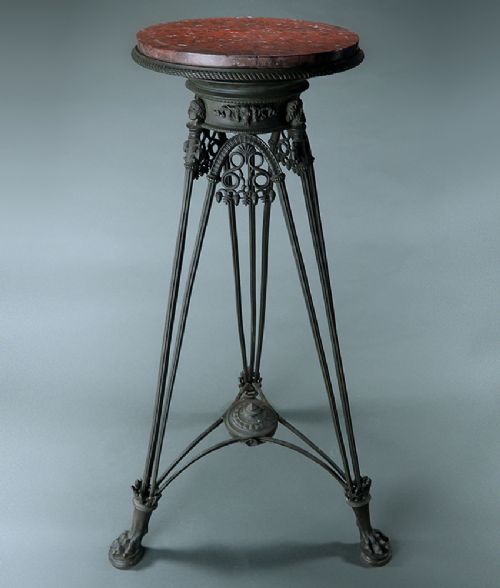
Bronze and marble pedestals represent classical display stands, columns, and gueridon tables shaped by nineteenth-century French and Regency makers. A buyer searching this phrase encounters architectural columns, urn stands, and occasional tables designed to support sculptures, tazzas, and decorative vases.
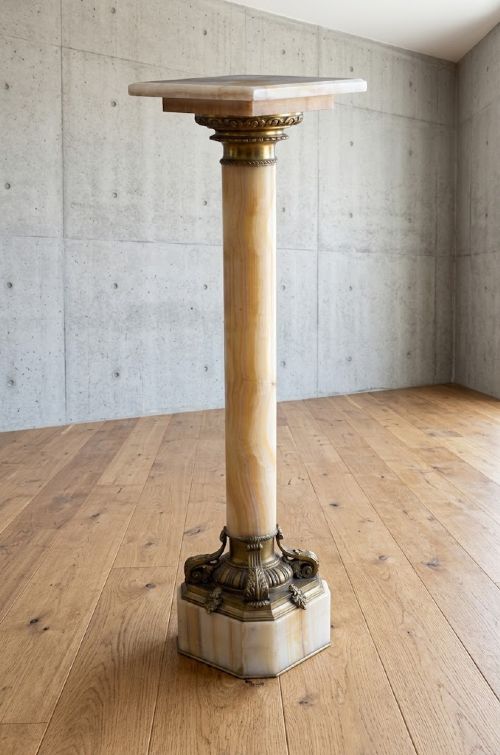
The selections span the nineteenth century, incorporating French Empire, Neoclassical, and Rococo styling. Onyx columns with ormolu collars and marble-topped display stands appear frequently alongside matched pairs of decorative pedestals.
Makers drew on ancient Greek and Roman precedents during the Grand Tour era, producing tiered columns and figural torcheres. These architectural supports utilise contrasting materials to create vertical presence within an interior space.
Materials and Technique
Craftsmen built these pieces by combining turned natural stone shafts with cast and chased metal components. Marble and onyx provide solid structural columns, while ormolu and gilt bronze form decorative collars, capitals, and base mounts.
Foundries cast bronze elements using traditional techniques before applying chemical patination or mercury gilding. Stone surfaces underwent precision turning and polishing to achieve smooth, reflective tops designed to carry heavy ornamental vessels.
Nineteenth-century travellers often posted their heavy marble columns home by mail, testing postal endurance to its absolute limit.
Craftsmanship and Design
The standard of a bronze and marble pedestal rests on the crispness of the metal chasing and the selection of the stone. Finer examples display deeply articulated acanthus leaves and well-defined figural mounts rather than soft, mass-produced castings.
Material choice dictates the upper tier of production, where dense Siena marble, rich onyx, and fire-gilded ormolu replace simpler brass and standard timber. Proportion and architectural balance separate standard utilitarian stands from sculptural display pieces designed for formal reception rooms.
Emile Guillemin·Jean Antoine Houdon·Antonio Merente·F. De Luca·Messina Roma·Willems·Ferdinand Preiss·Claire Colinet
The Bronze and Marble Pedestals Glossary
- Ormolu
- Gilt bronze produced by applying a gold and mercury amalgam to cast bronze before heating. This technique creates a durable, bright golden finish seen on nineteenth-century French furniture mounts.
- Guéridon
- A small circular table supported by a single central column or tripod base, frequently topped with marble. Originating in seventeenth-century France, these tables experienced revivals through the Neoclassical and Empire periods.
- Grand Tour
- An extended journey through continental Europe undertaken by wealthy young men to study classical art and architecture. The souvenirs brought back included bronze reductions, marble tazzas, and architectural columns.
Bronze and Marble Pedestals: Frequently Asked Questions
What were bronze and marble pedestals used for?
These pedestals served as architectural display stands for fine art, bronze sculptures, and decorative urns within nineteenth-century drawing rooms and libraries. By elevating objects, they drew the eye to Grand Tour souvenirs and classical bronzes.
They also functioned as standalone decorative furniture that enhanced the proportions of a formal interior. Wealthy collectors used them to showcase their acquisitions from travels across Europe.
How do I style a pedestal at home?
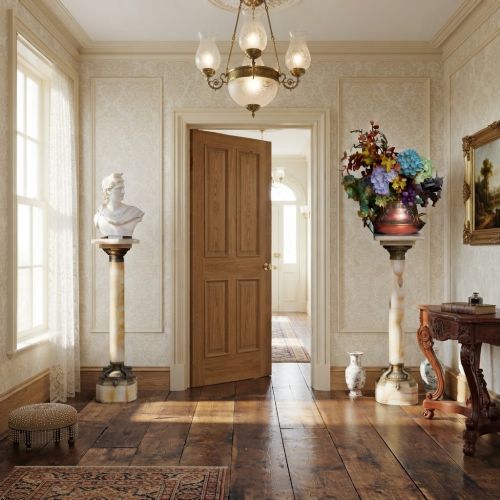
Place a single column in an empty corner or frame a doorway with a matched pair to create architectural symmetry. Topping the stand with a bronze sculpture or a marble tazza completes the classical arrangement.
Ensure the weight of the displayed object matches the structural capacity of the stone and metal column. Keeping the surrounding space uncluttered allows the contrasting textures of the bronze and marble to stand out.
How can I tell nineteenth-century pieces apart?
Examine the casting quality of the bronze mounts and the geological type of the marble or onyx shaft. Nineteenth-century pieces frequently employ fire-gilded ormolu and hand-chased details that differ from later cast reproductions.
French Empire and Neoclassical examples often feature specific classical motifs such as paw feet, laurel wreaths, and acanthus collars. Comparing the joining methods inside the column base helps confirm the period of manufacture.
What is the difference between onyx and marble?
Onyx is a translucent, banded variety of chalcedony quartz that transmits light when cut thinly, whereas marble is a non-foliated metamorphic rock formed from recrystallised limestone. Both stones were turned on lathes to form smooth, cylindrical columns.
Onyx columns often feature natural golden and amber striping, while marble provides opaque white, grey, or deeply veined coloured surfaces. Makers selected both materials for their polished finishes and structural rigidity.