
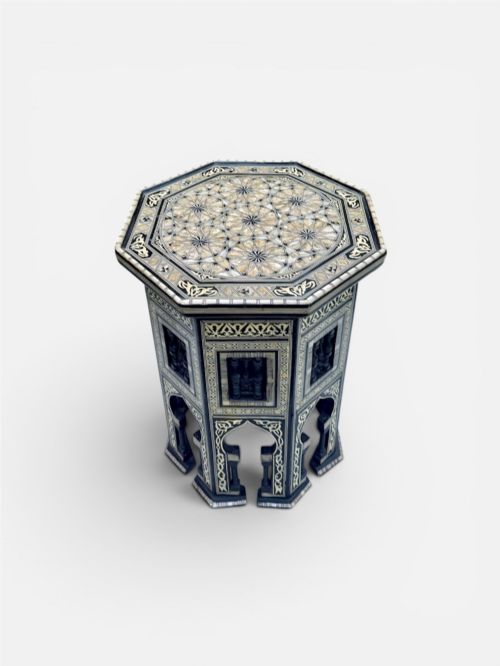
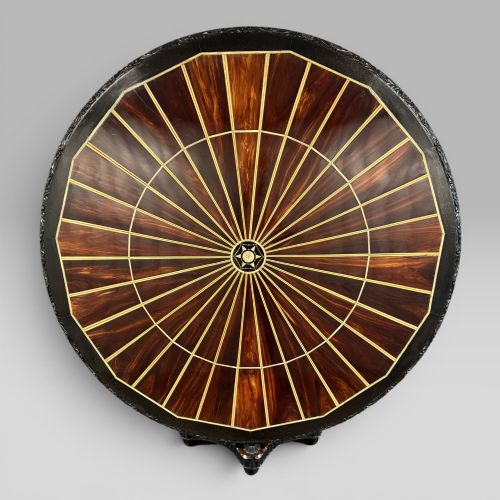
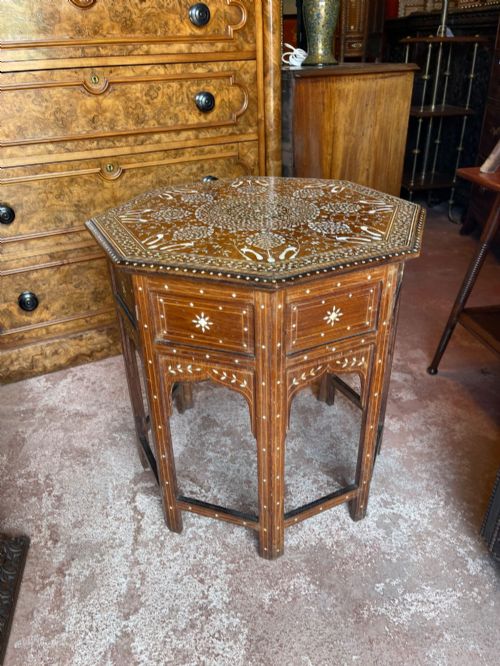
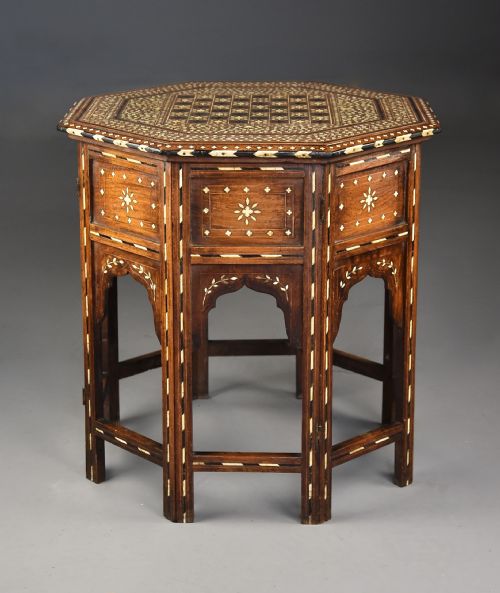
19th Century Anglo Indian Table
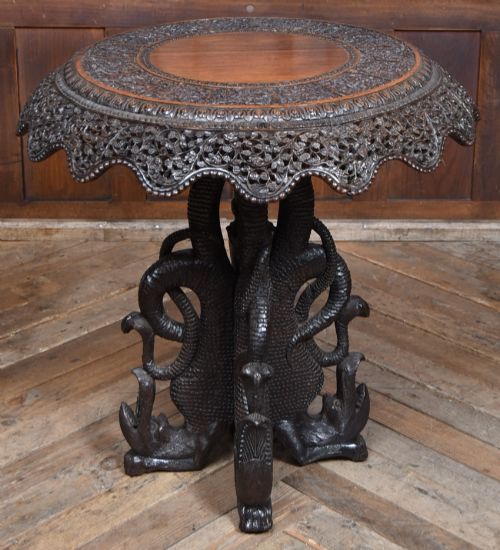
A 19th century anglo indian table brings colonial craftsmanship and dense botanical carving into a modern room.
19th Century Anglo Indian Table
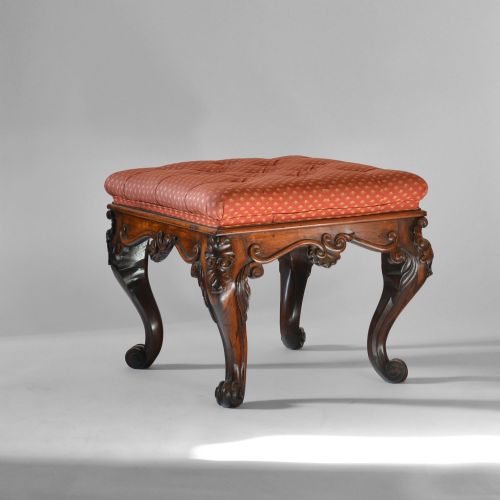
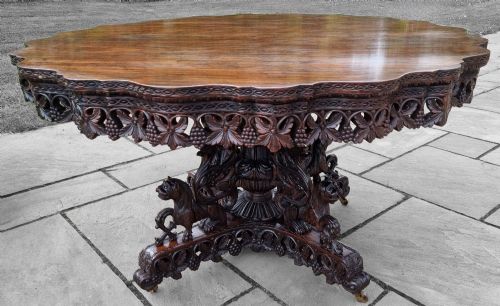
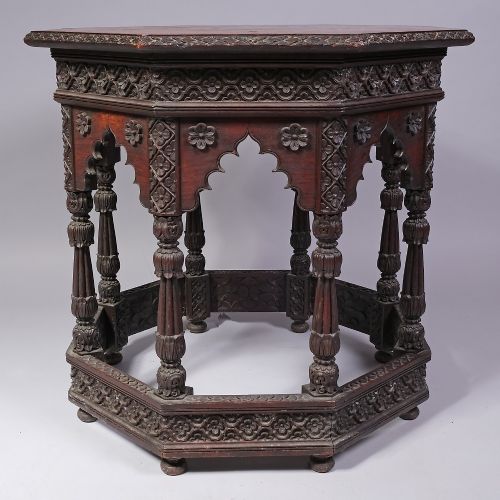
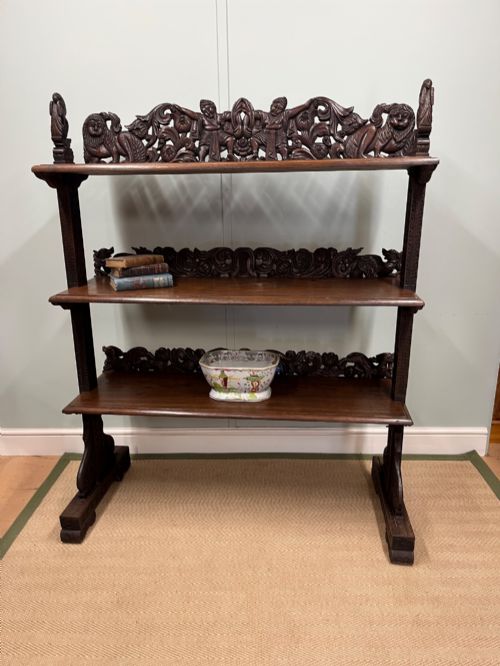
A 19th century anglo indian table encompasses heavy centre tables, octagonal occasional pieces, and folding campaign furniture produced during the British colonial period. These forms combine traditional Indian woodworking techniques with European furniture shapes requested by British residents.
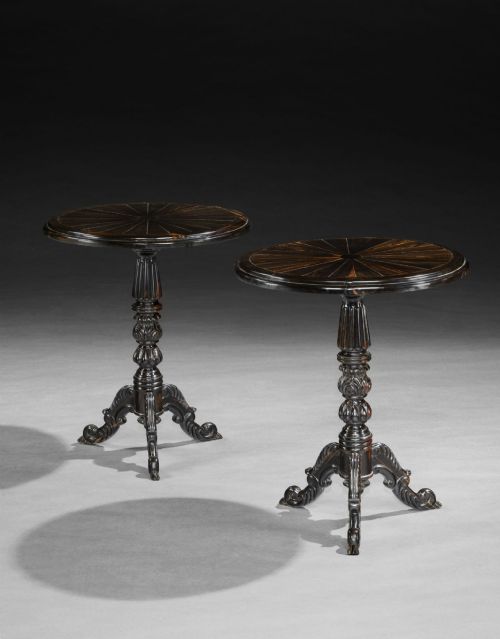
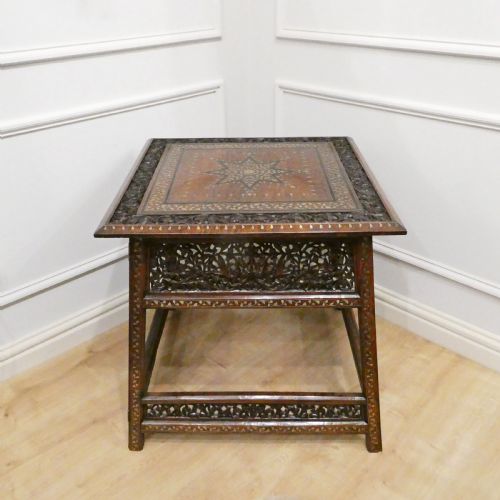
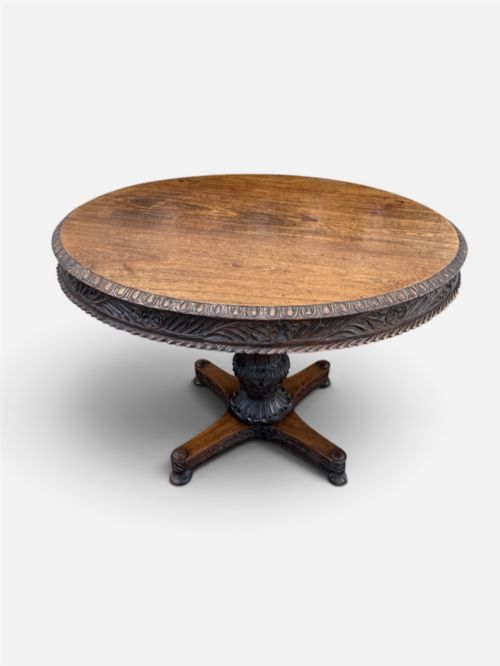
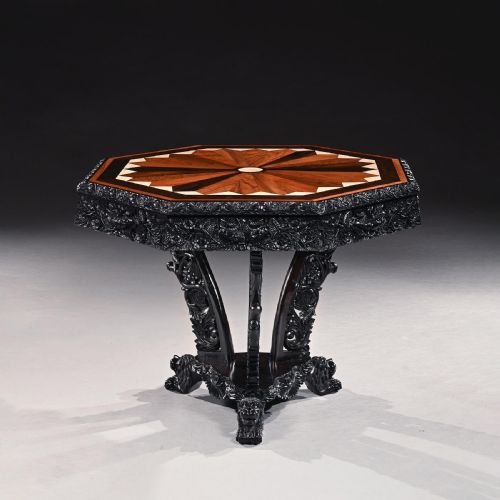
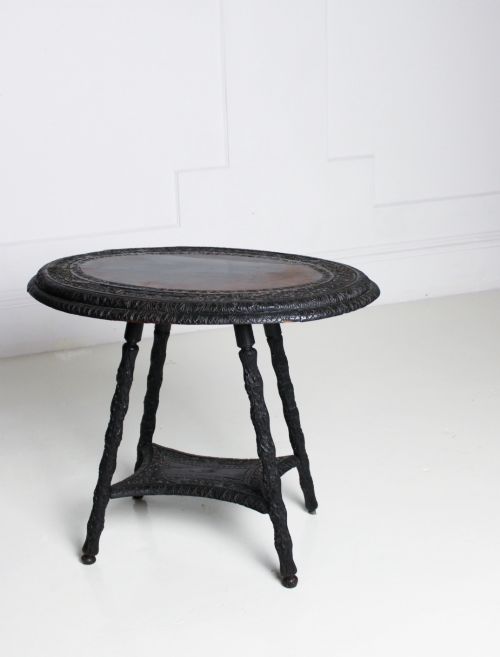
The version most commonly encountered on this page is the occasional or side table, frequently shaped in an octagonal format or featuring a circular tilt-top. Many originate from specific regional hubs such as Hoshiarpur, Bombay, or Ceylon.
Makers utilised native timbers to construct forms ranging from simple tripod tea tables to elaborate centrepieces supported by carved elephant heads. The resulting objects serve as functional display surfaces with dense surface ornament.
How They Were Made
Artisans constructed these pieces using dense tropical hardwoods, notably padouk, rosewood, teak, and calamander, selected for their stability and dark natural tones. These timbers supported deep relief carving without splintering under the chisel.
Surface decoration frequently incorporated intricate inlay work utilising brass wire, bone, and mother-of-pearl set into geometric patterns. Panel construction and folding mechanisms allowed campaign variations to pack flat for transport across regions.
Listings feature 19th century pieces constructed from teak, rosewood, padouk, and ebony, alongside inlaid brass and bone.
What Varies in Quality
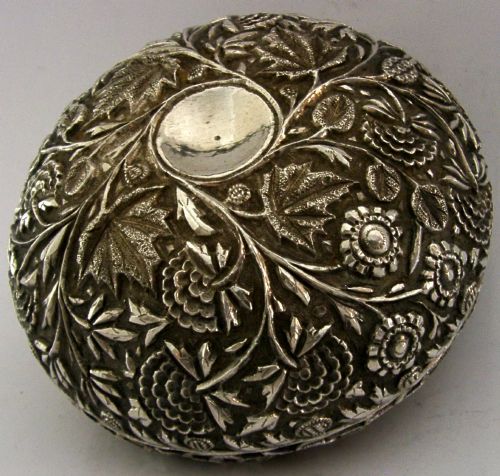
The depth and crispness of the hand carving separate standard production from exceptional examples, as skilled artisans achieved distinct separation between foliage layers and animal figures. Surface patination on untreated hardwoods also indicates age and handling.
Precision in the geometric inlay work marks the tier of a piece, where tight joints between brass, bone, and wood denote careful workshop output. Structural integrity in tilt mechanisms and pedestal joints completes the assessment.
The 19th Century Anglo Indian Table Glossary
- Hoshiarpur
- A district in Punjab known for producing wooden tables and furniture decorated with intricate wire and micro-mosaic inlay. Pieces from this centre often feature dense geometric patterns across octagonal tops.
- Padouk
- A heavy, durable tropical hardwood with a reddish-brown tone frequently utilised for carved colonial furniture. It accepts fine chisel work without losing structural strength.
- Teapoy
- A small occasional table or stand originally designed to support a tea caddy or service. Examples from the colonial period often feature carved pedestals and tripod bases.
- Tilt-top
- A tabletop hinged to the pedestal column to allow the surface to pivot vertically when not in use. This mechanism saved floor space in British colonial interiors.
- Campaign table
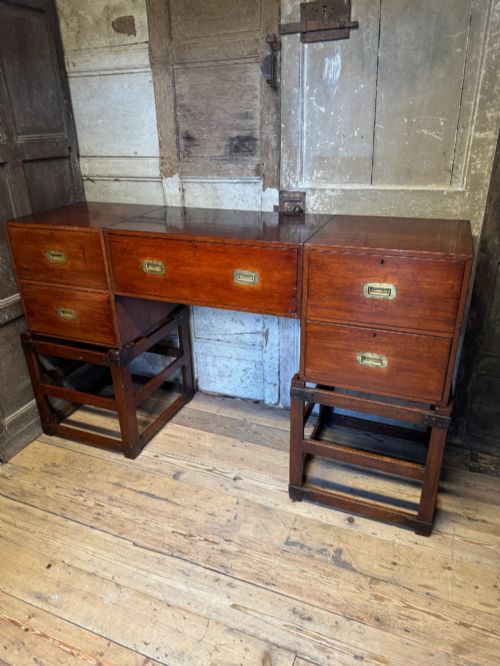
- Portable furniture designed for military officers or administrators on the move, featuring folding bases and detachable tops. These items prioritize disassembly without sacrificing stability.
19th Century Anglo Indian Table: Frequently Asked Questions
Where were these tables made?
Production occurred across the Indian subcontinent and Ceylon within specialised regional workshops fulfilling European commissions. Major centres included Bombay, Hoshiarpur, and Galle.
Local artisans adapted indigenous motifs and native timbers to suit Victorian furnishing requirements.
How do I identify a Hoshiarpur table?
These pieces feature extensive inlay work executed in brass wire, bone, or wooden mosaic across octagonal or square surfaces. The overall composition relies on dense geometric repetition rather than deep figurative carving.
Foliage and star motifs cover every visible surface of the wood.
What wood is used most often?
Padouk, rosewood, teak, and ebony form the primary structural materials for these tables. Artisans chose these dense tropical varieties for their deep natural colour and resistance to humidity.
Secondary woods occasionally appear in hidden structural components.
How should I care for the surface?
Maintain the finish by dusting with a dry cloth and avoiding modern silicone sprays or excessive moisture. Natural wax can be applied sparingly to nourish dry tropical hardwoods.
Keep pieces away from direct heat sources to prevent timber movement.