

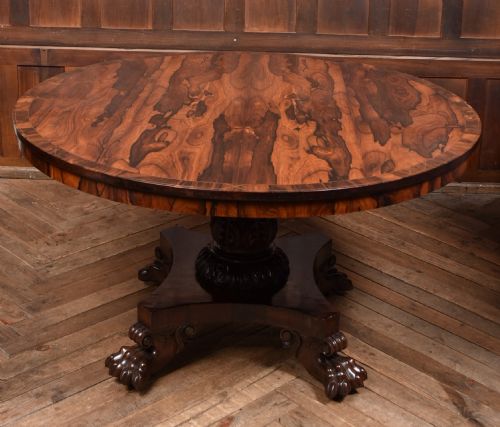

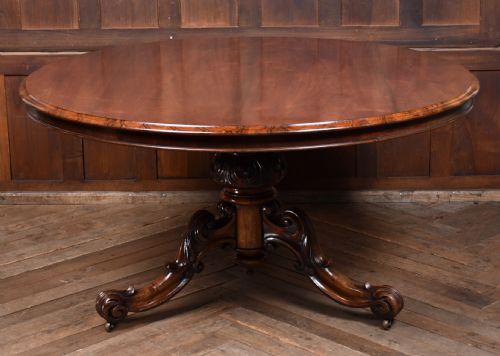
Circular Rosewood Loo Table
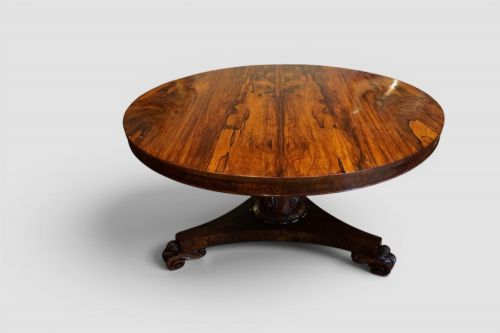
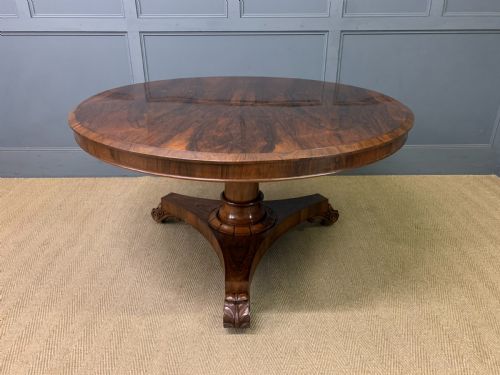
A circular rosewood loo table brings warmth and grand proportion to a room, serving as both centre table and family gathering place.
Circular Rosewood Loo Table
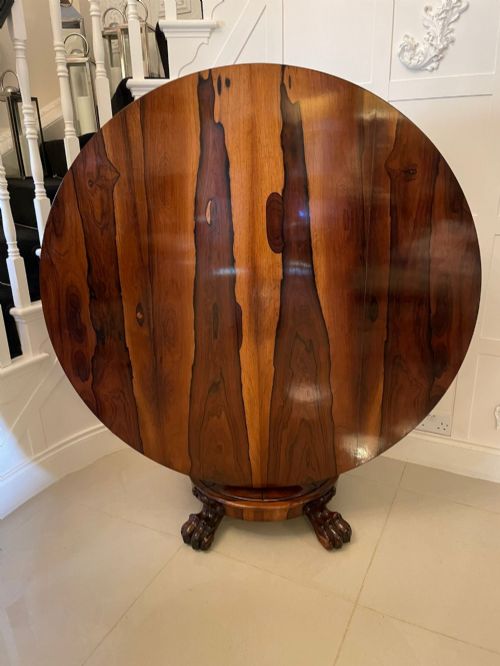
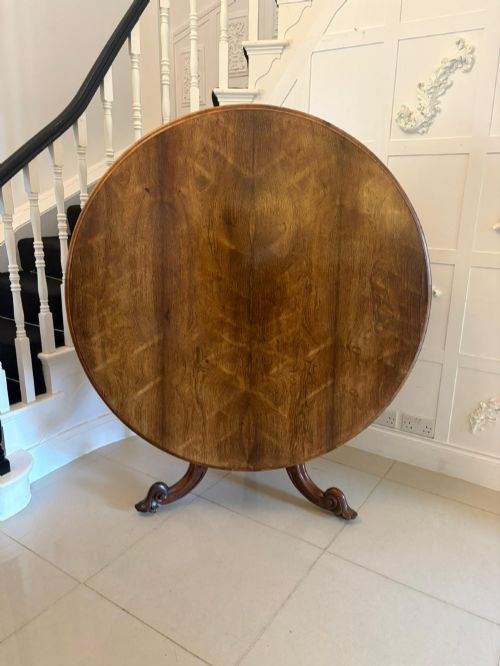
A circular rosewood loo table is a versatile piece designed for nineteenth-century drawing rooms, functioning as a card table, breakfast table or centre table. The selection here spans the Regency, William IV and Victorian eras, showing how the form evolved from restrained classical lines to heavier carved ornamentation.
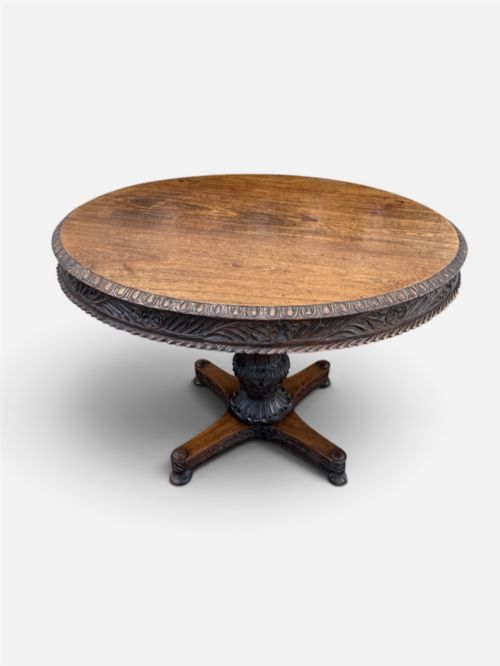
Most examples found on this page date from the nineteenth century, encompassing styles from Grand Regency to Anglo-Indian and Victorian. Buyers frequently encounter tilt-top and snap-top mechanisms that allow the round top to fold vertically when not in use.
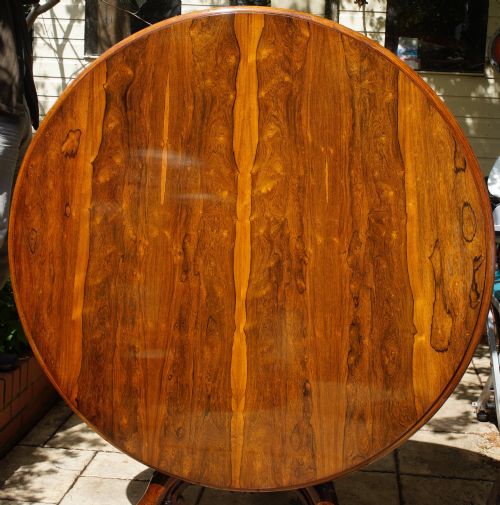
Makers and regional workshops from London, Scotland and Ireland contributed to this group, alongside examples attributed to prominent firms. Timber selection defines the surface character, with figured rosewood, satinwood and occasional brass inlay appearing across the inventory.
How they were made
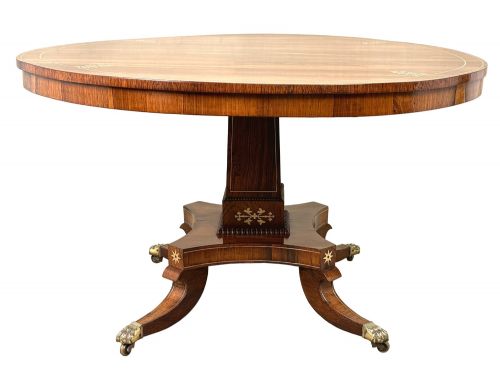
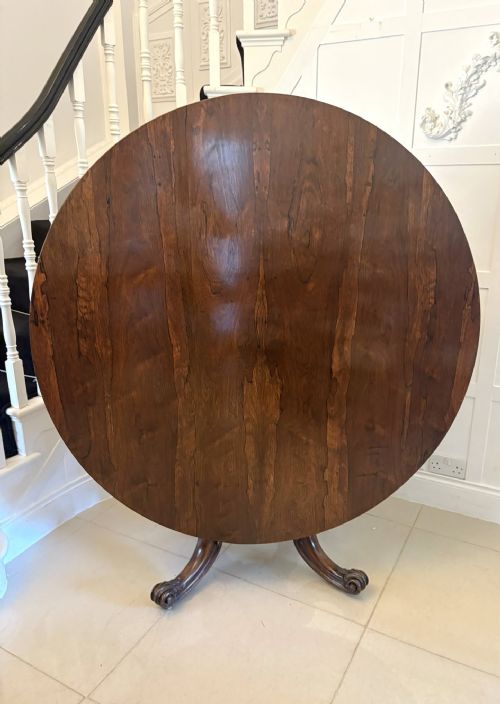
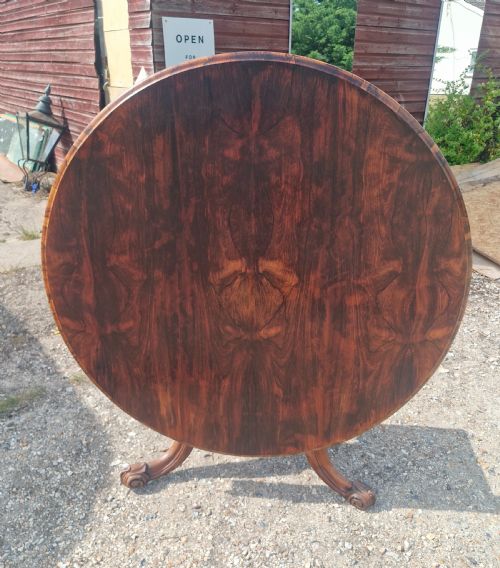
Cabinet makers utilised dense rosewood veneer laid over secondary timbers such as mahogany and pine, creating rich grain patterns across large circular tops. Selected pieces incorporate contrasting wood inlay, marquetry details or brass work set directly into the timber surface.
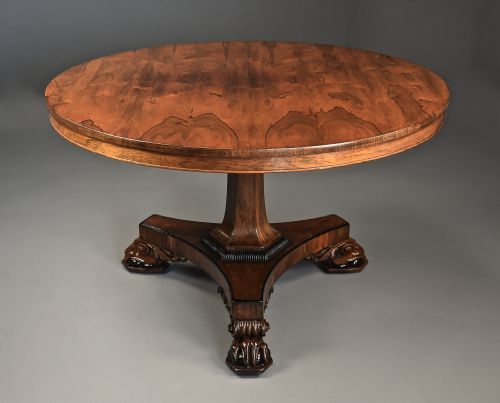
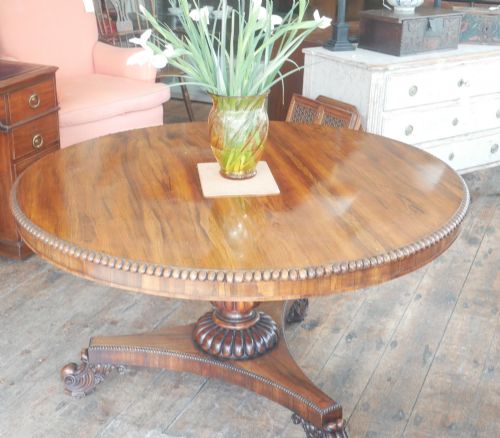
Pedestal supports rely on heavy central pillars resting on tripartite or quadrupartite platforms, frequently fitted with concealed castors for movement. Tilt-top mechanisms employ robust brass catches and wooden pivots that allow the heavy top to pivot securely.
Several tables retain their original brass castors designed to roll smoothly across thick Victorian carpets during evening card games.
What varies in quality
The quality of a circular rosewood loo table rests upon the choice of timber and the complexity of its construction. Highly figured grain patterns and skilled marquetry or brass inlay elevate an example above plain or heavily repaired surfaces.
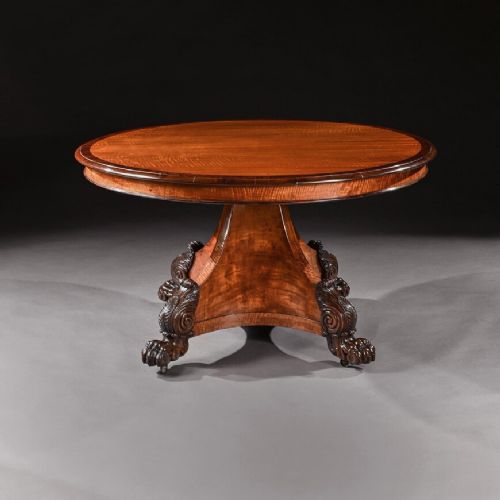
Carving depth and proportion distinguish the finest pedestal bases from simpler country house pieces. Crisp execution of acanthus leaves on the column and well-turned paw feet indicate superior workshop execution.
Peters of Genoa·Gillows·James Winter of Wardour Street·George Smith
The Circular Rosewood Loo Table Glossary
- Loo table
- A round or oval nineteenth-century card and social table designed for the popular game of loo. These tables often feature tilt-top mechanisms to save space in the drawing room.
- Tilt top
- A hinged table top that rotates and locks into a vertical position for storage against a wall. This mechanism relies on a brass catch beneath the surface.
- Veneer
- A thin layer of figured rosewood applied over a stable secondary timber body. This technique displays rich grain patterns without risking the structural movement of solid tropical hardwoods.
- Marquetry
- Decorative patterns formed by fitting small pieces of veneer such as satinwood into the primary ground. It creates intricate geometric or floral designs across the table top.
- Snap top
- A spring-loaded or latch mechanism that secures a tilt-top table firmly in its horizontal position during use.
Circular Rosewood Loo Table: Frequently Asked Questions
How do I use a loo table today?
A circular rosewood loo table works effectively as a freestanding centre table in a hallway or drawing room, displaying lamps or decorative objects. Dropping the top allows the piece to rest flat against a wall when floor space is required.
For daily dining or as a library table, the sturdy pedestal base provides ample legroom around the entire circumference. The solid construction handles everyday domestic use while maintaining its formal appearance.
How do I tell Regency from Victorian tables?
Regency tables tend to display cleaner classical proportions, restraint in ornament, and occasional brass stringing or inlay. Timber choice often emphasises smooth figured surfaces rather than heavy carving.
Victorian examples generally feature bolder proportions, heavier pedestal bases, and deep relief carving around the pillar and platform. The use of snap-top mechanisms becomes particularly pronounced in mid-nineteenth-century production.
What is a tilt-top mechanism?
A tilt-top mechanism uses a hinged block beneath the table surface that allows the heavy rosewood top to pivot ninety degrees. This lets the furniture stand flat against a wall when not in active use.
Original brass catches and wooden locking pins secure the top safely in both vertical and horizontal positions. Inspecting these internal joints reveals the age and hand-finishing of the mechanism.
How do I care for rosewood furniture?
Keep rosewood tables away from direct sunlight and strong heat sources to prevent the veneer from drying and splitting. Regular dusting with a soft, dry cloth preserves the natural lustre of the polished surface.
Occasional application of appropriate wax feeding nourishes the timber and protects the grain figure without building up greasy residues. Avoid placing wet containers directly on the polished wood.