

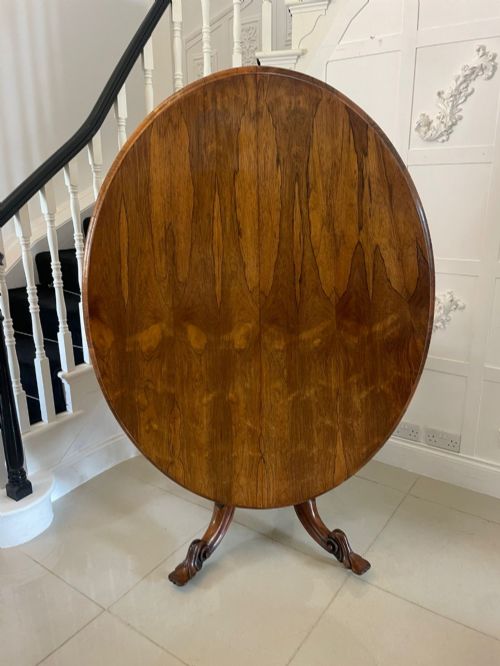
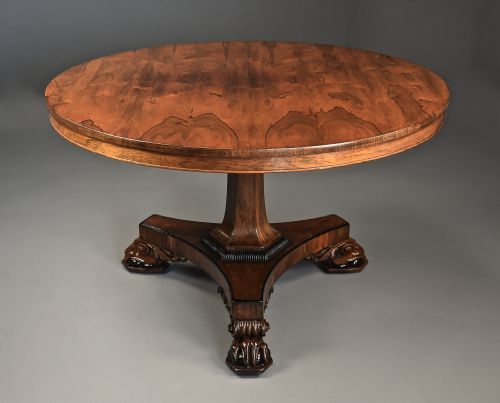
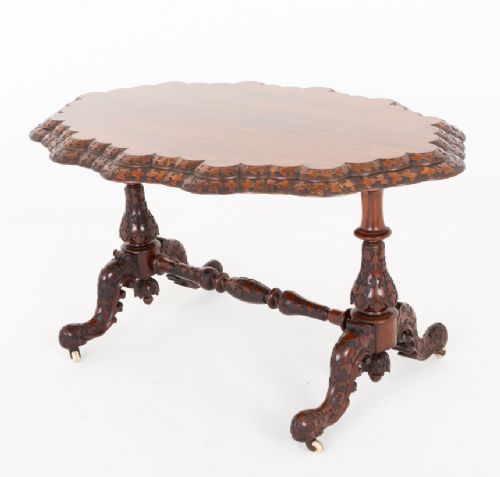
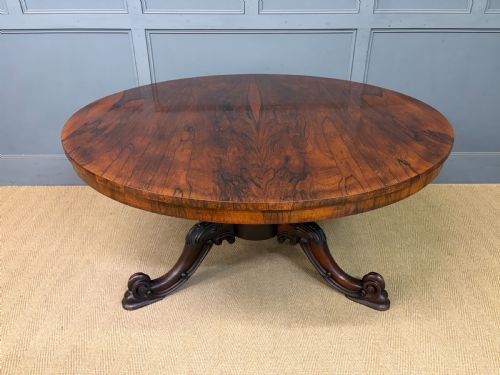
Victorian Rosewood Tilt Top Table
A victorian rosewood tilt top table brings rich timber grain and clever folding mechanisms together for flexible dining and display.
Victorian Rosewood Tilt Top Table
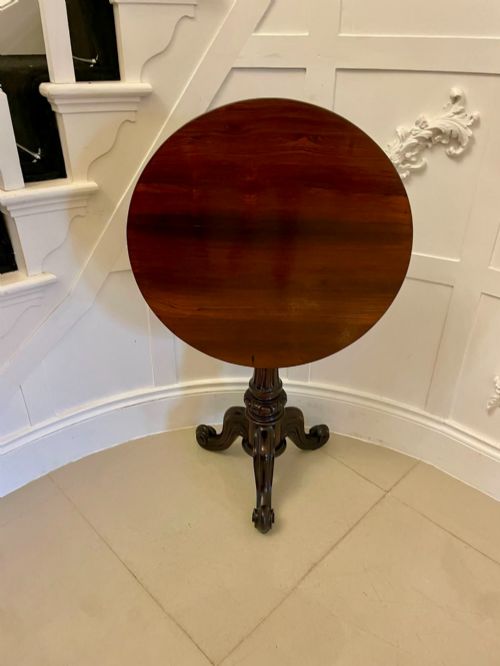
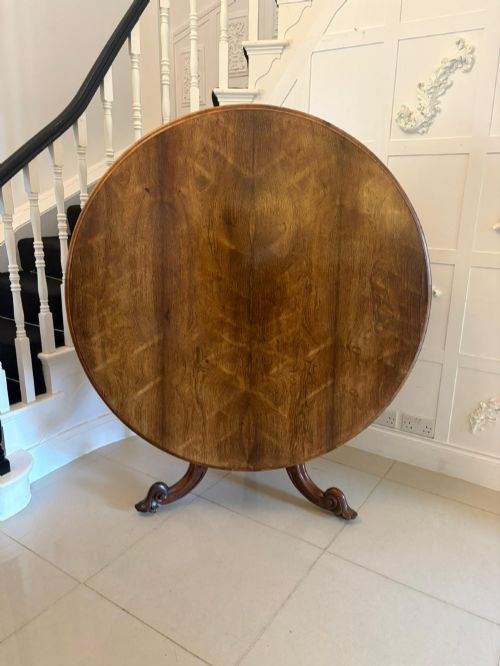
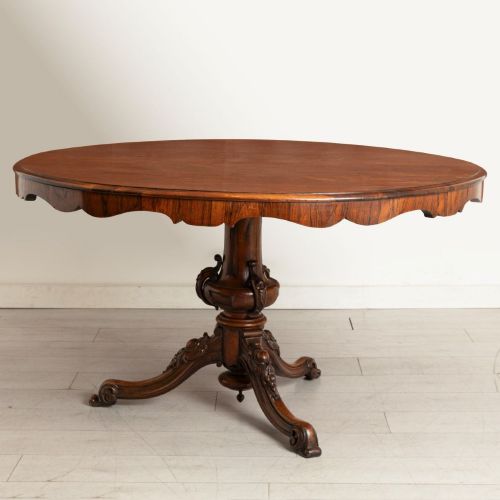
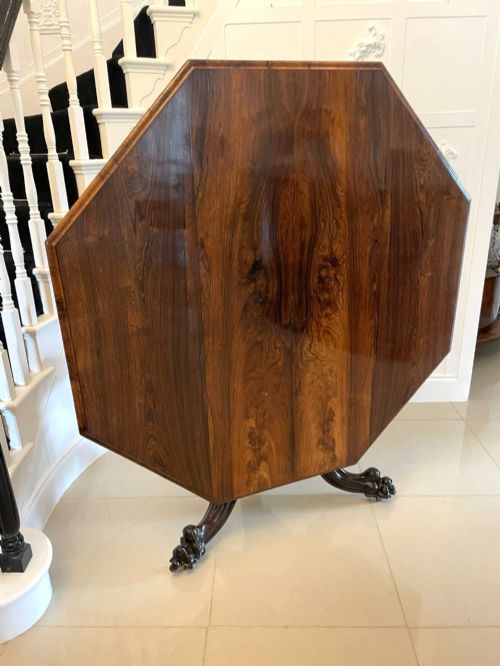
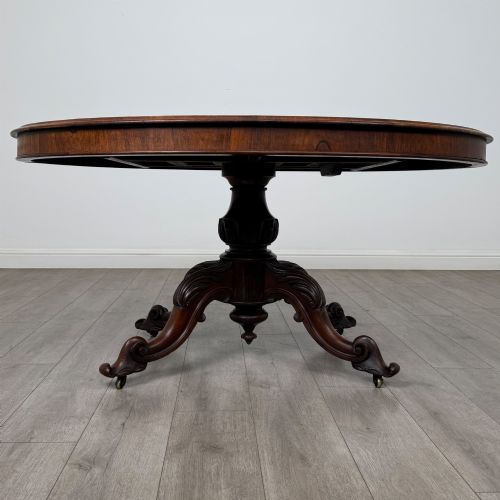
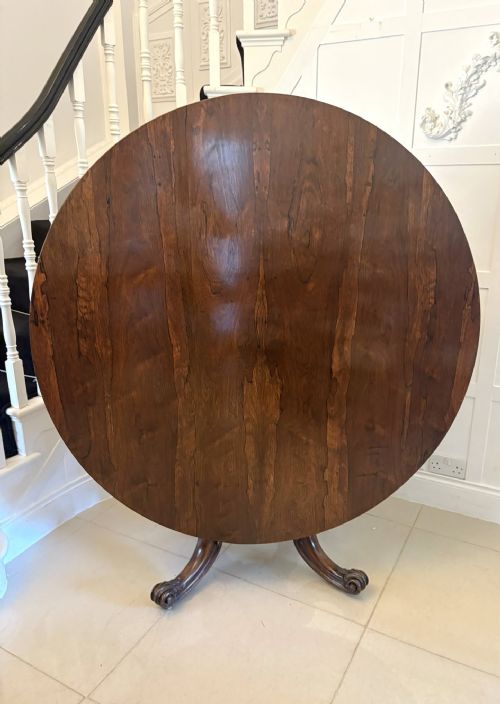
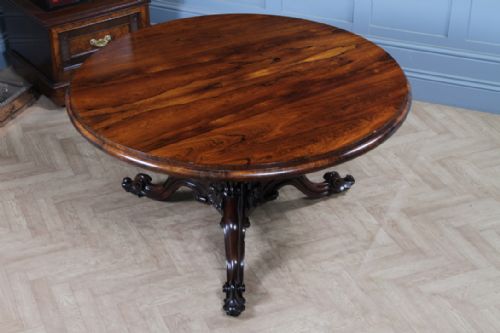
A victorian rosewood tilt top table serves multiple domestic roles, functioning as a breakfast table, centre table, or loo table depending on its size and proportion. The circular, oval, or serpentine top tips vertically on a hinge mechanism, allowing the piece to stand flat against a wall when not in use.
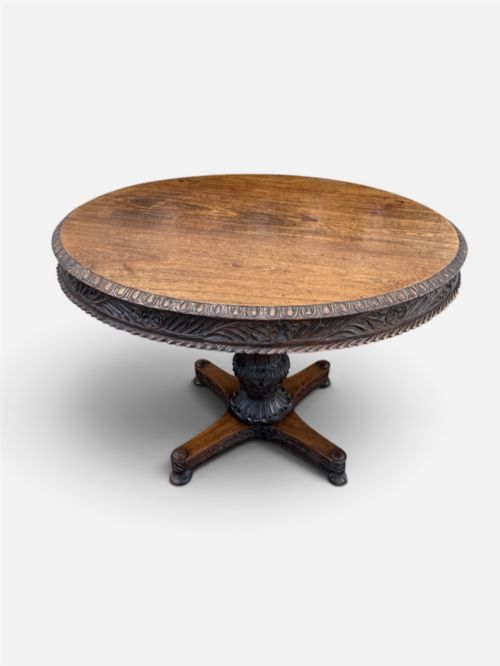
Most examples encountered belong to the nineteenth century, spanning the William IV, early Victorian, and later Victorian periods. Alongside standard English cabinet work, occasional Anglo-Indian pieces appear, demonstrating distinct regional carving and inlay traditions.
How they were made
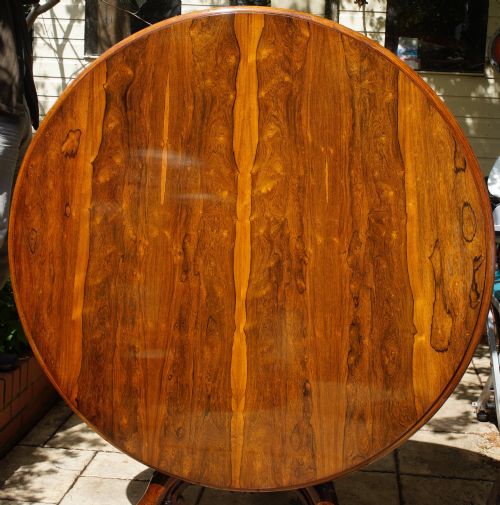
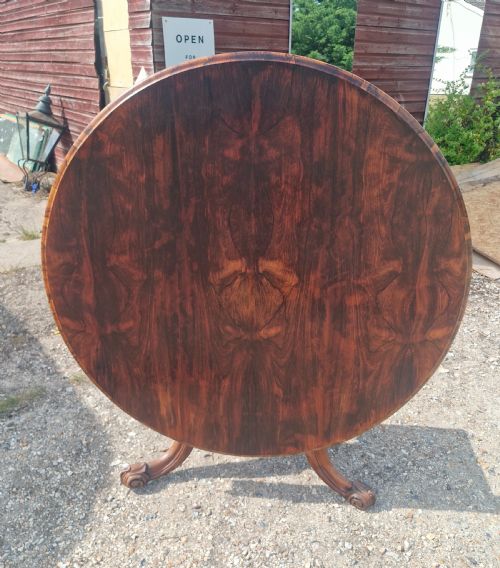
Cabinet makers utilised dense tropical timber, frequently applying rosewood veneer over solid secondary woods like mahogany to achieve striking grain patterns on the expansive table tops. Figured veneers and burr-elm accents require precise cutting and laying to create balanced, symmetrical surfaces.
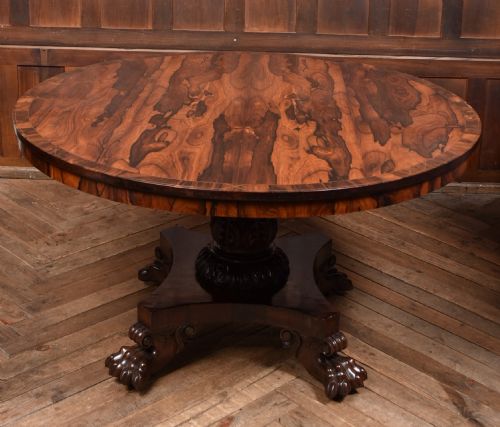
Structural stability relies on solid rosewood for turned and carved pedestals, columns, and base assemblies. Brass locking catches secure the tilting top in its horizontal position, while mother-of-pearl inlay or marquetry occasionally decorates the surface.
Listings feature pieces spanning the Georgian, William IV, and Victorian periods, utilising rosewood, mahogany, brass, and mother-of-pearl.
What varies in quality
The sophistication of the carved detail on the central pillar and base distinguishes finer examples from simpler provincial work. Crisp, deep relief carving reflects greater skill by the maker.
The choice and matching of timber veneer dictate visual success, with highly figured grain and seamless joints marking superior craftsmanship. Solid rosewood components and robust, well-engineered tilt mechanisms further separate standard production from exceptional pieces.
Gillows·James Winter of Wardour Street in London
The Victorian Rosewood Tilt Top Table Glossary
- Tilt top
- A table top mounted on a hinge mechanism that pivots from horizontal to vertical. This clever design allows the furniture to save space in smaller rooms.
- Loo table
- A large round or oval table designed for the nineteenth-century card game loo. These tables often feature substantial tilting tops and heavy pedestal bases.
- Snap top
- An alternative term for a tilt top table, referencing the spring catch that snaps the top securely into its horizontal position. It prevents accidental movement during use.
- Marquetry
- Decorative patterns formed by fitting together small pieces of veneer of different woods or materials. Craftsmen apply this technique to create intricate geometric or floral designs on the table top.
Victorian Rosewood Tilt Top Table: Frequently Asked Questions
How do I operate the tilt mechanism safely?
Release the brass catch underneath the table top while supporting the edge with one hand. Guide the top gently upward until it rests securely against the central pillar.
To lower the table, hold the top firmly before releasing the catch, then ease it down until the mechanism locks flat. Ensure no heavy items remain on the surface during this process.
Can I use a tilt top table for daily dining?
These tables provide sturdy surfaces for meals when properly locked in the horizontal position. Their pedestal designs allow adequate legroom for seating around the perimeter.
Protect the polished rosewood surface with heat mats and placemats to prevent marks from hot dishes or moisture. Lowering the top afterward keeps the timber safe when the room is empty.
How do I distinguish William IV from Victorian examples?
William IV pieces often display heavy, robust proportions with bold scrolling pedestals and rich, dark rosewood timbers. The styling bridges late Regency and early Victorian aesthetics.
Later Victorian tables frequently introduce lighter or more elaborate carved ornamentation, serpentine top edges, and occasional marquetry or mother-of-pearl inlay. The architectural details on the base typically reflect mid-nineteenth-century revival tastes.
How should I care for rosewood veneer?
Maintain the timber by dusting regularly with a soft, dry cloth and avoiding silicone-based polishes. Occasional application of a quality beeswax feed preserves the moisture and natural lustre of the polished surface.
Keep the table away from direct sunlight and radiators to prevent the rosewood veneer from drying out or splitting. Stable room temperatures protect both the finish and the underlying structure.