





Colonial Rosewood Centre Table
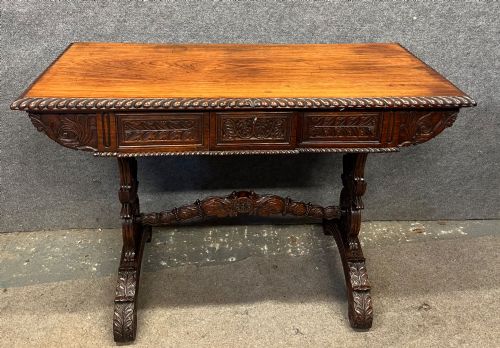
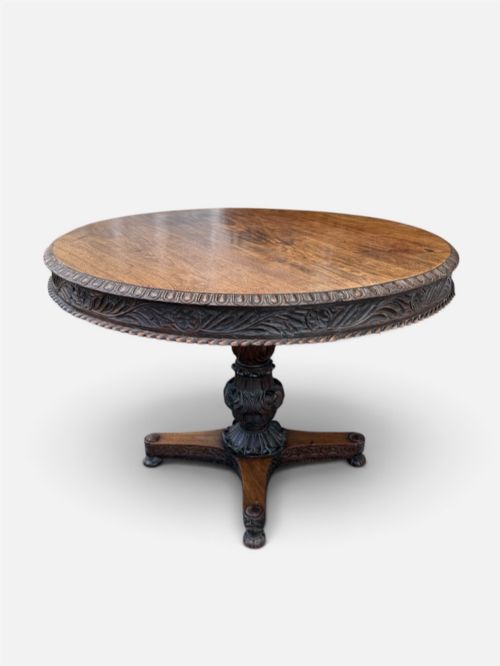
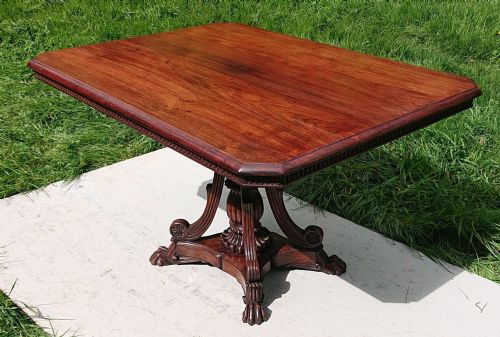
These colonial rosewood centre table pieces offer heavy timber and intricate carving, bringing solid nineteenth-century presence to any room.
Colonial Rosewood Centre Table
When you search for a colonial rosewood centre table, you are looking at nineteenth-century furniture shaped by British, Portuguese, and Indian cabinet-making traditions. These pieces were built to anchor large rooms, frequently positioned in the middle of a space rather than pushed against a wall.
The versions you are most likely to meet on this page belong to the Anglo-Indian, Portuguese Colonial, and Portuguese Baroque styles. They take the form of centre tables, occasional tables, and side tables, often featuring circular tops and heavily carved bases.
Origins span from Ceylonese workshops to broader Anglo-Indian and Portuguese territories during the nineteenth century, including specific dates around eighteen-twenty. You will encounter tilt-top mechanisms, pedestal supports, and occasionally miniature proportions alongside standard full-size examples.
How they were made
The makers relied on dense tropical timbers, predominantly rosewood, alongside padauk, teak, hardwood, ebony, and satinwood. These heavy woods were selected for their structural stability and deep natural grain.
Decoration involved intricate hand carving on the wooden bases and pedestal supports, coupled with contrasting inlay work. Artisans utilised mother of pearl to create luminous geometric and floral patterns directly into the dark timber surfaces.
Structural elements incorporated tilt-top functions and sturdy central pillars, requiring precise joinery to support the substantial weight of the solid wood tops.
Colonial Rosewood Centre Table Retail Price Guide 2026
Typical asking prices for colonial rosewood centre table among the pieces listed under this phrase on Sellingantiques today, from the lower quarter to the upper quarter. They describe what is for sale here now, not the wider market.
Listings feature nineteenth-century pieces incorporating rosewood, teak, padauk, and mother of pearl within Anglo-Indian and Portuguese Colonial styles.
What varies in quality
The distinction between ordinary and exceptional pieces lies in the depth and crispness of the carving on the base. Superior examples display sharply defined foliage and figures with no softness in the chisel work.
Material selection and inlay execution also set pieces apart. The best tables feature finely figured rosewood matched with meticulously fitted mother of pearl rather than simpler wooden surfaces.
The Colonial Rosewood Centre Table Glossary
- Centre table
- A piece of furniture designed to stand free in the middle of a room rather than against a wall. These tables are finished on all sides and often feature a central pedestal base.
- Anglo-Indian
- A style of furniture made in India by local craftsmen for British residents during the colonial period. It combines traditional British forms with intricate Indian carving techniques and native timbers.
- Mother of pearl
- An iridescent inner layer of mollusc shell used for decorative inlay. Artisans cut it into thin sections to create contrasting patterns against dark woods like rosewood and ebony.
- Tilt-top
- A mechanism allowing the table top to pivot vertically when not in use. This practical feature enabled large tables to be stored against walls to save space in nineteenth-century interiors.
- Padauk
- A heavy tropical hardwood known for its strength and rich reddish-brown colour. It provides a durable foundation for carved pedestals and heavy table tops.
Colonial Rosewood Centre Table: Frequently Asked Questions
What is a colonial rosewood centre table?
These are nineteenth-century freestanding tables produced in regions under British or Portuguese influence, notably India and Ceylon. They combine European furniture shapes with local timber and carving traditions.
They were built to sit in the middle of a room, serving as decorative and functional surfaces for lamps, books, or displaying decorative objects.
Where were these tables made?
Production took place across various colonial territories, primarily through Anglo-Indian workshops and Portuguese colonial centres. Local artisans utilised regional timbers like rosewood and padauk.
Items were frequently commissioned by expatriates or exported back to Britain and Europe during the nineteenth century.
How do I care for rosewood furniture?
Keep the timber away from direct heat sources and strong sunlight to prevent the dense wood from drying out. Dust regularly with a soft, dry cloth and avoid harsh chemical polishes.
Applying a traditional beeswax occasionally will help nourish the grain and maintain the natural lustre of the rosewood and inlay.
How do I identify an Anglo-Indian table?
Look for dense tropical hardwoods such as rosewood or padauk combined with deep, elaborate hand carving on the base and pedestal. The presence of mother of pearl inlay is also a strong indicator.
Construction methods and timber choices will reflect nineteenth-century workshop practices from South Asian regions rather than standard British domestic furniture.