





Indian Colonial Console Table
An Indian colonial console table brings heavy carved timber and British room proportions together into a single striking piece of furniture.
Indian Colonial Console Table
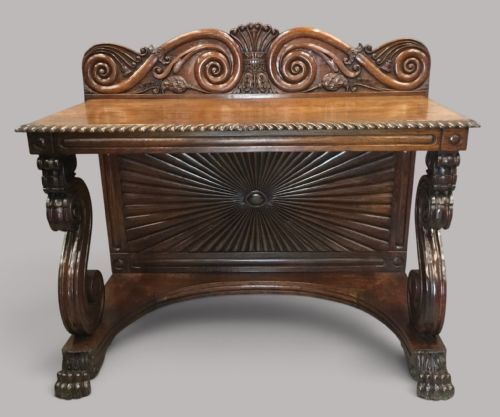
When you search for an Indian colonial console table, you are looking at nineteenth-century furniture made in the subcontinent and Burma for British tastes. The form adapts domestic hall and pier tables to the dense carving traditions of Anglo-Indian and Anglo-Burmese workshops.
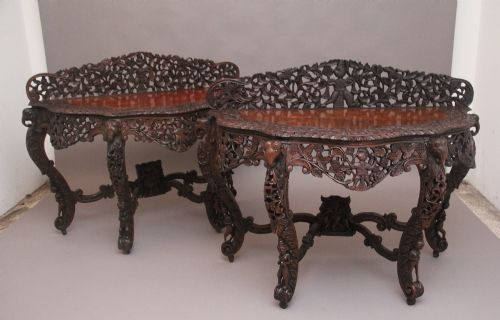
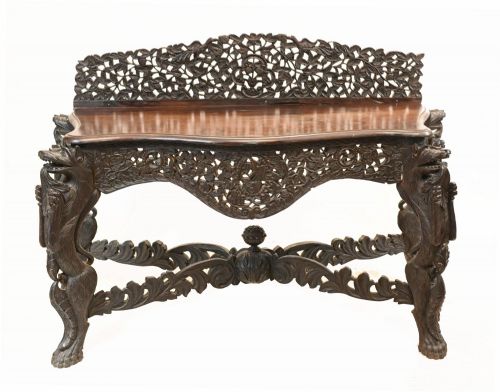
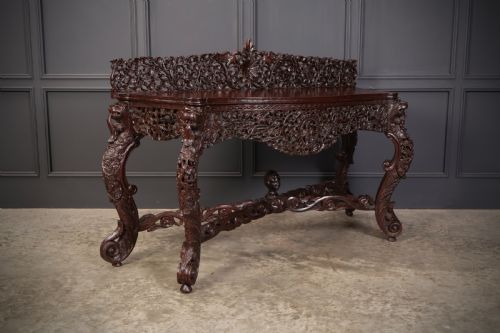
The version you are most likely to meet on this page is a nineteenth-century console or side table fashioned from solid padauk, teak, or rosewood. These pieces often feature deep relief work and substantial proportions suited to entrance halls and reception rooms.
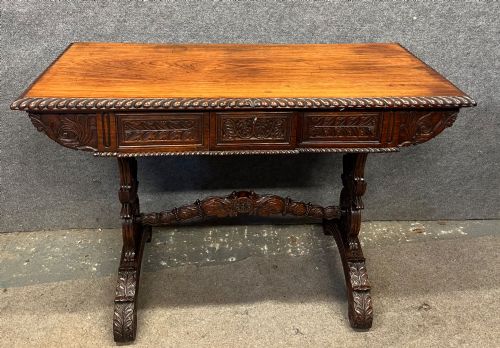
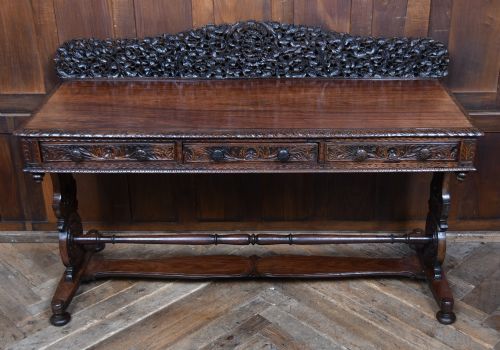
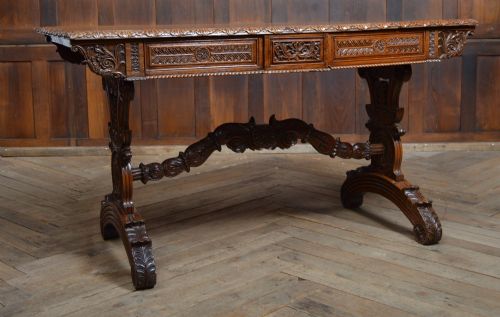
Alongside standard console tables, the evidence shows related forms including centre tables, library tables, pier tables, occasional tables, window seats, and hall benches. Some of these domestic pieces incorporate distinct figural carvings such as elephants.
How they were made
Carpenters utilised dense tropical hardwoods such as teak, rosewood, and padauk, selected for stability and weight in warm climates. These timbers were worked in solid planks rather than thin veneers.
Decoration relied on deep hand carving executed by local artisans following European furniture designs. Surfaces frequently display floral motifs, scrolling foliage, and figural elements carved directly into the structural timber.
Indian Colonial Console Table Retail Price Guide 2026
Typical asking prices for indian colonial console table among the pieces listed under this phrase on Sellingantiques today, from the lower quarter to the upper quarter. They describe what is for sale here now, not the wider market.
Materials recorded across the inventory include teak, rosewood, hardwood, padauk, marble, and bone inlay.
What varies in quality
The standard of carving defines the upper tier of these tables. Crisp, deep relief work with sharp undercut details distinguishes accomplished workshop production from simpler provincial output.
Selection of timber also determines quality, with well-figured rosewood and dense padauk commanding greater presence than plainer hardwood surfaces. The integration of secondary materials such as marble or bone inlay alters the visual weight of the piece.
The Indian Colonial Console Table Glossary
- Padauk
- A heavy tropical hardwood with a reddish-brown tone, frequently utilised for carved colonial furniture. It provides a stable and durable base for intricate relief work.
- Console table
- A table designed to stand against a wall, historically supported by brackets or legs. In nineteenth-century interiors, these served as decorative focal points in entrance halls.
- Anglo-Indian
- A descriptive term for furniture made in India during the British period, combining local timber and carving skills with European forms. These pieces reflect cross-cultural design exchanges.
- Pier table
- A table designed to stand against the wall between two windows, often placed beneath a mirror. The form mirrors the proportions of standard console tables.
- Bone inlay
- A decorative technique involving the insertion of small pieces of bone into recessed channels within the wooden surface. This method creates contrasting geometric or floral patterns.
Indian Colonial Console Table: Frequently Asked Questions
What is an Indian colonial console table?
An Indian colonial console table is a nineteenth-century furniture piece created for British residents in India and Burma. It combines European table designs with local hardwood timbers and traditional hand carving.
These tables were built to furnish large colonial homes and government buildings. They typically stood against reception hall or drawing room walls.
How were these tables used?
These tables served primarily as decorative and functional furniture in entrance halls, corridors, and reception rooms. They held lamps, calling card trays, and decorative objects.
In larger spaces, related forms such as centre tables and library tables stood away from the walls for active daily use. Window seats and hall benches provided specialised seating in similar settings.
What woods were used?
Workshop makers utilised dense tropical hardwoods native to the region, principally teak, rosewood, and padauk. These timbers resisted local insects and supported deep carving.
Surfaces were left in their natural polished wood finish rather than painted. Some examples incorporated contrasting materials such as marble tops or bone inlay.
How do I date a piece?
Dating relies on stylistic indicators and recorded production periods spanning the nineteenth century, including Victorian examples and pieces from around eighteen eighty. Construction methods in solid tropical hardwoods remain consistent across this era.
Carving styles also offer clues, moving from classical Anglo-Indian foliage to denser figural motifs featuring animals like elephants. Documentary evidence from the period helps anchor specific regional workshop styles.